뉴욕증시, 트럼프 유럽 관세 철회·경제성장 기대에 상승 마감 ksdaily.co.kr
Key takeaway
"뉴욕증시, 트럼프 유럽 관세 철회·경제성장 기대에 상승 마감 - ksdaily.co.kr" — BullBear's AI rates this story as a mixed, direction-neutral signal, with a market-impact score of 8 out of 100. 뉴욕증시, 트럼프 유럽 관세 철회·경제성장 기대에 상승 마감 ksdaily.co.kr Reported by Google News Inflation on January 22, 2026. The call is verified against the actual 24-hour price move on BullBear's public conviction ledger.
Get the next high-impact catalyst
Telegram alerts when our AI scores a story 80+/100 impact (~1-3 per day, no spam).
Verified 30d hit rate 53.2%.
G7 central banks are preparing for interest rate decisions as oil prices continue to rise, potentially increasing inflation and influencing monetary policy.
Fed Chair Kevin Warsh testified that inflation remains too high, causing market odds of a July rate hike to drop significantly.
The dual developments of Fed Chair Kevin Warsh's testimony highlighting persistent inflation concerns and a key inflation report released on the same day have significantly recalibrated market expectations. The sharp decline in the probability of a July rate hike signals a shift in how investors are pricing in future monetary policy, suggesting a growing belief that the Federal Reserve may be nearing the end of its tightening cycle, or at least pausing to assess economic data. This recalibration impacts broader market sentiment, potentially fostering a more cautious outlook as traders digest the implications of sustained inflationary pressures alongside a less aggressive Fed stance. The connection to macro themes of economic resilience versus recessionary pressures becomes more pronounced, influencing investor confidence and risk appetite. A perceived pause in rate hikes could, in the short term, offer some relief to risk assets, but the underlying inflation narrative continues to cast a shadow, demanding careful observation of subsequent economic indicators and Fed communications.
The dual developments of Fed Chair Kevin Warsh's testimony highlighting persistent inflation concerns and a key inflation report released on the same day have significantly recalibrated market expectations. The sharp decline in the probability of a July rate hike signals a shift in how investors are pricing in future monetary policy, suggesting a growing belief that the Federal Reserve may be nearing the end of its tightening cycle, or at least pausing to assess economic data. This recalibration impacts broader market sentiment, potentially fostering a more cautious outlook as traders digest the implications of sustained inflationary pressures alongside a less aggressive Fed stance. The connection to macro themes of economic resilience versus recessionary pressures becomes more pronounced, influencing investor confidence and risk appetite. A perceived pause in rate hikes could, in the short term, offer some relief to risk assets, but the underlying inflation narrative continues to cast a shadow, demanding careful observation of subsequent economic indicators and Fed communications.
US Federal Reserve expected to hold rates steady as inflation swirls
Anticipation of the Federal Reserve maintaining its current interest rate stance amidst persistent inflationary pressures suggests a period of cautious navigation for equity markets. Such a holding pattern could dampen immediate enthusiasm, potentially leading to a more subdued market sentiment as investors weigh the Fed's commitment to price stability against growth concerns. This scenario aligns with broader macroeconomic themes of sticky inflation and the ongoing debate surrounding the timing and efficacy of monetary policy adjustments. Consequently, investor confidence may experience a recalibration, fostering a more risk-averse environment where capital allocation prioritizes defensive sectors and established value over speculative growth. The extended period of elevated rates, even if unchanged, can continue to influence borrowing costs and corporate profitability, thus shaping future investment decisions.
Anticipation of the Federal Reserve maintaining its current interest rate stance amidst persistent inflationary pressures suggests a period of cautious navigation for equity markets. Such a holding pattern could dampen immediate enthusiasm, potentially leading to a more subdued market sentiment as investors weigh the Fed's commitment to price stability against growth concerns. This scenario aligns with broader macroeconomic themes of sticky inflation and the ongoing debate surrounding the timing and efficacy of monetary policy adjustments. Consequently, investor confidence may experience a recalibration, fostering a more risk-averse environment where capital allocation prioritizes defensive sectors and established value over speculative growth. The extended period of elevated rates, even if unchanged, can continue to influence borrowing costs and corporate profitability, thus shaping future investment decisions.
Rewritten: Treasury yields rise on inflation fears and new debt.
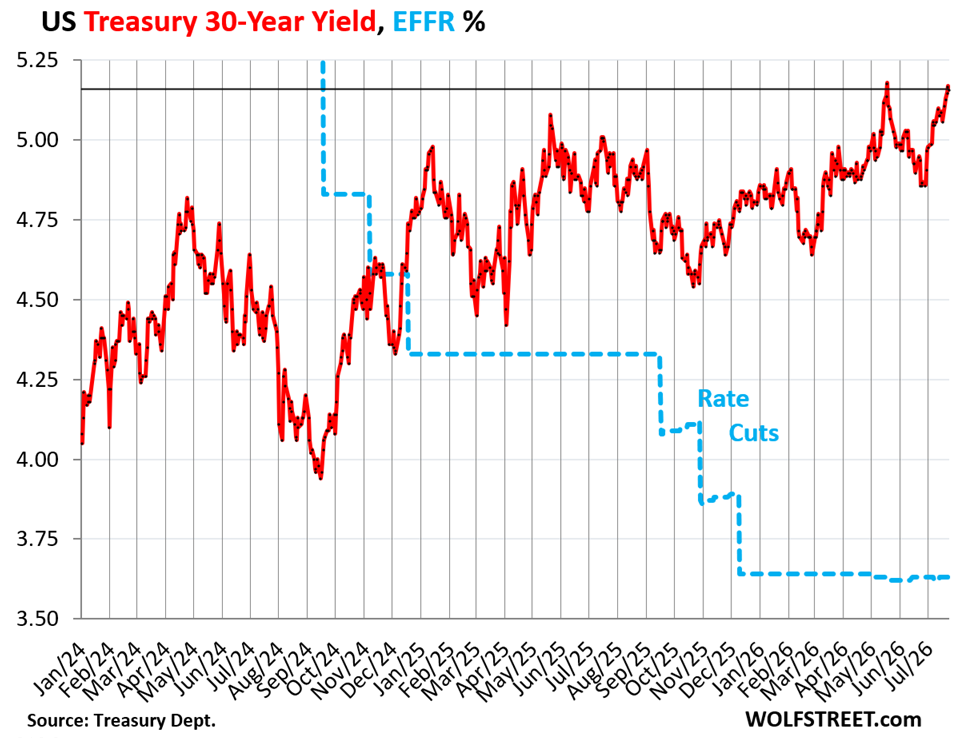
Long-term Treasury yields are jumping as the bond market grows edgier about inflation and the massive new debt. During the last debt scare, the 10-year yield hit 5%, and the floodgates of demand opened. Now the debt is $6 trillion bigger; no guarantee 5% will open the floodgates again.
The surge in long-term Treasury yields signals a recalibration within fixed income markets, suggesting investors are demanding higher compensation for holding government debt amidst renewed inflation concerns and the substantial increase in new debt issuance. This shift could ripple through broader equity markets, potentially pressuring growth stocks that are more sensitive to rising interest rates and increasing the cost of capital for businesses. Market sentiment may turn more cautious as the prospect of sustained higher borrowing costs becomes more entrenched, impacting corporate earnings forecasts and valuations. This development directly connects to macro themes of fiscal sustainability and the Federal Reserve's ongoing battle against inflation, potentially leading to a more risk-averse environment. Consequently, investor confidence could wane, leading to a reduced appetite for speculative assets and a preference for more defensive allocations as the economic outlook becomes less certain.
The surge in long-term Treasury yields signals a recalibration within fixed income markets, suggesting investors are demanding higher compensation for holding government debt amidst renewed inflation concerns and the substantial increase in new debt issuance. This shift could ripple through broader equity markets, potentially pressuring growth stocks that are more sensitive to rising interest rates and increasing the cost of capital for businesses. Market sentiment may turn more cautious as the prospect of sustained higher borrowing costs becomes more entrenched, impacting corporate earnings forecasts and valuations. This development directly connects to macro themes of fiscal sustainability and the Federal Reserve's ongoing battle against inflation, potentially leading to a more risk-averse environment. Consequently, investor confidence could wane, leading to a reduced appetite for speculative assets and a preference for more defensive allocations as the economic outlook becomes less certain.

 or scan with phone →