Choose language / Korean

EN / 한
US Federal Reserve expected to hold rates steady as inflation swirls
Bull/Bear Index 45.6/100
macro ▼ Bear Impact 75/100 Google News Macroecon... 1h ago Read original ↗

US Federal Reserve expected to hold rates steady as inflation swirls

US Federal Reserve expected to hold rates steady as inflation swirls

How this call is verified

The ▼ Bearish call is auto-verified against the actual S&P 500 price in ~23h.

Bar: S&P 500 ±0.3% within 24h · every verdict lands on the public ledger

AI comment — why bearish

Anticipation of the Federal Reserve maintaining its current interest rate stance amidst persistent inflationary pressures suggests a period of cautious navigation for equity markets. Such a holding pattern could dampen immediate enthusiasm, potentially leading to a more subdued market sentiment as investors weigh the Fed's commitment to price stability against growth concerns. This scenario aligns with broader macroeconomic themes of sticky inflation and the ongoing debate surrounding the timing and efficacy of monetary policy adjustments. Consequently, investor confidence may experience a recalibration, fostering a more risk-averse environment where capital allocation prioritizes defensive sectors and established value over speculative growth. The extended period of elevated rates, even if unchanged, can continue to influence borrowing costs and corporate profitability, thus shaping future investment decisions.

Key takeaway

"US Federal Reserve expected to hold rates steady as inflation swirls" — BullBear's AI rates this story as a bearish (negative) signal for markets, with a market-impact score of 75 out of 100. US Federal Reserve expected to hold rates steady as inflation swirls Anticipation of the Federal Reserve maintaining its current interest rate stance amidst persistent inflationary pressures suggests a period of cautious navigation for equity markets. Such a holding pattern could dampen immediate enthusiasm, potentially leading to a more subdued market sentiment as investors weigh the Fed's commitment to price stability against growth concerns. This scenario aligns with broader macroeconomic themes of sticky inflation and the ongoing debate surrounding the timing and efficacy of monetary policy adjustments. Consequently, investor confidence may experience a recalibration, fostering a more risk-averse environment where capital allocation prioritizes defensive sectors and established value over speculative growth. The extended period of elevated rates, even if unchanged, can continue to influence borrowing costs and corporate profitability, thus shaping future investment decisions. That score reflects how strongly the story is likely to move Bitcoin, US equities, the dollar, and gold, and near-duplicate coverage of the same event is clustered so only the representative article is scored. Reported by Google News Macroeconomics (EN) on July 26, 2026. The call is verified against the actual 24-hour price move on BullBear's public conviction ledger.

1 more report on this event

Google News Macroeconomics (EN) US Federal Reserve expected to hold rates steady as inflation swirls 33m ago

Catch the next bear flag

Telegram alerts when our AI scores a story 80+/100 impact (~1-3 per day, no spam). Verified 30d hit rate 53.2%.

Join Telegram channel

📡 Tomorrow's Watch

Related news

▼ Bear
85/100
Google News Macroeconomics (EN) 53m ago

G7 central banks prepare for rate decisions amid rising oil prices – Bloomberg

Rewritten: G7 banks ready rate moves as oil costs climb.

G7 central banks are preparing for interest rate decisions as oil prices continue to rise, potentially increasing inflation and influencing monetary policy.

The anticipation surrounding G7 central bank rate decisions, juxtaposed with escalating oil prices, introduces a complex dynamic for global markets. Higher energy costs can fuel inflation concerns, potentially pressuring monetary policymakers to maintain or even increase interest rates to curb price pressures. This scenario risks dampening economic growth prospects, creating a headwind for corporate earnings and broader equity valuations. Market sentiment may tilt towards caution as investors weigh the dual threat of inflation and slower economic expansion. This development intersects with ongoing macro themes of supply chain resilience and geopolitical instability, highlighting the interconnectedness of energy markets and global economic policy. Consequently, investor confidence could waver, leading to a reduced risk appetite as the potential for higher borrowing costs and diminished growth overshadows the outlook.

The anticipation surrounding G7 central bank rate decisions, juxtaposed with escalating oil prices, introduces a complex dynamic for global markets. Higher energy costs can fuel inflation concerns, potentially pressuring monetary policymakers to maintain or even increase interest rates to curb price pressures. This scenario risks dampening economic growth prospects, creating a headwind for corporate earnings and broader equity valuations. Market sentiment may tilt towards caution as investors weigh the dual threat of inflation and slower economic expansion. This development intersects with ongoing macro themes of supply chain resilience and geopolitical instability, highlighting the interconnectedness of energy markets and global economic policy. Consequently, investor confidence could waver, leading to a reduced risk appetite as the potential for higher borrowing costs and diminished growth overshadows the outlook.

#macro
▼ Bear
80/100
Google News Macroeconomics (EN) 59m ago

Fed Chair Kevin Warsh Testified Before Congress on July 14 and Said Inflation Remains Too High. A Key Inflation Report Came Out the Same Day. Markets Dropped the Odds of a July Rate Hike to 16%, Down From 42% the Day Before. The Odds Have Since

Rewritten: Fed Chair: Inflation high; markets cut rate hike odds.

Fed Chair Kevin Warsh testified that inflation remains too high, causing market odds of a July rate hike to drop significantly.

The dual developments of Fed Chair Kevin Warsh's testimony highlighting persistent inflation concerns and a key inflation report released on the same day have significantly recalibrated market expectations. The sharp decline in the probability of a July rate hike signals a shift in how investors are pricing in future monetary policy, suggesting a growing belief that the Federal Reserve may be nearing the end of its tightening cycle, or at least pausing to assess economic data. This recalibration impacts broader market sentiment, potentially fostering a more cautious outlook as traders digest the implications of sustained inflationary pressures alongside a less aggressive Fed stance. The connection to macro themes of economic resilience versus recessionary pressures becomes more pronounced, influencing investor confidence and risk appetite. A perceived pause in rate hikes could, in the short term, offer some relief to risk assets, but the underlying inflation narrative continues to cast a shadow, demanding careful observation of subsequent economic indicators and Fed communications.

The dual developments of Fed Chair Kevin Warsh's testimony highlighting persistent inflation concerns and a key inflation report released on the same day have significantly recalibrated market expectations. The sharp decline in the probability of a July rate hike signals a shift in how investors are pricing in future monetary policy, suggesting a growing belief that the Federal Reserve may be nearing the end of its tightening cycle, or at least pausing to assess economic data. This recalibration impacts broader market sentiment, potentially fostering a more cautious outlook as traders digest the implications of sustained inflationary pressures alongside a less aggressive Fed stance. The connection to macro themes of economic resilience versus recessionary pressures becomes more pronounced, influencing investor confidence and risk appetite. A perceived pause in rate hikes could, in the short term, offer some relief to risk assets, but the underlying inflation narrative continues to cast a shadow, demanding careful observation of subsequent economic indicators and Fed communications.

#macro
▼ Bear
85/100
Wolf Street 3h ago

Long-Term Treasury Yields Jump as Bloodied Bond Market Gets Edgier about Inflation & the Massive New Debt

Rewritten: Treasury yields rise on inflation fears and new debt.

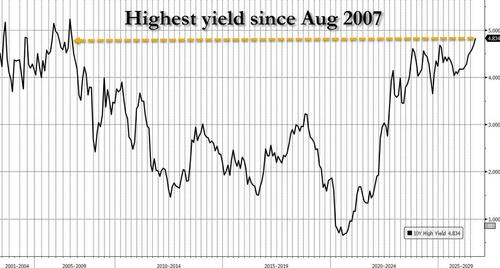
Long-term Treasury yields are jumping as the bond market grows edgier about inflation and the massive new debt. During the last debt scare, the 10-year yield hit 5%, and the floodgates of demand opened. Now the debt is $6 trillion bigger; no guarantee 5% will open the floodgates again.

The surge in long-term Treasury yields signals a recalibration within fixed income markets, suggesting investors are demanding higher compensation for holding government debt amidst renewed inflation concerns and the substantial increase in new debt issuance. This shift could ripple through broader equity markets, potentially pressuring growth stocks that are more sensitive to rising interest rates and increasing the cost of capital for businesses. Market sentiment may turn more cautious as the prospect of sustained higher borrowing costs becomes more entrenched, impacting corporate earnings forecasts and valuations. This development directly connects to macro themes of fiscal sustainability and the Federal Reserve's ongoing battle against inflation, potentially leading to a more risk-averse environment. Consequently, investor confidence could wane, leading to a reduced appetite for speculative assets and a preference for more defensive allocations as the economic outlook becomes less certain.

The surge in long-term Treasury yields signals a recalibration within fixed income markets, suggesting investors are demanding higher compensation for holding government debt amidst renewed inflation concerns and the substantial increase in new debt issuance. This shift could ripple through broader equity markets, potentially pressuring growth stocks that are more sensitive to rising interest rates and increasing the cost of capital for businesses. Market sentiment may turn more cautious as the prospect of sustained higher borrowing costs becomes more entrenched, impacting corporate earnings forecasts and valuations. This development directly connects to macro themes of fiscal sustainability and the Federal Reserve's ongoing battle against inflation, potentially leading to a more risk-averse environment. Consequently, investor confidence could wane, leading to a reduced appetite for speculative assets and a preference for more defensive allocations as the economic outlook becomes less certain.

#macro
▼ Bear
85/100
ZeroHedge 9h ago

US Pauses Iran Bombing Campaign As Saudi-Houthi Red Sea Front Erupts

Rewritten: US Halts Iran Strikes Amid Red Sea Conflict Escalation

US Pauses Iran Bombing Campaign As Saudi-Houthi Red Sea Front Erupts

The current geopolitical climate, characterized by heightened activity in the Red Sea region and a temporary cessation of certain military operations involving Iran, introduces a notable degree of uncertainty into the global economic outlook. This situation raises concerns regarding the stability of critical trade routes, with potential implications for the flow of commodities, particularly energy supplies. Such disruptions could contribute to upward pressure on prices, potentially impacting inflation rates and presenting challenges for monetary policy objectives aimed at fostering stable economic expansion. As a result, market participants may adopt a more cautious approach, potentially leading to a decrease in demand for assets perceived as higher risk and a general recalibration of investment strategies in response to evolving global dynamics. The interconnected nature of these geopolitical events highlights the potential for localized instability to generate broader financial market fluctuations.

The current geopolitical climate, characterized by heightened activity in the Red Sea region and a temporary cessation of certain military operations involving Iran, introduces a notable degree of uncertainty into the global economic outlook. This situation raises concerns regarding the stability of critical trade routes, with potential implications for the flow of commodities, particularly energy supplies. Such disruptions could contribute to upward pressure on prices, potentially impacting inflation rates and presenting challenges for monetary policy objectives aimed at fostering stable economic expansion. As a result, market participants may adopt a more cautious approach, potentially leading to a decrease in demand for assets perceived as higher risk and a general recalibration of investment strategies in response to evolving global dynamics. The interconnected nature of these geopolitical events highlights the potential for localized instability to generate broader financial market fluctuations.

#macro