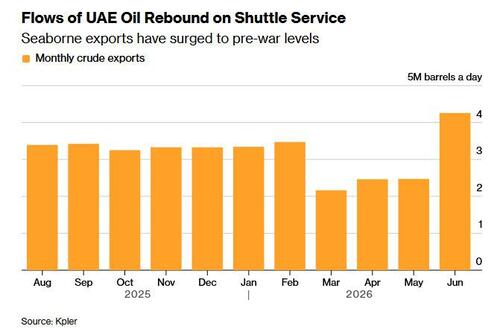
How The UAE Has Kept Its Oil Flowing Through Hormuz
How this call is verified
▲ Bullish call was checked against the actual S&P 500 price 24h later: — Flat (+0.00%, below the ±0.3% bar).
Our record on calls like this
1,300 scored calls here, 46.4% right (±9.0pp). Always answering up would have scored 62.3% — so we are -15.9pp.
Bar: S&P 500 ±0.3% within 24h · every verdict lands on the public ledger
AI comment — why bullish
The UAE's sustained oil exports via the Strait of Hormuz, despite geopolitical tensions, offers a stabilizing influence on global energy markets. This resilience suggests a degree of predictability in supply, which can temper volatility and reduce immediate price shocks, thereby fostering a more measured market sentiment. Such developments connect to broader macro themes of energy security and the strategic importance of key chokepoints, reinforcing the narrative of established players navigating complex geopolitical landscapes. For investors, this consistent flow can bolster confidence in the stability of a critical commodity, potentially encouraging a more measured risk appetite as concerns over immediate supply disruptions are mitigated. The ability to maintain these flows underscores the strategic importance of the region and its capacity to influence global economic stability.
Key takeaway
"How The UAE Has Kept Its Oil Flowing Through Hormuz" — BullBear's AI rates this story as a bullish (positive) signal for markets, with a market-impact score of 75 out of 100. The UAE's sustained oil exports via the Strait of Hormuz, despite geopolitical tensions, offers a stabilizing influence on global energy markets. This resilience suggests a degree of predictability in supply, which can temper volatility and reduce immediate price shocks, thereby fostering a more measured market sentiment. Such developments connect to broader macro themes of energy security and the strategic importance of key chokepoints, reinforcing the narrative of established players navigating complex geopolitical landscapes. For investors, this consistent flow can bolster confidence in the stability of a critical commodity, potentially encouraging a more measured risk appetite as concerns over immediate supply disruptions are mitigated. The ability to maintain these flows underscores the strategic importance of the region and its capacity to influence global economic stability. That score reflects how strongly the story is likely to move Bitcoin, US equities, the dollar, and gold, and near-duplicate coverage of the same event is clustered so only the representative article is scored. Reported by ZeroHedge on August 08, 2026. The call is verified against the actual 24-hour price move on BullBear's public conviction ledger.
Catch the next bull catalyst
Telegram alerts when our AI scores a story 80+/100 impact (~1-3 per day, no spam). Verified 30d hit rate 42.5%.