Choose language / Korean

EN / 한
The Federal Reserve's Initial August Inflation Forecast Has Arrived, and It Contains a Glaring Red Flag That Can Come Back to Bite Wall Street - fool.com
Bull/Bear Index 47.4/100
macro ▼ Bear Impact 80/100 Google News Macroecon... 20d ago Read original ↗

The Federal Reserve's Initial August Inflation Forecast Has Arrived, and It Contains a Glaring Red Flag That Can Come Back to Bite Wall Street - fool.com

How this call is verified

▼ Bearish call was checked against the actual S&P 500 price 24h later: — Flat (-0.16%, below the ±0.3% bar).

Our record on calls like this

1,294 scored calls here, 46.5% right (±9.1pp). Always answering up would have scored 62.1% — so we are -15.6pp.

Bar: S&P 500 ±0.3% within 24h · every verdict lands on the public ledger

AI comment — why bearish

The Federal Reserve's preliminary August inflation projections indicate a potential for sustained or renewed upward price pressures. This outlook, described as a "glaring red flag," carries considerable weight for financial markets. The implications are directly tied to the central bank's efforts to manage price stability and fulfill its economic objectives. Should these inflation forecasts materialize, it could foster a more cautious market environment. Investors may exhibit diminished confidence and a reduced tolerance for risk, anticipating a protracted period of elevated inflation. This shift in sentiment could manifest as heightened market volatility and a more conservative stance on equity allocations among market participants.

Key takeaway

"The Federal Reserve's Initial August Inflation Forecast Has Arrived, and It Contains a Glaring Red Flag That Can Come Back to Bite Wall Street - fool.com" — BullBear's AI rates this story as a bearish (negative) signal for markets, with a market-impact score of 80 out of 100. The Federal Reserve's preliminary August inflation projections indicate a potential for sustained or renewed upward price pressures. This outlook, described as a "glaring red flag," carries considerable weight for financial markets. The implications are directly tied to the central bank's efforts to manage price stability and fulfill its economic objectives. Should these inflation forecasts materialize, it could foster a more cautious market environment. Investors may exhibit diminished confidence and a reduced tolerance for risk, anticipating a protracted period of elevated inflation. This shift in sentiment could manifest as heightened market volatility and a more conservative stance on equity allocations among market participants. That score reflects how strongly the story is likely to move Bitcoin, US equities, the dollar, and gold, and near-duplicate coverage of the same event is clustered so only the representative article is scored. Reported by Google News Macroeconomics (EN) on August 06, 2026. The call is verified against the actual 24-hour price move on BullBear's public conviction ledger.

Catch the next bear flag

Telegram alerts when our AI scores a story 80+/100 impact (~1-3 per day, no spam). Verified 30d hit rate 42.8%.

Join Telegram channel

📡 Tomorrow's Watch

Related news

▼ Bear
65/100
ZeroHedge 3h ago

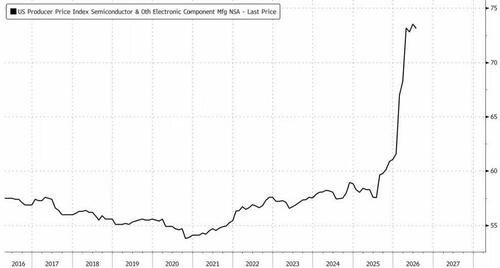
"This Is Crazy" - FTC Chair Responds To Soaring Chip Costs, Floats Possible Antitrust Action

Rewritten: FTC Chair calls chip price surge crazy, hints at antitrust action

Rising semiconductor prices are prompting heightened regulatory scrutiny, and the FTC chair’s warning signals that antitrust enforcement could intensify. If authorities pursue action against dominant chip makers, supply‑chain constraints may tighten, pushing component costs higher and compressing margins for downstream technology firms. Investors are likely to interpret the prospect of additional oversight as a drag on earnings growth, prompting a shift toward defensive assets and a reduction in risk‑on positioning. The episode dovetails with broader macro concerns over inflationary pressures and the resilience of global manufacturing networks, reinforcing doubts about the pace of the post‑pandemic recovery. Consequently, confidence in the sector may wane, prompting a cautious stance among capital allocators who could demand higher risk premiums or rotate out of high‑exposure equities. Such dynamics may also reverberate through related sectors, amplifying volatility across the broader market.

Rising semiconductor prices are prompting heightened regulatory scrutiny, and the FTC chair’s warning signals that antitrust enforcement could intensify. If authorities pursue action against dominant chip makers, supply‑chain constraints may tighten, pushing component costs higher and compressing margins for downstream technology firms. Investors are likely to interpret the prospect of additional oversight as a drag on earnings growth, prompting a shift toward defensive assets and a reduction in risk‑on positioning. The episode dovetails with broader macro concerns over inflationary pressures and the resilience of global manufacturing networks, reinforcing doubts about the pace of the post‑pandemic recovery. Consequently, confidence in the sector may wane, prompting a cautious stance among capital allocators who could demand higher risk premiums or rotate out of high‑exposure equities. Such dynamics may also reverberate through related sectors, amplifying volatility across the broader market.

#macro
▼ Bear
75/100
ZeroHedge 6h ago

Zelensky Continues To Oppose Wartime Democracy Amidst Escalated Election Demands

Rewritten: Zelensky Resists Wartime Democracy as Election Pressures Rise

Zelensky's persistent opposition to wartime democracy, coupled with heightened calls for elections, amplifies political uncertainty in a region already fraught with conflict, prompting investors to reassess exposure to both emerging‑market equities and commodity‑linked assets. The perceived risk of a destabilising power shift in Ukraine can dampen risk‑on sentiment, nudging capital toward safe‑haven currencies and Treasury yields as market participants brace for potential supply‑chain disruptions and broader geopolitical spillovers. This development dovetails with macro themes of heightened geopolitical risk premiums and the ongoing debate over the resilience of democratic institutions under duress, reinforcing concerns about policy continuity and fiscal stability in conflict zones. Consequently, investor confidence may erode, curbing appetite for high‑beta positions and prompting a modest rotation toward lower‑volatility sectors, while the broader market remains vigilant for any further escalation that could trigger sharper risk‑off dynamics.

Zelensky's persistent opposition to wartime democracy, coupled with heightened calls for elections, amplifies political uncertainty in a region already fraught with conflict, prompting investors to reassess exposure to both emerging‑market equities and commodity‑linked assets. The perceived risk of a destabilising power shift in Ukraine can dampen risk‑on sentiment, nudging capital toward safe‑haven currencies and Treasury yields as market participants brace for potential supply‑chain disruptions and broader geopolitical spillovers. This development dovetails with macro themes of heightened geopolitical risk premiums and the ongoing debate over the resilience of democratic institutions under duress, reinforcing concerns about policy continuity and fiscal stability in conflict zones. Consequently, investor confidence may erode, curbing appetite for high‑beta positions and prompting a modest rotation toward lower‑volatility sectors, while the broader market remains vigilant for any further escalation that could trigger sharper risk‑off dynamics.

#macro
▼ Bear
75/100
ZeroHedge 13h ago

Pitch For Defense Treaty And Moving US Military To Israel Is Insane

Rewritten: Proposal to move US troops to Israel and forge defense pact reckless

Escalating rhetoric around a formal defense treaty and the deployment of U.S. forces to Israel heightens geopolitical risk, prompting a shift toward defensive positioning across equity markets. Investors are likely to downgrade exposure to regions perceived as vulnerable to conflict, while favoring assets such as gold, Treasury bonds, and defense sector equities that benefit from heightened security spending. The development dovetails with broader macro concerns about supply‑chain disruptions, energy price volatility, and the potential for broader regional instability to dampen global growth forecasts. Consequently, market sentiment may tilt toward caution, eroding confidence in risk‑on strategies and compressing valuations in growth‑oriented stocks. The heightened uncertainty can suppress risk appetite, encouraging a flight to quality and potentially widening credit spreads as investors reassess the probability of geopolitical shocks spilling over into broader economic activity.

Escalating rhetoric around a formal defense treaty and the deployment of U.S. forces to Israel heightens geopolitical risk, prompting a shift toward defensive positioning across equity markets. Investors are likely to downgrade exposure to regions perceived as vulnerable to conflict, while favoring assets such as gold, Treasury bonds, and defense sector equities that benefit from heightened security spending. The development dovetails with broader macro concerns about supply‑chain disruptions, energy price volatility, and the potential for broader regional instability to dampen global growth forecasts. Consequently, market sentiment may tilt toward caution, eroding confidence in risk‑on strategies and compressing valuations in growth‑oriented stocks. The heightened uncertainty can suppress risk appetite, encouraging a flight to quality and potentially widening credit spreads as investors reassess the probability of geopolitical shocks spilling over into broader economic activity.

#macro