Choose language / Korean

EN / 한
Meta Settles With US States For $16.7 Billion Over Social Media Harms To Children
Bull/Bear Index 47.3/100
macro ▼ Bear Impact 45/100 ZeroHedge 4h ago Read original ↗

Meta Settles With US States For $16.7 Billion Over Social Media Harms To Children

Key takeaway

"Meta Settles With US States For $16.7 Billion Over Social Media Harms To Children" — BullBear's AI rates this story as a bearish (negative) signal for markets, with a market-impact score of 45 out of 100. Reported by ZeroHedge on August 26, 2026. The call is verified against the actual 24-hour price move on BullBear's public conviction ledger.

Catch the next bear flag

Telegram alerts when our AI scores a story 80+/100 impact (~1-3 per day, no spam). Verified 30d hit rate 42.7%.

Join Telegram channel

📡 Tomorrow's Watch

Related news

▼ Bear
85/100
MishTalk 1h ago

PCE Inflation on the Hot Side, Lack of Progress in Pictures

Rewritten: PCE Inflation Remains Elevated, Charts Show No Improvement

Elevated PCE inflation signals that price pressures remain entrenched, prompting traders to reassess the timing of monetary tightening. Equity valuations, already pressured by higher‑for‑longer rates, may face additional downward pressure as investors price in a slower path to policy normalization. Fixed‑income markets could see yields inch higher, reflecting expectations of tighter liquidity, while the dollar may gain strength on the back of a more hawkish stance. The data reinforces macro narratives of persistent core inflation despite recent easing in other indicators, underscoring the challenge of achieving a soft landing. Consequently, investor confidence is likely to wane, with risk‑averse capital shifting toward defensive sectors and cash. Overall risk appetite may contract, heightening volatility across asset classes as market participants await clearer signals from the Fed.

Elevated PCE inflation signals that price pressures remain entrenched, prompting traders to reassess the timing of monetary tightening. Equity valuations, already pressured by higher‑for‑longer rates, may face additional downward pressure as investors price in a slower path to policy normalization. Fixed‑income markets could see yields inch higher, reflecting expectations of tighter liquidity, while the dollar may gain strength on the back of a more hawkish stance. The data reinforces macro narratives of persistent core inflation despite recent easing in other indicators, underscoring the challenge of achieving a soft landing. Consequently, investor confidence is likely to wane, with risk‑averse capital shifting toward defensive sectors and cash. Overall risk appetite may contract, heightening volatility across asset classes as market participants await clearer signals from the Fed.

#macro
▼ Bear
65/100
ZeroHedge 3h ago

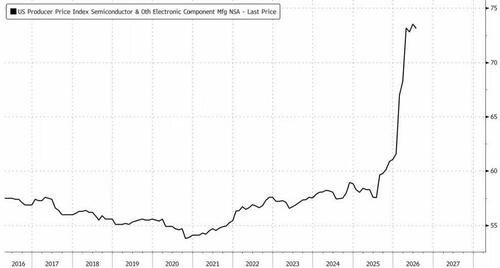
"This Is Crazy" - FTC Chair Responds To Soaring Chip Costs, Floats Possible Antitrust Action

Rewritten: FTC Chair calls chip price surge crazy, hints at antitrust action

Rising semiconductor prices are prompting heightened regulatory scrutiny, and the FTC chair’s warning signals that antitrust enforcement could intensify. If authorities pursue action against dominant chip makers, supply‑chain constraints may tighten, pushing component costs higher and compressing margins for downstream technology firms. Investors are likely to interpret the prospect of additional oversight as a drag on earnings growth, prompting a shift toward defensive assets and a reduction in risk‑on positioning. The episode dovetails with broader macro concerns over inflationary pressures and the resilience of global manufacturing networks, reinforcing doubts about the pace of the post‑pandemic recovery. Consequently, confidence in the sector may wane, prompting a cautious stance among capital allocators who could demand higher risk premiums or rotate out of high‑exposure equities. Such dynamics may also reverberate through related sectors, amplifying volatility across the broader market.

Rising semiconductor prices are prompting heightened regulatory scrutiny, and the FTC chair’s warning signals that antitrust enforcement could intensify. If authorities pursue action against dominant chip makers, supply‑chain constraints may tighten, pushing component costs higher and compressing margins for downstream technology firms. Investors are likely to interpret the prospect of additional oversight as a drag on earnings growth, prompting a shift toward defensive assets and a reduction in risk‑on positioning. The episode dovetails with broader macro concerns over inflationary pressures and the resilience of global manufacturing networks, reinforcing doubts about the pace of the post‑pandemic recovery. Consequently, confidence in the sector may wane, prompting a cautious stance among capital allocators who could demand higher risk premiums or rotate out of high‑exposure equities. Such dynamics may also reverberate through related sectors, amplifying volatility across the broader market.

#macro
▼ Bear
75/100
ZeroHedge 7h ago

Zelensky Continues To Oppose Wartime Democracy Amidst Escalated Election Demands

Rewritten: Zelensky Resists Wartime Democracy as Election Pressures Rise

Zelensky's persistent opposition to wartime democracy, coupled with heightened calls for elections, amplifies political uncertainty in a region already fraught with conflict, prompting investors to reassess exposure to both emerging‑market equities and commodity‑linked assets. The perceived risk of a destabilising power shift in Ukraine can dampen risk‑on sentiment, nudging capital toward safe‑haven currencies and Treasury yields as market participants brace for potential supply‑chain disruptions and broader geopolitical spillovers. This development dovetails with macro themes of heightened geopolitical risk premiums and the ongoing debate over the resilience of democratic institutions under duress, reinforcing concerns about policy continuity and fiscal stability in conflict zones. Consequently, investor confidence may erode, curbing appetite for high‑beta positions and prompting a modest rotation toward lower‑volatility sectors, while the broader market remains vigilant for any further escalation that could trigger sharper risk‑off dynamics.

Zelensky's persistent opposition to wartime democracy, coupled with heightened calls for elections, amplifies political uncertainty in a region already fraught with conflict, prompting investors to reassess exposure to both emerging‑market equities and commodity‑linked assets. The perceived risk of a destabilising power shift in Ukraine can dampen risk‑on sentiment, nudging capital toward safe‑haven currencies and Treasury yields as market participants brace for potential supply‑chain disruptions and broader geopolitical spillovers. This development dovetails with macro themes of heightened geopolitical risk premiums and the ongoing debate over the resilience of democratic institutions under duress, reinforcing concerns about policy continuity and fiscal stability in conflict zones. Consequently, investor confidence may erode, curbing appetite for high‑beta positions and prompting a modest rotation toward lower‑volatility sectors, while the broader market remains vigilant for any further escalation that could trigger sharper risk‑off dynamics.

#macro
▼ Bear
75/100
ZeroHedge 14h ago

Pitch For Defense Treaty And Moving US Military To Israel Is Insane

Rewritten: Proposal to move US troops to Israel and forge defense pact reckless

Escalating rhetoric around a formal defense treaty and the deployment of U.S. forces to Israel heightens geopolitical risk, prompting a shift toward defensive positioning across equity markets. Investors are likely to downgrade exposure to regions perceived as vulnerable to conflict, while favoring assets such as gold, Treasury bonds, and defense sector equities that benefit from heightened security spending. The development dovetails with broader macro concerns about supply‑chain disruptions, energy price volatility, and the potential for broader regional instability to dampen global growth forecasts. Consequently, market sentiment may tilt toward caution, eroding confidence in risk‑on strategies and compressing valuations in growth‑oriented stocks. The heightened uncertainty can suppress risk appetite, encouraging a flight to quality and potentially widening credit spreads as investors reassess the probability of geopolitical shocks spilling over into broader economic activity.

Escalating rhetoric around a formal defense treaty and the deployment of U.S. forces to Israel heightens geopolitical risk, prompting a shift toward defensive positioning across equity markets. Investors are likely to downgrade exposure to regions perceived as vulnerable to conflict, while favoring assets such as gold, Treasury bonds, and defense sector equities that benefit from heightened security spending. The development dovetails with broader macro concerns about supply‑chain disruptions, energy price volatility, and the potential for broader regional instability to dampen global growth forecasts. Consequently, market sentiment may tilt toward caution, eroding confidence in risk‑on strategies and compressing valuations in growth‑oriented stocks. The heightened uncertainty can suppress risk appetite, encouraging a flight to quality and potentially widening credit spreads as investors reassess the probability of geopolitical shocks spilling over into broader economic activity.

#macro
▼ Bear
75/100
ZeroHedge 16h ago

DEA Seized 47 Million Fentanyl-Laced Counterfeit Pills In 2025

Rewritten: DEA Seized 47 Million Counterfeit Pills in 2025

A massive seizure of 47 million fentanyl‑laced counterfeit pills underscores escalating law‑enforcement pressure on the illicit opioid supply chain, which could reverberate through legitimate pharmaceutical and biotech firms tied to pain‑management pipelines. Heightened scrutiny may prompt tighter regulatory reviews, slowing approvals for new opioid formulations and amplifying litigation risk for companies with existing products. The development dovetails with broader macro trends of intensified government action on public‑health crises and a tightening of cash‑flow‑sensitive sectors amid lingering inflationary pressures. Consequently, market sentiment may tilt more cautious, prompting investors to discount exposure to firms perceived as vulnerable to policy clampdowns. Risk appetite could shift toward defensive assets, eroding confidence in growth‑oriented health‑care stocks and reinforcing a bearish tilt in related equities until clarity on enforcement trajectories emerges.

A massive seizure of 47 million fentanyl‑laced counterfeit pills underscores escalating law‑enforcement pressure on the illicit opioid supply chain, which could reverberate through legitimate pharmaceutical and biotech firms tied to pain‑management pipelines. Heightened scrutiny may prompt tighter regulatory reviews, slowing approvals for new opioid formulations and amplifying litigation risk for companies with existing products. The development dovetails with broader macro trends of intensified government action on public‑health crises and a tightening of cash‑flow‑sensitive sectors amid lingering inflationary pressures. Consequently, market sentiment may tilt more cautious, prompting investors to discount exposure to firms perceived as vulnerable to policy clampdowns. Risk appetite could shift toward defensive assets, eroding confidence in growth‑oriented health‑care stocks and reinforcing a bearish tilt in related equities until clarity on enforcement trajectories emerges.

#macro