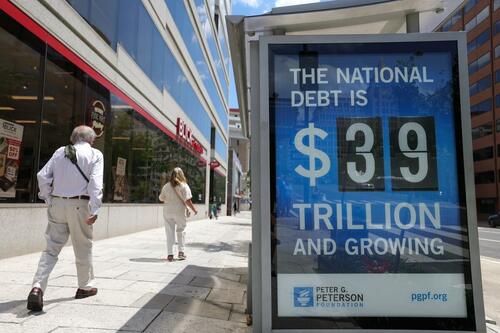
The Real Threat To Young Americans' Jobs Isn't AI. It's The National Debt...
How this call is verified
▼ Bearish call was checked against the actual S&P 500 price 24h later: — Flat (+0.00%, below the ±0.3% bar).
Our record on calls like this
1,284 scored calls here, 46.8% right (±9.2pp). Always answering up would have scored 61.8% — so we are -15.0pp.
Bar: S&P 500 ±0.3% within 24h · every verdict lands on the public ledger
AI comment — why bearish
A burgeoning national debt presents a significant, often overlooked, headwind for the future job market, particularly for younger generations. This fiscal burden could translate into higher taxes, reduced government spending on crucial infrastructure and education, and potentially slower economic growth, all of which dampen long-term employment prospects. The broader market implications include a potential drag on corporate earnings and a less dynamic entrepreneurial landscape. Market sentiment may shift towards caution as investors grapple with the long-term implications of fiscal irresponsibility, potentially increasing demand for safer assets and reducing appetite for riskier growth stocks. This connects directly to macro themes of fiscal sustainability and intergenerational equity. Investor confidence could erode if the debt trajectory appears unsustainable, leading to a more risk-averse stance and a preference for capital preservation over aggressive expansion.
Key takeaway
"The Real Threat To Young Americans' Jobs Isn't AI. It's The National Debt..." — BullBear's AI rates this story as a bearish (negative) signal for markets, with a market-impact score of 80 out of 100. A burgeoning national debt presents a significant, often overlooked, headwind for the future job market, particularly for younger generations. This fiscal burden could translate into higher taxes, reduced government spending on crucial infrastructure and education, and potentially slower economic growth, all of which dampen long-term employment prospects. The broader market implications include a potential drag on corporate earnings and a less dynamic entrepreneurial landscape. Market sentiment may shift towards caution as investors grapple with the long-term implications of fiscal irresponsibility, potentially increasing demand for safer assets and reducing appetite for riskier growth stocks. This connects directly to macro themes of fiscal sustainability and intergenerational equity. Investor confidence could erode if the debt trajectory appears unsustainable, leading to a more risk-averse stance and a preference for capital preservation over aggressive expansion. That score reflects how strongly the story is likely to move Bitcoin, US equities, the dollar, and gold, and near-duplicate coverage of the same event is clustered so only the representative article is scored. Reported by ZeroHedge on August 01, 2026. The call is verified against the actual 24-hour price move on BullBear's public conviction ledger.
Catch the next bear flag
Telegram alerts when our AI scores a story 80+/100 impact (~1-3 per day, no spam). Verified 30d hit rate 43.6%.