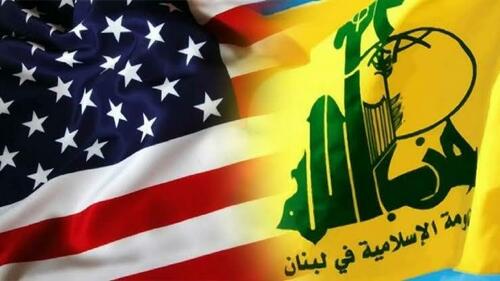
US Treasury Classifies Hezbollah As Arm Of The IRGC, Not A 'Stand-Alone' Group
How this call is verified
The ▼ Bearish call is auto-verified against the actual S&P 500 price in ~23h.
Our record on calls like this
1,282 scored calls here, 46.9% right (±9.2pp). Always answering up would have scored 61.8% — so we are -14.9pp.
Bar: S&P 500 ±0.3% within 24h · every verdict lands on the public ledger
AI comment — why bearish
The designation of Hezbollah as an extension of Iran’s Revolutionary Guard Corps heightens geopolitical risk across the Middle East, prompting investors to reassess exposure to regions vulnerable to heightened tensions. Elevated uncertainty can pressure oil prices upward, benefitting energy producers while squeezing consumer‑sensitive sectors and amplifying volatility in emerging‑market equities. In the broader macro context, the move dovetails with ongoing U.S. efforts to tighten sanctions on Iran, reinforcing a narrative of escalating diplomatic friction that may dampen global growth forecasts. Consequently, market sentiment may tilt toward caution, bolstering demand for safe‑haven assets such as U.S. Treasuries and gold, and potentially widening credit spreads. Investor confidence could erode in risk‑on assets, curbing appetite for high‑yield bonds and cyclical stocks, while defense and security firms might see modest inflows as risk‑off positioning intensifies.
Key takeaway
"US Treasury Classifies Hezbollah As Arm Of The IRGC, Not A 'Stand-Alone' Group" — BullBear's AI rates this story as a bearish (negative) signal for markets, with a market-impact score of 78 out of 100. The designation of Hezbollah as an extension of Iran’s Revolutionary Guard Corps heightens geopolitical risk across the Middle East, prompting investors to reassess exposure to regions vulnerable to heightened tensions. Elevated uncertainty can pressure oil prices upward, benefitting energy producers while squeezing consumer‑sensitive sectors and amplifying volatility in emerging‑market equities. In the broader macro context, the move dovetails with ongoing U.S. efforts to tighten sanctions on Iran, reinforcing a narrative of escalating diplomatic friction that may dampen global growth forecasts. Consequently, market sentiment may tilt toward caution, bolstering demand for safe‑haven assets such as U.S. Treasuries and gold, and potentially widening credit spreads. Investor confidence could erode in risk‑on assets, curbing appetite for high‑yield bonds and cyclical stocks, while defense and security firms might see modest inflows as risk‑off positioning intensifies. That score reflects how strongly the story is likely to move Bitcoin, US equities, the dollar, and gold, and near-duplicate coverage of the same event is clustered so only the representative article is scored. Reported by ZeroHedge on August 22, 2026. The call is verified against the actual 24-hour price move on BullBear's public conviction ledger.
Catch the next bear flag
Telegram alerts when our AI scores a story 80+/100 impact (~1-3 per day, no spam). Verified 30d hit rate 43.6%.