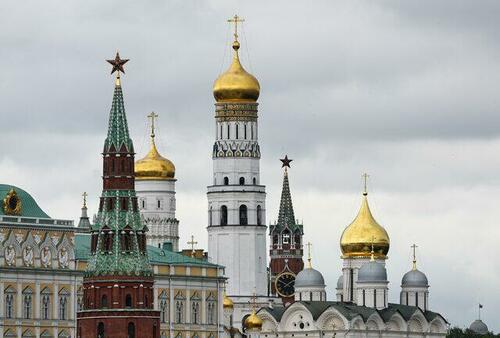
Mali Govt Says Al-Qaeda Extremists In Region Receive Training, Drones From Ukraine
How this call is verified
▼ Bearish
call was checked against the actual S&P 500 price 24h later:
— Flat (-0.02%, below the ±0.3% bar).
Our record on calls like this
1,284 scored calls here,
46.8% right (±9.2pp).
Always answering up would have scored 61.8% —
so we are
-15.0pp.
Bar: S&P 500 ±0.3% within 24h · every verdict lands on the public ledger
Key takeaway
"Mali Govt Says Al-Qaeda Extremists In Region Receive Training, Drones From Ukraine" — BullBear's AI rates this story as a bearish (negative) signal for markets, with a market-impact score of 75 out of 100. Reported by ZeroHedge on July 10, 2026. The call is verified against the actual 24-hour price move on BullBear's public conviction ledger.
Catch the next bear flag
Telegram alerts when our AI scores a story 80+/100 impact (~1-3 per day, no spam).
Verified 30d hit rate 43.4%.
The abrupt halt in trade discussions with Canada injects considerable unpredictability into the North American economic landscape, which may negatively impact overall stock market performance. Businesses heavily dependent on the seamless flow of goods and services across the border could encounter renewed operational challenges. This situation is likely to cultivate a more hesitant market atmosphere, prompting investors to re-evaluate the dependability of existing trade agreements and the possibility of escalating protectionist policies. Such an outcome resonates with prevailing macroeconomic trends characterized by geopolitical fragmentation and escalating trade disputes, factors that have already contributed to market fluctuations. As a result, investor assurance might diminish, potentially leading to a decreased willingness to take on risk and a possible inclination towards more conservative investment strategies as the perceived dangers associated with disruptions in international commerce grow.
The abrupt halt in trade discussions with Canada injects considerable unpredictability into the North American economic landscape, which may negatively impact overall stock market performance. Businesses heavily dependent on the seamless flow of goods and services across the border could encounter renewed operational challenges. This situation is likely to cultivate a more hesitant market atmosphere, prompting investors to re-evaluate the dependability of existing trade agreements and the possibility of escalating protectionist policies. Such an outcome resonates with prevailing macroeconomic trends characterized by geopolitical fragmentation and escalating trade disputes, factors that have already contributed to market fluctuations. As a result, investor assurance might diminish, potentially leading to a decreased willingness to take on risk and a possible inclination towards more conservative investment strategies as the perceived dangers associated with disruptions in international commerce grow.
Rewritten: Russia says ready for new US proposals to end Ukraine war
The expressed willingness by Moscow to consider alternative proposals from Washington on the Ukraine conflict introduces a variable that could moderate the current geopolitical risk premium embedded in global markets. A de‑escalation scenario would likely attenuate pressure on energy and commodity price volatility, which have been amplified by sanctions and supply‑chain disruptions, thereby easing inflationary pressures in economies that remain sensitive to external shocks. Reduced tension may also improve the predictability of trade routes and logistics, supporting a gradual stabilization of input costs for manufacturers. In addition, a softer geopolitical environment could encourage a modest reallocation of capital toward higher‑yielding assets as investors reassess risk‑adjusted returns, while sovereign and corporate financing conditions might benefit from lower uncertainty premiums. Overall, the prospect of diplomatic progress, even if preliminary, adds a counterbalancing force to the broader macroeconomic outlook.
The expressed willingness by Moscow to consider alternative proposals from Washington on the Ukraine conflict introduces a variable that could moderate the current geopolitical risk premium embedded in global markets. A de‑escalation scenario would likely attenuate pressure on energy and commodity price volatility, which have been amplified by sanctions and supply‑chain disruptions, thereby easing inflationary pressures in economies that remain sensitive to external shocks. Reduced tension may also improve the predictability of trade routes and logistics, supporting a gradual stabilization of input costs for manufacturers. In addition, a softer geopolitical environment could encourage a modest reallocation of capital toward higher‑yielding assets as investors reassess risk‑adjusted returns, while sovereign and corporate financing conditions might benefit from lower uncertainty premiums. Overall, the prospect of diplomatic progress, even if preliminary, adds a counterbalancing force to the broader macroeconomic outlook.
Rewritten: US Treasury links Hezbollah to Iran's IRGC, not independent.
The designation of Hezbollah as an extension of Iran’s Revolutionary Guard Corps heightens geopolitical risk across the Middle East, prompting investors to reassess exposure to regions vulnerable to heightened tensions. Elevated uncertainty can pressure oil prices upward, benefitting energy producers while squeezing consumer‑sensitive sectors and amplifying volatility in emerging‑market equities. In the broader macro context, the move dovetails with ongoing U.S. efforts to tighten sanctions on Iran, reinforcing a narrative of escalating diplomatic friction that may dampen global growth forecasts. Consequently, market sentiment may tilt toward caution, bolstering demand for safe‑haven assets such as U.S. Treasuries and gold, and potentially widening credit spreads. Investor confidence could erode in risk‑on assets, curbing appetite for high‑yield bonds and cyclical stocks, while defense and security firms might see modest inflows as risk‑off positioning intensifies.
The designation of Hezbollah as an extension of Iran’s Revolutionary Guard Corps heightens geopolitical risk across the Middle East, prompting investors to reassess exposure to regions vulnerable to heightened tensions. Elevated uncertainty can pressure oil prices upward, benefitting energy producers while squeezing consumer‑sensitive sectors and amplifying volatility in emerging‑market equities. In the broader macro context, the move dovetails with ongoing U.S. efforts to tighten sanctions on Iran, reinforcing a narrative of escalating diplomatic friction that may dampen global growth forecasts. Consequently, market sentiment may tilt toward caution, bolstering demand for safe‑haven assets such as U.S. Treasuries and gold, and potentially widening credit spreads. Investor confidence could erode in risk‑on assets, curbing appetite for high‑yield bonds and cyclical stocks, while defense and security firms might see modest inflows as risk‑off positioning intensifies.