HD Hyundai to Directly Benefit from Shipbuilding and AI Infrastructure Boom…Enters an 'Unprecedented Super Cycle' with ₩71 Trillion in Sales
HD Hyundai is reportedly entering a record-breaking super cycle with ₩71 trillion in sales, benefiting from the shipbuilding and AI infrastructure sectors.
Key takeaway
"HD Hyundai to Directly Benefit from Shipbuilding and AI Infrastructure Boom…Enters an 'Unprecedented Super Cycle' with ₩71 Trillion in Sales" — BullBear's AI rates this story as a mixed, direction-neutral signal, with a market-impact score of 20 out of 100. HD Hyundai is reportedly entering a record-breaking super cycle with ₩71 trillion in sales, benefiting from the shipbuilding and AI infrastructure sectors. Reported by Google News Economy on February 13, 2026. The call is verified against the actual 24-hour price move on BullBear's public conviction ledger.
Get the next high-impact catalyst
Telegram alerts when our AI scores a story 80+/100 impact (~1-3 per day, no spam).
Verified 30d hit rate 53.2%.
Rewritten: Treasury yields rise on inflation fears and new debt.
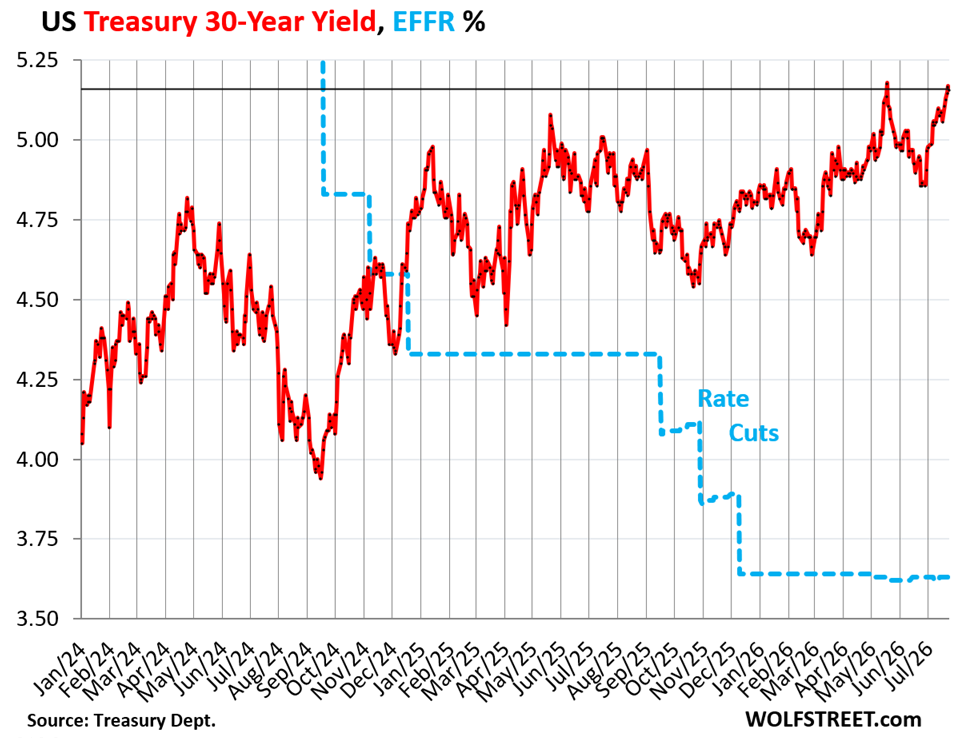
Long-term Treasury yields are jumping as the bond market grows edgier about inflation and the massive new debt. During the last debt scare, the 10-year yield hit 5%, and the floodgates of demand opened. Now the debt is $6 trillion bigger; no guarantee 5% will open the floodgates again.
The surge in long-term Treasury yields signals a recalibration within fixed income markets, suggesting investors are demanding higher compensation for holding government debt amidst renewed inflation concerns and the substantial increase in new debt issuance. This shift could ripple through broader equity markets, potentially pressuring growth stocks that are more sensitive to rising interest rates and increasing the cost of capital for businesses. Market sentiment may turn more cautious as the prospect of sustained higher borrowing costs becomes more entrenched, impacting corporate earnings forecasts and valuations. This development directly connects to macro themes of fiscal sustainability and the Federal Reserve's ongoing battle against inflation, potentially leading to a more risk-averse environment. Consequently, investor confidence could wane, leading to a reduced appetite for speculative assets and a preference for more defensive allocations as the economic outlook becomes less certain.
The surge in long-term Treasury yields signals a recalibration within fixed income markets, suggesting investors are demanding higher compensation for holding government debt amidst renewed inflation concerns and the substantial increase in new debt issuance. This shift could ripple through broader equity markets, potentially pressuring growth stocks that are more sensitive to rising interest rates and increasing the cost of capital for businesses. Market sentiment may turn more cautious as the prospect of sustained higher borrowing costs becomes more entrenched, impacting corporate earnings forecasts and valuations. This development directly connects to macro themes of fiscal sustainability and the Federal Reserve's ongoing battle against inflation, potentially leading to a more risk-averse environment. Consequently, investor confidence could wane, leading to a reduced appetite for speculative assets and a preference for more defensive allocations as the economic outlook becomes less certain.
Rewritten: US Halts Iran Strikes Amid Red Sea Conflict Escalation
US Pauses Iran Bombing Campaign As Saudi-Houthi Red Sea Front Erupts
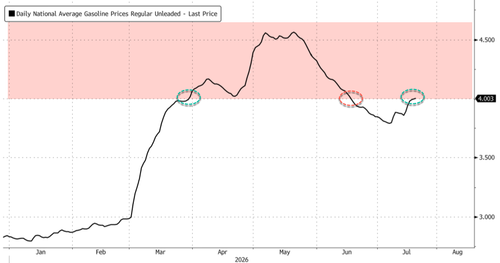
The current geopolitical climate, characterized by heightened activity in the Red Sea region and a temporary cessation of certain military operations involving Iran, introduces a notable degree of uncertainty into the global economic outlook. This situation raises concerns regarding the stability of critical trade routes, with potential implications for the flow of commodities, particularly energy supplies. Such disruptions could contribute to upward pressure on prices, potentially impacting inflation rates and presenting challenges for monetary policy objectives aimed at fostering stable economic expansion. As a result, market participants may adopt a more cautious approach, potentially leading to a decrease in demand for assets perceived as higher risk and a general recalibration of investment strategies in response to evolving global dynamics. The interconnected nature of these geopolitical events highlights the potential for localized instability to generate broader financial market fluctuations.
The current geopolitical climate, characterized by heightened activity in the Red Sea region and a temporary cessation of certain military operations involving Iran, introduces a notable degree of uncertainty into the global economic outlook. This situation raises concerns regarding the stability of critical trade routes, with potential implications for the flow of commodities, particularly energy supplies. Such disruptions could contribute to upward pressure on prices, potentially impacting inflation rates and presenting challenges for monetary policy objectives aimed at fostering stable economic expansion. As a result, market participants may adopt a more cautious approach, potentially leading to a decrease in demand for assets perceived as higher risk and a general recalibration of investment strategies in response to evolving global dynamics. The interconnected nature of these geopolitical events highlights the potential for localized instability to generate broader financial market fluctuations.
Rewritten: Iran conflict, trade duties add new threats to strong US economy.
The possibility of war with Iran and the imposition of new tariffs are introducing new risks to the currently resilient U.S. economy.
The U.S. economy's current robustness faces potential headwinds from escalating geopolitical instability, particularly concerning the conflict involving Iran. This, combined with persistent trade disagreements and the implementation of tariffs, introduces a significant degree of unpredictability. Such developments are poised to negatively influence market sentiment, prompting a shift in investor behavior towards assets perceived as safer and potentially leading to increased fluctuations in stock and raw material prices. The convergence of these global events exacerbates existing trends such as the fragmentation of global trade networks and upward price pressures, compelling a re-evaluation of future economic expansion. As a result, investor confidence might diminish, fostering a more risk-averse stance due to the heightened possibility of disruptions to supply chains and increased operational expenses for businesses.
The U.S. economy's current robustness faces potential headwinds from escalating geopolitical instability, particularly concerning the conflict involving Iran. This, combined with persistent trade disagreements and the implementation of tariffs, introduces a significant degree of unpredictability. Such developments are poised to negatively influence market sentiment, prompting a shift in investor behavior towards assets perceived as safer and potentially leading to increased fluctuations in stock and raw material prices. The convergence of these global events exacerbates existing trends such as the fragmentation of global trade networks and upward price pressures, compelling a re-evaluation of future economic expansion. As a result, investor confidence might diminish, fostering a more risk-averse stance due to the heightened possibility of disruptions to supply chains and increased operational expenses for businesses.
Rewritten: Hedge fund manager sees chance for inflation plus 3% returns.
A hedge-fund manager claims there is a 'generational buying opportunity' that guarantees returns of inflation plus 3% per year.
The projection of a "generational buying opportunity" that aims to deliver returns exceeding inflation by 3% annually implies a strong conviction in the market's capacity for sustained growth and value creation. This perspective from a prominent financial manager could influence investor sentiment, suggesting a belief in underlying economic strength and the potential for assets to appreciate significantly over the long term. Such an outlook aligns with strategies focused on identifying undervalued assets with strong growth prospects, particularly in an environment where inflation is a consideration. If this sentiment gains traction, it could lead to a reallocation of capital towards assets deemed capable of generating substantial real returns, potentially driving demand for equities and other growth-oriented investments as market participants seek to benefit from this perceived favorable investment window.
The projection of a "generational buying opportunity" that aims to deliver returns exceeding inflation by 3% annually implies a strong conviction in the market's capacity for sustained growth and value creation. This perspective from a prominent financial manager could influence investor sentiment, suggesting a belief in underlying economic strength and the potential for assets to appreciate significantly over the long term. Such an outlook aligns with strategies focused on identifying undervalued assets with strong growth prospects, particularly in an environment where inflation is a consideration. If this sentiment gains traction, it could lead to a reallocation of capital towards assets deemed capable of generating substantial real returns, potentially driving demand for equities and other growth-oriented investments as market participants seek to benefit from this perceived favorable investment window.
Rewritten: US Sanctions UK Leader for Alleged Hamas Ties
The United States has sanctioned a senior UK-based Egyptian Muslim Brotherhood (MB) official alongside six other individuals and entities that it said provided material support to terrorist group Hamas.
The recent US sanctions targeting a UK-based senior Muslim Brotherhood figure, due to alleged ties with Hamas, introduce a new element of geopolitical uncertainty into the global economic landscape. This development can foster increased caution among investors, potentially leading to a more subdued market sentiment. The situation highlights ongoing trends of geopolitical fragmentation and the increasing use of financial measures as foreign policy tools, which can collectively diminish investor confidence. As a result, a reduction in risk-taking behavior may occur, potentially contributing to greater market fluctuations and a shift towards more secure investments as market participants reassess their exposure to perceived high-risk areas. The integrated nature of financial systems suggests that such sanctions, even if geographically specific, can precipitate wider, though often short-lived, market recalibrations.
The recent US sanctions targeting a UK-based senior Muslim Brotherhood figure, due to alleged ties with Hamas, introduce a new element of geopolitical uncertainty into the global economic landscape. This development can foster increased caution among investors, potentially leading to a more subdued market sentiment. The situation highlights ongoing trends of geopolitical fragmentation and the increasing use of financial measures as foreign policy tools, which can collectively diminish investor confidence. As a result, a reduction in risk-taking behavior may occur, potentially contributing to greater market fluctuations and a shift towards more secure investments as market participants reassess their exposure to perceived high-risk areas. The integrated nature of financial systems suggests that such sanctions, even if geographically specific, can precipitate wider, though often short-lived, market recalibrations.
#macro
Get the next 80+ impact catalyst
Push notifications when our AI flags a high-impact bull/bear story. ~1–3 per day.