[AI Global Focus] US Economy 'Stagflation Lite' Behind the AI Rally - Nate
The article discusses the possibility of 'stagflation lite' in the US economy behind the AI rally.
Key takeaway
"[AI Global Focus] US Economy 'Stagflation Lite' Behind the AI Rally - Nate" — BullBear's AI rates this story as a bearish (negative) signal for markets, with a market-impact score of 65 out of 100. The article discusses the possibility of 'stagflation lite' in the US economy behind the AI rally. Reported by Google News Inflation on February 11, 2026. The call is verified against the actual 24-hour price move on BullBear's public conviction ledger.
Catch the next bear flag
Telegram alerts when our AI scores a story 80+/100 impact (~1-3 per day, no spam).
Verified 30d hit rate 48.1%.
The Philadelphia Federal Reserve Bank emphasizes a data-dependent and cautious approach to monetary policy, stating they will keep rates high until confident that inflation is returning to target. However, maintaining an 'open mind' without specifying a clear timeline for rate cuts introduces uncertainty into the market.
This article from the Council on Foreign Relations argues that the Fed's published inflation forecasts are meaningless or worse, raising questions about the effectiveness of monetary policy.
The analysis raises questions about the efficacy of official inflation projections, suggesting a potential divergence from actual economic outcomes. This discrepancy, if perceived by market participants, could foster an environment of heightened uncertainty, potentially leading to increased price fluctuations. Such a situation might challenge the expectation of a smooth disinflationary process, thereby amplifying concerns about the persistence of inflationary pressures and their downstream effects on asset values. Consequently, a reduction in investor willingness to take on risk could manifest, possibly prompting a rebalancing of portfolios towards less volatile assets. This scenario underscores the ongoing challenge of managing a complex inflationary landscape and places a spotlight on the perceived reliability of central bank communications.
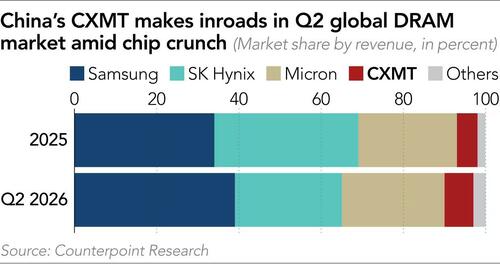
Major PC manufacturers like HP, Asus, and Acer have begun using memory chips from China's CXMT amidst a severe memory shortage. This move diversifies supply chains but could increase competition for established memory chip giants like Samsung, SK Hynix, and Micron.
Gold prices are increasing due to falling oil prices, while upcoming US jobs data and the Federal Reserve's interest rate outlook are key market focuses.
Rewritten: Economist: Fed's rate silence risks market turmoil, U.S. economy.
Moody’s economist warns Fed silence on interest rates could rattle markets and put U.S. economy at risk moneywise.com
The absence of clear guidance from the Federal Reserve concerning its future interest rate decisions presents a notable source of market apprehension. This lack of explicit communication can foster an environment of heightened uncertainty, compelling investors to navigate a landscape where the direction of monetary policy remains undefined. Such ambiguity may exacerbate existing anxieties surrounding persistent inflationary pressures and the ongoing process of economic normalization. This can, in turn, contribute to increased market volatility as participants attempt to price in potential policy shifts. A sustained period of Federal Reserve reticence could lead to a reassessment of risk premiums, potentially influencing asset valuations across various market segments as investors adjust their outlooks for economic expansion and the cost of capital.
The US is considering establishing a price floor for polysilicon and imposing tariffs to counter China's dominance in the solar and semiconductor industries, according to Reuters.
#macro
Get the next 80+ impact catalyst
Push notifications when our AI flags a high-impact bull/bear story. ~1–3 per day.