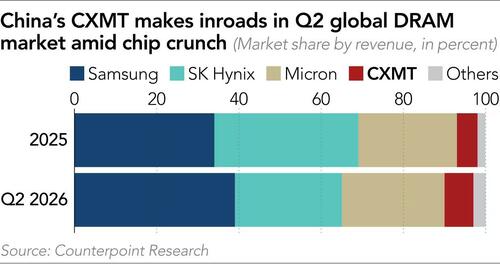
World's Largest PC Makers Start Using Memory Chips From China's CXMT
How this call is verified
▼ Bearish call was checked against the actual S&P 500 price 24h later: — Flat (-0.16%, below the ±0.3% bar).
Our record on calls like this
1,286 scored calls here, 46.7% right (±9.1pp). Always answering up would have scored 61.9% — so we are -15.2pp.
Bar: S&P 500 ±0.3% within 24h · every verdict lands on the public ledger
AI comment — why bearish
The adoption of memory chips from China's CXMT by leading personal computer manufacturers indicates a significant evolution in global technology supply chains. This integration suggests a potential increase in market competition and downward pressure on pricing for memory components, which could affect the financial performance of incumbent suppliers. The development may also contribute to a more cautious investor sentiment, driven by concerns regarding geopolitical tensions and the resilience of established supply networks. This trend reflects broader global discussions around technological self-sufficiency and the growing influence of Chinese semiconductor manufacturers. As a result, market participants may adjust their outlook on companies heavily dependent on current memory chip providers, potentially leading to a more measured approach to risk as the competitive environment and its impact on revenue and market positioning are evaluated.
Key takeaway
"World's Largest PC Makers Start Using Memory Chips From China's CXMT" — BullBear's AI rates this story as a bearish (negative) signal for markets, with a market-impact score of 75 out of 100. The adoption of memory chips from China's CXMT by leading personal computer manufacturers indicates a significant evolution in global technology supply chains. This integration suggests a potential increase in market competition and downward pressure on pricing for memory components, which could affect the financial performance of incumbent suppliers. The development may also contribute to a more cautious investor sentiment, driven by concerns regarding geopolitical tensions and the resilience of established supply networks. This trend reflects broader global discussions around technological self-sufficiency and the growing influence of Chinese semiconductor manufacturers. As a result, market participants may adjust their outlook on companies heavily dependent on current memory chip providers, potentially leading to a more measured approach to risk as the competitive environment and its impact on revenue and market positioning are evaluated. That score reflects how strongly the story is likely to move Bitcoin, US equities, the dollar, and gold, and near-duplicate coverage of the same event is clustered so only the representative article is scored. Reported by ZeroHedge on August 04, 2026. The call is verified against the actual 24-hour price move on BullBear's public conviction ledger.
Catch the next bear flag
Telegram alerts when our AI scores a story 80+/100 impact (~1-3 per day, no spam). Verified 30d hit rate 42.4%.