"어피닛, 320억 투자유치 마무리...IPO 힘 받는다 - 매일경제" — BullBear's AI rates this story as a mixed, direction-neutral signal, with a market-impact score of 45 out of 100. Reported by Google News Economy on February 10, 2026. The call is verified against the actual 24-hour price move on BullBear's public conviction ledger.
Get the next high-impact catalyst
Telegram alerts when our AI scores a story 80+/100 impact (~1-3 per day, no spam).
Verified 30d hit rate 44.5%.
US Navy's New Air-To-Air Missile AIM-424 Malice: Countering China's Growing Airpower
By Rick Fisher, senior fellow at the International Assessment and Strategy Center.
With its revealed range in “excess of 250 nautical miles” (287 miles), the U.S. Navy’s new long-range air-to-air missile (AAM) constitutes a major upgrade in the ability of the United States to arrest China’s quest for superior air power in Asia.
On May 7, 2025, Chinese air combat technology gave Pakistan a historic, beyond-visual-range (BVR) victory, when, during a record aerial engagement between 72 Indian Air Force and 42 Pakistan Air Force combat jets—that did not enter the other’s territory—Pakistan claimed to have shot down five Indian combat aircraft at ranges approaching a record 125 miles, including three French-made 4.5-generation Dassault Rafale fighters.
Pakistan’s victory was enabled by its acquisition of 20 Chengdu Aircraft Corporation 4.5-generation J-10CE fighters, equipped with an estimated 105- to 125-mile-range active electronically scanned array (AESA) radar, and armed with 125-plus-mile-range Luoyang PL-15E (‘E’ for export model) long-range AAMs.
When long-range AAM engagements exceed the range of the fighter’s radar, “off-board cuing,” or guidance, is necessary, such as from Pakistan’s Chinese-made Shaanxi KJ-500 airborne warning and control system (AWACS) with an estimated 300-mile-range AESA radar, but these reportedly were undergoing modifications and were not in the battle.
But Chinese-source rumors at the time credited China with helping Pakistan fight this air battle by providing satellite and perhaps electronic intelligence that helped enable maximum-ra
Iran Says Basij Force Commander Killed In Mystery Insurgent 'Terror Attack'
American and Israeli officials have continued to speculate about fomenting some kind of internal rebellion or large-scale street uprising inside Iran, in hopes of toppling the leadership of the Islamic Republic. Bombs have largely fallen silent, for now.
But the longer the Iran war drags on, amid sporadic tit-for-tat action between US and Iranian forces as they clash over who controls the Strait of Hormuz, the more unlikely the kind of groundswell of protests like what was seen last January will be.
The Trump administration is betting that long-term severe economic 'D-Day' sanctions will eventually break Iranian society, but there's also the reality that a wartime and de facto martial law situation now makes large public anti-government demonstrations all the more difficult. It is also the case then when a country is under attack, there is a 'rally around the flag effect' - making it further easier for authorities to stamp out dissent before it spreads. And without doubt, Iran leaders have genuine support across various sectors of the Iranian populace, as they face down the United States.
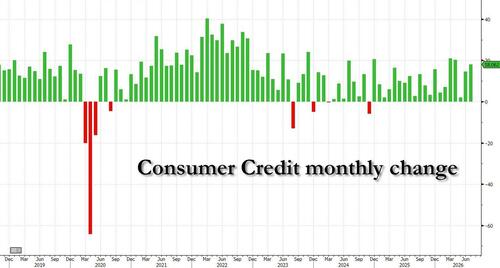
Rising consumer credit levels, highlighted by a surge in credit‑card balances to an unprecedented peak, signal mounting household financial strain that could dampen discretionary spending and weigh on corporate earnings across retail and services sectors. The data reinforces concerns about a slowing economy, feeding a more cautious market mood and prompting investors to reassess valuations that rely on robust consumer demand. Within the broader macro context, the trend dovetails with higher interest rates and lingering inflation pressures, which together amplify debt‑service costs and may accelerate a shift toward tighter credit conditions. Consequently, confidence among equity investors may erode, prompting a tilt toward defensive assets and lower‑beta positions as risk appetite contracts. The confluence of these factors suggests a potential recalibration of market expectations, with heightened volatility likely as participants digest the implications of sustained debt growth.
Rising consumer credit levels, highlighted by a surge in credit‑card balances to an unprecedented peak, signal mounting household financial strain that could dampen discretionary spending and weigh on corporate earnings across retail and services sectors. The data reinforces concerns about a slowing economy, feeding a more cautious market mood and prompting investors to reassess valuations that rely on robust consumer demand. Within the broader macro context, the trend dovetails with higher interest rates and lingering inflation pressures, which together amplify debt‑service costs and may accelerate a shift toward tighter credit conditions. Consequently, confidence among equity investors may erode, prompting a tilt toward defensive assets and lower‑beta positions as risk appetite contracts. The confluence of these factors suggests a potential recalibration of market expectations, with heightened volatility likely as participants digest the implications of sustained debt growth.

 or scan with phone →