Iran Says Basij Force Commander Killed In Mystery Insurgent 'Terror Attack'
How this call is verified
The ▼ Bearish call is auto-verified against the actual S&P 500 price
in ~21h.
Our record on calls like this
1,123 scored calls here,
46.5% right (±7.7pp).
Always answering up would have scored 60.6% on the same rows.
Paired within the same day and asset, our directional edge is
+1.9 pp ± 4.3
— inside the error bar, i.e. indistinguishable from zero.
Bar: S&P 500 ±0.3% within 24h · every verdict lands on the public ledger
Key takeaway
"Iran Says Basij Force Commander Killed In Mystery Insurgent 'Terror Attack'" — BullBear's AI rates this story as a bearish (negative) signal for markets, with a market-impact score of 68 out of 100. Reported by ZeroHedge on September 09, 2026. The call is verified against the actual 24-hour price move on BullBear's public conviction ledger.
Catch the next bear flag
Telegram alerts when our AI scores a story 80+/100 impact (~1-3 per day, no spam).
Verified 30d hit rate 44.5%.
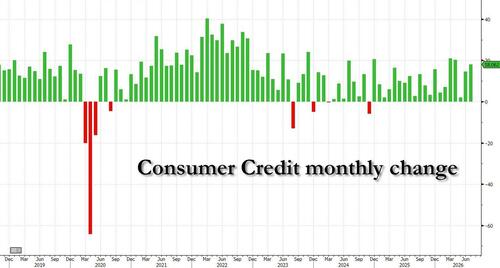
Rising consumer credit levels, highlighted by a surge in credit‑card balances to an unprecedented peak, signal mounting household financial strain that could dampen discretionary spending and weigh on corporate earnings across retail and services sectors. The data reinforces concerns about a slowing economy, feeding a more cautious market mood and prompting investors to reassess valuations that rely on robust consumer demand. Within the broader macro context, the trend dovetails with higher interest rates and lingering inflation pressures, which together amplify debt‑service costs and may accelerate a shift toward tighter credit conditions. Consequently, confidence among equity investors may erode, prompting a tilt toward defensive assets and lower‑beta positions as risk appetite contracts. The confluence of these factors suggests a potential recalibration of market expectations, with heightened volatility likely as participants digest the implications of sustained debt growth.
Rising consumer credit levels, highlighted by a surge in credit‑card balances to an unprecedented peak, signal mounting household financial strain that could dampen discretionary spending and weigh on corporate earnings across retail and services sectors. The data reinforces concerns about a slowing economy, feeding a more cautious market mood and prompting investors to reassess valuations that rely on robust consumer demand. Within the broader macro context, the trend dovetails with higher interest rates and lingering inflation pressures, which together amplify debt‑service costs and may accelerate a shift toward tighter credit conditions. Consequently, confidence among equity investors may erode, prompting a tilt toward defensive assets and lower‑beta positions as risk appetite contracts. The confluence of these factors suggests a potential recalibration of market expectations, with heightened volatility likely as participants digest the implications of sustained debt growth.
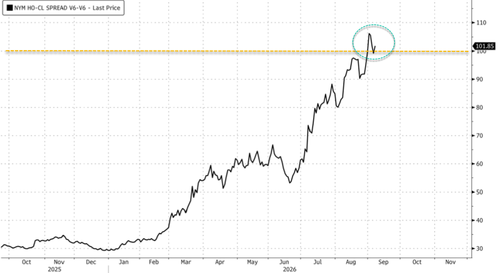
With refineries operating near capacity, the prospect of a global fuel squeeze intensifies pressure on commodity markets, pushing crude and product premiums higher and tightening margins for downstream players. The warning amplifies bearish sentiment across equities, especially in energy‑intensive sectors, as investors brace for cost‑inflationary spillovers that could erode corporate earnings and consumer spending. This development dovetails with broader macro concerns over lingering supply chain constraints, elevated geopolitical risk, and the prospect of higher inflation prompting tighter monetary policy, thereby reinforcing a risk‑off environment. Consequently, investor confidence may wane, prompting a shift toward safer assets and reducing appetite for high‑beta positions, while speculative bets on energy futures could see renewed interest as market participants hedge against potential disruptions. Overall, the narrative of constrained fuel supply adds another layer of uncertainty to an already fragile global growth outlook.
With refineries operating near capacity, the prospect of a global fuel squeeze intensifies pressure on commodity markets, pushing crude and product premiums higher and tightening margins for downstream players. The warning amplifies bearish sentiment across equities, especially in energy‑intensive sectors, as investors brace for cost‑inflationary spillovers that could erode corporate earnings and consumer spending. This development dovetails with broader macro concerns over lingering supply chain constraints, elevated geopolitical risk, and the prospect of higher inflation prompting tighter monetary policy, thereby reinforcing a risk‑off environment. Consequently, investor confidence may wane, prompting a shift toward safer assets and reducing appetite for high‑beta positions, while speculative bets on energy futures could see renewed interest as market participants hedge against potential disruptions. Overall, the narrative of constrained fuel supply adds another layer of uncertainty to an already fragile global growth outlook.
#macro
Get the next 80+ impact catalyst
Push notifications when our AI flags a high-impact bull/bear story. ~1–3 per day.