Choose language / 한국어

EN / 한
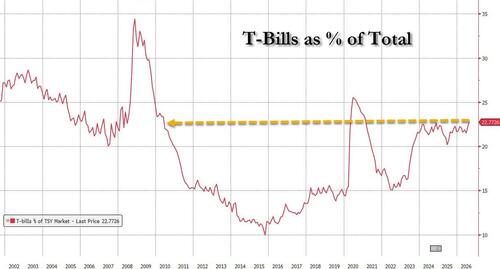
Fed Rate Hikes Will Increase US Interest Costs By $50 Billion
Bull/Bear Index 47.3/100
macro ▼ Bear Impact 88/100 ZeroHedge 6h ago Read original ↗

Fed Rate Hikes Will Increase US Interest Costs By $50 Billion

How this call is verified

The ▼ Bearish call is auto-verified against the actual S&P 500 price in ~18h.

Our record on calls like this

1,149 scored calls here, 46.6% right (±7.6pp). Always answering up would have scored 60.1% on the same rows. Paired within the same day and asset, our directional edge is -0.7 pp ± 6.7 — inside the error bar, i.e. indistinguishable from zero.

Bar: S&P 500 ±0.3% within 24h · every verdict lands on the public ledger

AI comment — why bearish

Rising borrowing costs of $50 billion will reverberate across equity, credit and currency markets, as higher financing expenses compress corporate margins and elevate debt‑service pressures. Investors are likely to reassess valuation models, prompting a shift toward sectors with strong cash flows and lower leverage, while growth‑oriented stocks may face heightened discount rates. The move dovetails with broader macro narratives of tightening monetary policy, persistent inflation concerns and a decelerating global growth outlook, reinforcing expectations of a more restrictive financial environment. Consequently, market sentiment could tilt more cautious, with risk‑averse capital gravitating to safe‑haven assets such as Treasuries and gold. Confidence among investors may wane as the cost of capital rises, dampening appetite for speculative positions and prompting a reallocation toward defensive holdings, potentially curbing liquidity in risk‑on segments.

Key takeaway

"Fed Rate Hikes Will Increase US Interest Costs By $50 Billion" — BullBear's AI rates this story as a bearish (negative) signal for markets, with a market-impact score of 88 out of 100. That score reflects how strongly the story is likely to move Bitcoin, US equities, the dollar, and gold, and near-duplicate coverage of the same event is clustered so only the representative article is scored. Reported by ZeroHedge on September 14, 2026. The call is verified against the actual 24-hour price move on BullBear's public conviction ledger.

Catch the next bear flag

Telegram alerts when our AI scores a story 80+/100 impact (~1-3 per day, no spam). Verified 30d hit rate 42.2%.
Join Telegram channel

📡 Tomorrow's Watch

Related news

▼ Bear
70/100
ZeroHedge 2h ago

Houthis Unleash Major Missile Barrage On Saudi Arabia's Sprawling King Khalid Air Base

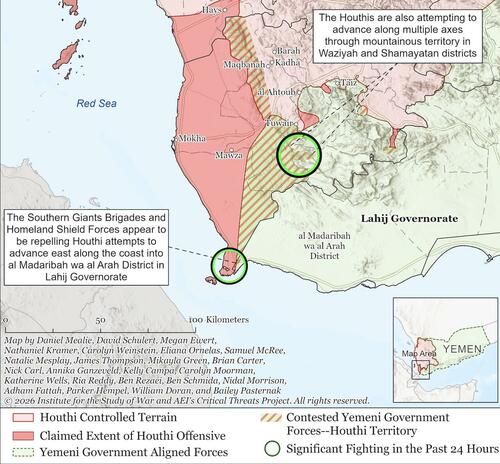
Houthis Unleash Major Missile Barrage On Saudi Arabia's Sprawling King Khalid Air Base Summary Houthis attacked a Saudi air base with missiles and drones, claiming major damage. Houthis seized more Red Sea territory, including Perim Island near the Bab al-Mandab Strait. Shipping risks are rising, with vessels avoiding the Red Sea and taking longer routes around Africa. Iran-Gulf diplomacy was postponed, delaying efforts to address the Strait of Hormuz crisis in what was to be a rare GCC-Iran meeting. Saudi oil exports face ongoing disruption after a pipeline shutdown, pushing oil prices above $100/barrel. <!--//--><![CDATA[// ><!-- <!--//--><![CDATA[// ><!-- <!--//--><![CDATA[// ><!-- <!--//--><![CDATA[// ><!-- { "@context": "https://schema.org", "@type": "WebPage", "name": "Trump invokes war powers in Yemen by September 30?", "description": "Prediction market: Yes 5% · No 95% on Polymarket.", "url": "https://polymarket.com/event/trump-invokes-war-powers-in-yemen-by-september-30", "publisher": { "@type": "Organization", "name": "Polymarket", "url": "https://polymarket.com" } } //--><!]]]]]]]]><![CDATA[><![CDATA[><![CDATA[> //--><!]]]]]]><![CDATA[><![CDATA[> //--><!]]]]><![CDATA[> //--><!]]>

Escalation of hostilities in the Red Sea corridor heightens geopolitical risk for energy markets, prompting traders to reassess exposure to Saudi oil output and regional logistics. The attack on a key air base underscores vulnerability of critical infrastructure, nudging crude futures higher as concerns over supply disruptions mount, while risk‑off assets such as safe‑haven currencies and government bonds gain traction. This development dovetails with broader macro themes of heightened Middle‑East tension feeding into inflationary pressure via higher energy prices, potentially complicating central bank policy paths. Investor confidence may wane as the prospect of prolonged conflict fuels uncertainty, curbing appetite for emerging‑market equities and high‑yield credit, while encouraging a shift toward defensive sectors and liquidity preservation. Overall, the episode reinforces a cautious market stance amid an already fragile risk environment.

Escalation of hostilities in the Red Sea corridor heightens geopolitical risk for energy markets, prompting traders to reassess exposure to Saudi oil output and regional logistics. The attack on a key air base underscores vulnerability of critical infrastructure, nudging crude futures higher as concerns over supply disruptions mount, while risk‑off assets such as safe‑haven currencies and government bonds gain traction. This development dovetails with broader macro themes of heightened Middle‑East tension feeding into inflationary pressure via higher energy prices, potentially complicating central bank policy paths. Investor confidence may wane as the prospect of prolonged conflict fuels uncertainty, curbing appetite for emerging‑market equities and high‑yield credit, while encouraging a shift toward defensive sectors and liquidity preservation. Overall, the episode reinforces a cautious market stance amid an already fragile risk environment.

#macro