Choose language / 한국어

EN / 한
China's Solar Boom Hits A Wall As Industry Losses Mount
Bull/Bear Index 47.3/100
macro ▼ Bear Impact 75/100 ZeroHedge 55m ago Read original ↗

China's Solar Boom Hits A Wall As Industry Losses Mount

How this call is verified

The ▼ Bearish call is auto-verified against the actual S&P 500 price in ~24h.

Our record on calls like this

1,090 scored calls here, 46.1% right (±7.9pp). Always answering up would have scored 61.0% on the same rows. Paired within the same day and asset, our directional edge is +0.3 pp ± 3.9 — inside the error bar, i.e. indistinguishable from zero.

Bar: S&P 500 ±0.3% within 24h · every verdict lands on the public ledger

AI comment — why bearish

China’s slowing solar expansion reverberates across global renewable markets, signaling a potential recalibration of supply dynamics that could tighten pricing and compress margins for manufacturers worldwide. The mounting losses raise doubts about the sector’s near‑term profitability, dampening bullish sentiment that has underpinned recent equity inflows into clean‑energy funds. This development dovetails with broader macro concerns about overcapacity in China’s industrial policy framework and the sustainability of state‑driven stimulus amid tighter fiscal conditions. As investors reassess exposure to Chinese clean‑tech firms, risk appetite may shift toward more diversified or lower‑cost renewable projects outside the country, while capital may flow into alternative energy themes perceived as less vulnerable to policy reversals. Consequently, confidence in the Chinese solar supply chain wanes, prompting a more cautious stance among institutional and retail participants.

Key takeaway

"China's Solar Boom Hits A Wall As Industry Losses Mount" — BullBear's AI rates this story as a bearish (negative) signal for markets, with a market-impact score of 75 out of 100. China’s slowing solar expansion reverberates across global renewable markets, signaling a potential recalibration of supply dynamics that could tighten pricing and compress margins for manufacturers worldwide. The mounting losses raise doubts about the sector’s near‑term profitability, dampening bullish sentiment that has underpinned recent equity inflows into clean‑energy funds. This development dovetails with broader macro concerns about overcapacity in China’s industrial policy framework and the sustainability of state‑driven stimulus amid tighter fiscal conditions. As investors reassess exposure to Chinese clean‑tech firms, risk appetite may shift toward more diversified or lower‑cost renewable projects outside the country, while capital may flow into alternative energy themes perceived as less vulnerable to policy reversals. Consequently, confidence in the Chinese solar supply chain wanes, prompting a more cautious stance among institutional and retail participants. That score reflects how strongly the story is likely to move Bitcoin, US equities, the dollar, and gold, and near-duplicate coverage of the same event is clustered so only the representative article is scored. Reported by ZeroHedge on August 28, 2026. The call is verified against the actual 24-hour price move on BullBear's public conviction ledger.

Catch the next bear flag

Telegram alerts when our AI scores a story 80+/100 impact (~1-3 per day, no spam). Verified 30d hit rate 43.5%.

Join Telegram channel

📡 Tomorrow's Watch

Related news

▼ Bear
90/100
Wolf Street 6h ago

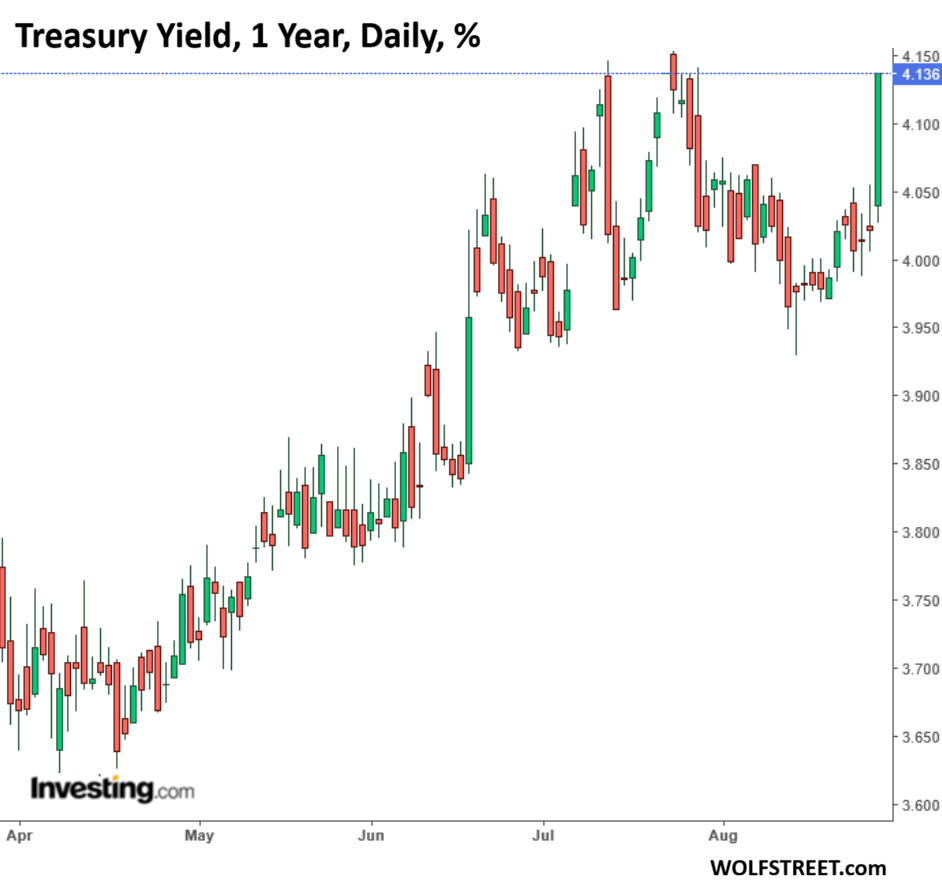
Warsh Speaks, Treasury Yields Jump, 6-Month to 3-Year Treasury Yields Spike

Rewritten: Warsh comments as Treasury yields rise, 6‑month to 3‑year spikes

Warsh’s remarks, coupled with a sharp rise in Treasury yields—particularly the widening gap between six‑month and three‑year rates—signal heightened uncertainty about the near‑term economic outlook. The steepening curve suggests investors anticipate tighter monetary policy and slower growth, pressuring equity valuations and prompting a shift toward defensive assets. As yields climb, financing costs for corporations increase, eroding profit margins and dampening capital‑intensive projects, which in turn curtails risk‑on positioning. The move also dovetails with broader macro concerns such as persistent inflation, a potentially protracted rate‑hiking cycle, and geopolitical tensions that could constrain global trade. Consequently, confidence among risk‑averse investors is likely to wane, reinforcing a preference for cash and high‑quality bonds while limiting appetite for speculative equities and high‑yield credit. The heightened yield volatility may also prompt fund managers to re‑balance portfolios, favoring shorter‑duration holdings to mitigate duration risk and preserve liquidity.

Warsh’s remarks, coupled with a sharp rise in Treasury yields—particularly the widening gap between six‑month and three‑year rates—signal heightened uncertainty about the near‑term economic outlook. The steepening curve suggests investors anticipate tighter monetary policy and slower growth, pressuring equity valuations and prompting a shift toward defensive assets. As yields climb, financing costs for corporations increase, eroding profit margins and dampening capital‑intensive projects, which in turn curtails risk‑on positioning. The move also dovetails with broader macro concerns such as persistent inflation, a potentially protracted rate‑hiking cycle, and geopolitical tensions that could constrain global trade. Consequently, confidence among risk‑averse investors is likely to wane, reinforcing a preference for cash and high‑quality bonds while limiting appetite for speculative equities and high‑yield credit. The heightened yield volatility may also prompt fund managers to re‑balance portfolios, favoring shorter‑duration holdings to mitigate duration risk and preserve liquidity.

#macro
▼ Bear
90/100
MishTalk 6h ago

Expect a Fed Rate Hike. Odds Jump to 60 Percent on Warsh’s Speech

Rewritten: Fed rate hike likely; odds rise to 60% after Warsh speech

Anticipation of a Federal Reserve rate increase, now estimated at roughly sixty percent after Warsh’s remarks, is likely to reverberate across equities, fixed income and currency markets. Higher borrowing costs tend to compress corporate profit margins, prompting a shift toward defensive sectors and heightening volatility in growth‑oriented stocks. The signal dovetails with broader macro narratives of tightening monetary policy amid persistent inflationary pressures, reinforcing expectations of slower economic expansion. Investor confidence may erode as the prospect of tighter financing conditions fuels concerns over earnings resilience, leading risk‑averse participants to favor cash or short‑duration assets. Consequently, risk appetite could contract, prompting a modest reallocation away from higher‑beta positions toward quality and yield‑focused instruments, while market sentiment tilts toward caution pending further guidance from policymakers.

Anticipation of a Federal Reserve rate increase, now estimated at roughly sixty percent after Warsh’s remarks, is likely to reverberate across equities, fixed income and currency markets. Higher borrowing costs tend to compress corporate profit margins, prompting a shift toward defensive sectors and heightening volatility in growth‑oriented stocks. The signal dovetails with broader macro narratives of tightening monetary policy amid persistent inflationary pressures, reinforcing expectations of slower economic expansion. Investor confidence may erode as the prospect of tighter financing conditions fuels concerns over earnings resilience, leading risk‑averse participants to favor cash or short‑duration assets. Consequently, risk appetite could contract, prompting a modest reallocation away from higher‑beta positions toward quality and yield‑focused instruments, while market sentiment tilts toward caution pending further guidance from policymakers.

#macro
▼ Bear
85/100
ZeroHedge 8h ago

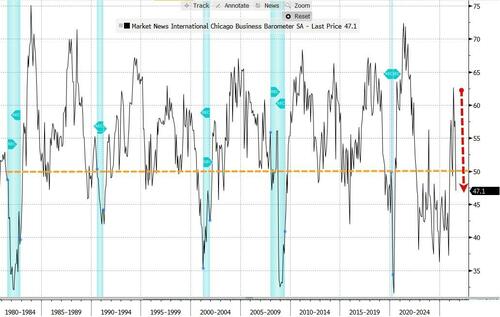
Americans' Confidence Dips In August As Chicago PMI Plunges Into Contraction

Rewritten: U.S. confidence falls in August as Chicago PMI enters contraction

An unexpected slide in the Chicago PMI, slipping into contraction, signals a slowdown in manufacturing activity that could reverberate across equity and credit markets. With the index falling well below the 50‑point growth threshold, investors may reinterpret recent earnings resilience as more fragile, prompting a shift toward defensive sectors and higher‑quality bonds. The dip aligns with broader macro concerns, including lingering supply‑chain bottlenecks, tighter monetary policy, and a modest weakening of the labor market, all of which reinforce expectations of slower GDP growth. Consequently, confidence among U.S. investors appears to be eroding, dampening risk appetite and potentially curbing inflows into growth‑oriented funds. While the contraction is still early in the cycle, the confluence of weaker industrial data and persistent inflation pressures could tighten valuations and heighten volatility in the weeks ahead.

An unexpected slide in the Chicago PMI, slipping into contraction, signals a slowdown in manufacturing activity that could reverberate across equity and credit markets. With the index falling well below the 50‑point growth threshold, investors may reinterpret recent earnings resilience as more fragile, prompting a shift toward defensive sectors and higher‑quality bonds. The dip aligns with broader macro concerns, including lingering supply‑chain bottlenecks, tighter monetary policy, and a modest weakening of the labor market, all of which reinforce expectations of slower GDP growth. Consequently, confidence among U.S. investors appears to be eroding, dampening risk appetite and potentially curbing inflows into growth‑oriented funds. While the contraction is still early in the cycle, the confluence of weaker industrial data and persistent inflation pressures could tighten valuations and heighten volatility in the weeks ahead.

#macro