Choose language / Korean

EN / 한
Bull/Bear Index 46.1/100
macro ▲ Bull Impact 48/100 U.S. Federal Register 13h ago Read original ↗

ICE Clear Credit Gets SEC Approval for CDS On‑Boarding Rule Change, Boosting Market Sentiment

The SEC approved ICE Clear Credit's proposed rule change on CDS onboarding policies and procedures, enhancing clearing clarity and reducing participant uncertainty.

AI comment — why bullish

The SEC’s notice confirms that ICE Clear Credit’s proposed amendments to its credit default swap (CDS) onboarding policies have been approved. By formalizing procedures, the rule change aims to streamline the entry of new CDS contracts into the clearing system, potentially improving operational efficiency. Market participants often view such regulatory clarity as a reduction in execution risk, which can encourage incremental trading activity. Although the filing is procedural, the removal of uncertainty may lift sentiment in the short term, especially among dealers and institutional investors who rely on ICE Clear Credit for clearing services. Traders should monitor subsequent communications from ICE Clear Credit for implementation timelines and any additional guidance that could affect liquidity or margin requirements.

Key takeaway

"ICE Clear Credit Gets SEC Approval for CDS On‑Boarding Rule Change, Boosting Market Sentiment" — BullBear's AI rates this story as a bullish (positive) signal for markets, with a market-impact score of 48 out of 100. The SEC approved ICE Clear Credit's proposed rule change on CDS onboarding policies and procedures, enhancing clearing clarity and reducing participant uncertainty. The SEC’s notice confirms that ICE Clear Credit’s proposed amendments to its credit default swap (CDS) onboarding policies have been approved. By formalizing procedures, the rule change aims to streamline the entry of new CDS contracts into the clearing system, potentially improving operational efficiency. Market participants often view such regulatory clarity as a reduction in execution risk, which can encourage incremental trading activity. Although the filing is procedural, the removal of uncertainty may lift sentiment in the short term, especially among dealers and institutional investors who rely on ICE Clear Credit for clearing services. Traders should monitor subsequent communications from ICE Clear Credit for implementation timelines and any additional guidance that could affect liquidity or margin requirements. That score reflects how strongly the story is likely to move Bitcoin, US equities, the dollar, and gold, and near-duplicate coverage of the same event is clustered so only the representative article is scored. Reported by U.S. Federal Register on August 25, 2026. The call is verified against the actual 24-hour price move on BullBear's public conviction ledger.

Catch the next bull catalyst

Telegram alerts when our AI scores a story 80+/100 impact (~1-3 per day, no spam). Verified 30d hit rate 42.5%.

Join Telegram channel

📡 Tomorrow's Watch

Related news

▼ Bear
75/100
MishTalk 3h ago

GDPNow Forecast Is 4 Miles High and Falling fast

Rewritten: GDPNow forecast indicates rapid decline.

A sharply elevated GDPNow projection that is now receding signals that near‑term growth expectations are being rapidly revised downward, which could pressure equity valuations that have been priced for robust expansion. As the forecast slides, investors may temper optimism, leading to a more cautious tone across sectors that are sensitive to economic momentum, such as consumer discretionary and industrials. The shift dovetails with broader macro concerns about lingering supply‑chain constraints, tighter monetary policy, and slower labor market gains, reinforcing narratives of a potential slowdown. Consequently, confidence in the outlook may erode, prompting a tilt toward defensive assets and lower‑risk positions. The waning appetite for risk could compress credit spreads and dampen demand for high‑beta equities, while reinforcing a preference for quality and liquidity until clearer growth signals emerge.

A sharply elevated GDPNow projection that is now receding signals that near‑term growth expectations are being rapidly revised downward, which could pressure equity valuations that have been priced for robust expansion. As the forecast slides, investors may temper optimism, leading to a more cautious tone across sectors that are sensitive to economic momentum, such as consumer discretionary and industrials. The shift dovetails with broader macro concerns about lingering supply‑chain constraints, tighter monetary policy, and slower labor market gains, reinforcing narratives of a potential slowdown. Consequently, confidence in the outlook may erode, prompting a tilt toward defensive assets and lower‑risk positions. The waning appetite for risk could compress credit spreads and dampen demand for high‑beta equities, while reinforcing a preference for quality and liquidity until clearer growth signals emerge.

#macro
▼ Bear
80/100
ZeroHedge 5h ago

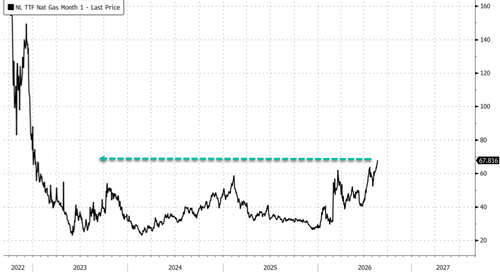
Goldman Sounds Alarm: Europe May Need €100 NatGas Shock To Refill Winter Storage

Rewritten: Europe's winter gas storage needs may hit €100 billion.

Goldman Sachs' warning regarding potential €100 per megawatt-hour natural gas prices in Europe injects a significant bearish element into energy markets, with ripple effects extending across broader financial landscapes. Such a price surge would likely exacerbate inflationary pressures, potentially forcing central banks to maintain a more hawkish stance on interest rates, thereby dampening economic growth prospects. This scenario directly challenges optimistic market sentiment, increasing volatility and fostering a risk-off environment as investors reassess their exposure to energy-intensive sectors and cyclical assets. The connection to macro themes of energy security, geopolitical instability, and the pace of the green transition becomes acutely apparent, as a supply crunch would highlight the vulnerabilities within current energy infrastructure. Consequently, investor confidence could erode, leading to a reduced risk appetite and a potential flight to perceived safe-haven assets, further complicating the economic outlook.

Goldman Sachs' warning regarding potential €100 per megawatt-hour natural gas prices in Europe injects a significant bearish element into energy markets, with ripple effects extending across broader financial landscapes. Such a price surge would likely exacerbate inflationary pressures, potentially forcing central banks to maintain a more hawkish stance on interest rates, thereby dampening economic growth prospects. This scenario directly challenges optimistic market sentiment, increasing volatility and fostering a risk-off environment as investors reassess their exposure to energy-intensive sectors and cyclical assets. The connection to macro themes of energy security, geopolitical instability, and the pace of the green transition becomes acutely apparent, as a supply crunch would highlight the vulnerabilities within current energy infrastructure. Consequently, investor confidence could erode, leading to a reduced risk appetite and a potential flight to perceived safe-haven assets, further complicating the economic outlook.

#macro
▼ Bear
75/100
ZeroHedge 11h ago

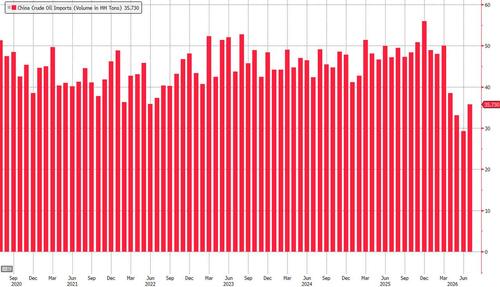
World's Largest Refiner Says China's Oil Demand "Very Likely Peaked Last Year"

Rewritten: China's oil demand likely peaked in 2023, says top refiner.

If China's oil demand truly peaked last year, global refiners could face a structural slowdown in one of their biggest growth markets, prompting a reassessment of supply‑side forecasts and tightening of profit margins across the sector. A perceived ceiling on demand would likely dampen bullish sentiment in energy equities, reinforcing a broader risk‑off tilt that has been gaining traction amid lingering inflationary pressures and tightening monetary policy. The development dovetails with macro trends of decarbonisation, slower economic expansion in Asia and the ongoing shift toward alternative fuels, all of which compound concerns about long‑term demand sustainability. Consequently, investor confidence in oil‑related assets may erode, prompting capital to migrate toward defensive or non‑commodity exposures, and reducing appetite for leverage in energy‑focused portfolios.

If China's oil demand truly peaked last year, global refiners could face a structural slowdown in one of their biggest growth markets, prompting a reassessment of supply‑side forecasts and tightening of profit margins across the sector. A perceived ceiling on demand would likely dampen bullish sentiment in energy equities, reinforcing a broader risk‑off tilt that has been gaining traction amid lingering inflationary pressures and tightening monetary policy. The development dovetails with macro trends of decarbonisation, slower economic expansion in Asia and the ongoing shift toward alternative fuels, all of which compound concerns about long‑term demand sustainability. Consequently, investor confidence in oil‑related assets may erode, prompting capital to migrate toward defensive or non‑commodity exposures, and reducing appetite for leverage in energy‑focused portfolios.

#macro