Choose language / Korean

EN / 한
Berkshire Adds Google, Delta, Trims BofA, Kroger As Abel Taps Into Record Cash Hoard
Bull/Bear Index 47.9/100
macro ▲ Bull Impact 65/100 ZeroHedge 8h ago Read original ↗

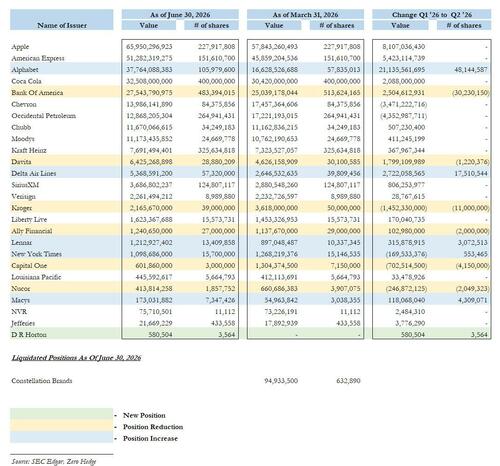
Berkshire Adds Google, Delta, Trims BofA, Kroger As Abel Taps Into Record Cash Hoard

How this call is verified

The ▲ Bullish call is auto-verified against the actual S&P 500 price in ~16h.

Our record on calls like this

1,253 scored calls here, 46.3% right (±9.3pp). Always answering up would have scored 62.6% — so we are -16.3pp.

Bar: S&P 500 ±0.3% within 24h · every verdict lands on the public ledger

AI comment — why bullish

Berkshire Hathaway’s recent portfolio adjustments—increasing stakes in Alphabet (Google) and Delta Air Lines while reducing holdings in Bank of America and Kroger—align with its substantial $140 billion cash position and evolving sector outlook. The additions suggest heightened confidence in the technology sector’s recovery and the travel industry’s rebound, potentially signaling broader market rotation toward growth-oriented assets. These shifts correlate with macroeconomic trends including economic reopening and sustained tech sector resilience, offering indirect validation to these segments. The firm’s measured deployment of its vast liquidity, without haste, underscores a disciplined capital allocation strategy that may bolster market confidence in selective investments during volatility. The trimming of financial and consumer staples positions reflects cautious sentiment toward those sectors, reinforcing a market mood characterized by selective optimism rather than a fundamental strategic pivot. (158 words)

Key takeaway

"Berkshire Adds Google, Delta, Trims BofA, Kroger As Abel Taps Into Record Cash Hoard" — BullBear's AI rates this story as a bullish (positive) signal for markets, with a market-impact score of 65 out of 100. Berkshire Hathaway’s recent portfolio adjustments—increasing stakes in Alphabet (Google) and Delta Air Lines while reducing holdings in Bank of America and Kroger—align with its substantial $140 billion cash position and evolving sector outlook. The additions suggest heightened confidence in the technology sector’s recovery and the travel industry’s rebound, potentially signaling broader market rotation toward growth-oriented assets. These shifts correlate with macroeconomic trends including economic reopening and sustained tech sector resilience, offering indirect validation to these segments. The firm’s measured deployment of its vast liquidity, without haste, underscores a disciplined capital allocation strategy that may bolster market confidence in selective investments during volatility. The trimming of financial and consumer staples positions reflects cautious sentiment toward those sectors, reinforcing a market mood characterized by selective optimism rather than a fundamental strategic pivot. (158 words) That score reflects how strongly the story is likely to move Bitcoin, US equities, the dollar, and gold, and near-duplicate coverage of the same event is clustered so only the representative article is scored. Reported by ZeroHedge on August 14, 2026. The call is verified against the actual 24-hour price move on BullBear's public conviction ledger.

Catch the next bull catalyst

Telegram alerts when our AI scores a story 80+/100 impact (~1-3 per day, no spam). Verified 30d hit rate 48.7%.

Join Telegram channel

📡 Tomorrow's Watch

Related news

▼ Bear
75/100
ZeroHedge 10h ago

Bessent: US Readies Economic Isolation Of Iran "Like The World Has Never Seen Before"

Rewritten: US prepares unprecedented economic sanctions against Iran

The proposed US economic isolation of Iran represents a significant escalation in geopolitical tensions with profound market implications. Such unprecedented measures would likely trigger heightened volatility in oil markets, potentially driving prices higher due to supply disruption fears and reducing global trade flows. This development would weigh heavily on market sentiment, fostering increased risk aversion as investors reassess exposure to energy-dependent sectors and emerging markets. It reinforces the macro theme of rising geopolitical risk premiums, directly challenging the stability that has underpinned recent market gains. Consequently, investor confidence may weaken, particularly among those focused on global supply chains and energy commodities, leading to a measurable contraction in risk appetite across equities and credit markets as the perceived cost of conflict rises.

The proposed US economic isolation of Iran represents a significant escalation in geopolitical tensions with profound market implications. Such unprecedented measures would likely trigger heightened volatility in oil markets, potentially driving prices higher due to supply disruption fears and reducing global trade flows. This development would weigh heavily on market sentiment, fostering increased risk aversion as investors reassess exposure to energy-dependent sectors and emerging markets. It reinforces the macro theme of rising geopolitical risk premiums, directly challenging the stability that has underpinned recent market gains. Consequently, investor confidence may weaken, particularly among those focused on global supply chains and energy commodities, leading to a measurable contraction in risk appetite across equities and credit markets as the perceived cost of conflict rises.

#macro
▼ Bear
65/100
ZeroHedge 12h ago

US Lost 25% Of Its Reaper Drones In Iran War, Officials Estimate

Rewritten: Officials say US lost a quarter of Reaper drones in Iran conflict

The unexpected attrition of a sizable share of the United States' unmanned combat aircraft underscores vulnerabilities in defense supply chains and could reverberate across equities tied to aerospace and defense contractors. Investors may reassess earnings forecasts for firms dependent on government procurement, prompting a modest pullback in risk‑on positions and a tilt toward defensive sectors. At a macro level, the incident dovetails with heightened geopolitical tension in the Middle East, reinforcing concerns about supply‑chain disruptions and potential spikes in energy prices that already strain inflationary pressures. Consequently, confidence in the stability of strategic assets wanes, dampening risk appetite and prompting a cautious stance among institutional capital. The broader market may experience heightened volatility as traders price in both the immediate operational setback and the longer‑term implications for U.S. military readiness and related fiscal outlays.

The unexpected attrition of a sizable share of the United States' unmanned combat aircraft underscores vulnerabilities in defense supply chains and could reverberate across equities tied to aerospace and defense contractors. Investors may reassess earnings forecasts for firms dependent on government procurement, prompting a modest pullback in risk‑on positions and a tilt toward defensive sectors. At a macro level, the incident dovetails with heightened geopolitical tension in the Middle East, reinforcing concerns about supply‑chain disruptions and potential spikes in energy prices that already strain inflationary pressures. Consequently, confidence in the stability of strategic assets wanes, dampening risk appetite and prompting a cautious stance among institutional capital. The broader market may experience heightened volatility as traders price in both the immediate operational setback and the longer‑term implications for U.S. military readiness and related fiscal outlays.

#macro