Choose language / Korean

EN / 한
Bull/Bear Index 47.5/100
macro ▼ Bear Impact 65/100 U.S. Bureau of Labor ... 19d ago Read original ↗

June PPI Declines Slightly Month-on-Month, Continuing Slowdown Trend

According to the U.S. Bureau of Labor Statistics, the Producer Price Index (PPI) for final demand in June 2026 was 157.045, a 0.19% decrease from the previous month. This represents a 5.51% increase compared to the same month last year.

How this call is verified

▼ Bearish call was checked against the actual S&P 500 price 24h later: ✗ Miss (+0.60%).

Our record on calls like this

1,294 scored calls here, 46.5% right (±9.1pp). Always answering up would have scored 62.1% — so we are -15.6pp.

Bar: S&P 500 ±0.3% within 24h · every verdict lands on the public ledger

AI comment — why bearish

The latest Producer Price Index (PPI) data for final demand from the U.S. Bureau of Labor Statistics indicates a slight deceleration in price pressures. The index declined by 0.19% month-on-month in June 2026, following a modest increase in the preceding months. While the year-on-year increase remains significant at 5.51%, the sequential decline suggests that inflationary pressures at the producer level may be moderating. This trend, if sustained, could eventually filter through to consumer prices. Investors will be watching to see if this downward momentum continues in the coming months and whether it signals a broader shift in the inflation outlook. The recent trend shows a general upward trajectory over the past year, but the last two months have seen a flattening and slight dip, which warrants close observation.

Key takeaway

"June PPI Declines Slightly Month-on-Month, Continuing Slowdown Trend" — BullBear's AI rates this story as a bearish (negative) signal for markets, with a market-impact score of 65 out of 100. According to the U.S. Bureau of Labor Statistics, the Producer Price Index (PPI) for final demand in June 2026 was 157.045, a 0.19% decrease from the previous month. This represents a 5.51% increase compared to the same month last year. The latest Producer Price Index (PPI) data for final demand from the U.S. Bureau of Labor Statistics indicates a slight deceleration in price pressures. The index declined by 0.19% month-on-month in June 2026, following a modest increase in the preceding months. While the year-on-year increase remains significant at 5.51%, the sequential decline suggests that inflationary pressures at the producer level may be moderating. This trend, if sustained, could eventually filter through to consumer prices. Investors will be watching to see if this downward momentum continues in the coming months and whether it signals a broader shift in the inflation outlook. The recent trend shows a general upward trajectory over the past year, but the last two months have seen a flattening and slight dip, which warrants close observation. That score reflects how strongly the story is likely to move Bitcoin, US equities, the dollar, and gold, and near-duplicate coverage of the same event is clustered so only the representative article is scored. Reported by U.S. Bureau of Labor Statistics on August 07, 2026. The call is verified against the actual 24-hour price move on BullBear's public conviction ledger.

Catch the next bear flag

Telegram alerts when our AI scores a story 80+/100 impact (~1-3 per day, no spam). Verified 30d hit rate 42.9%.

Join Telegram channel

📡 Tomorrow's Watch

Related news

▲ Bull
85/100
ZeroHedge 5h ago

Nvidia Rises After Solid Earnings, Reversing Margin Concerns As Company Guides To 70% 2028 Revenue Growth

Rewritten: Nvidia shares rise after earnings, easing margin worries, 70% growth by 2028

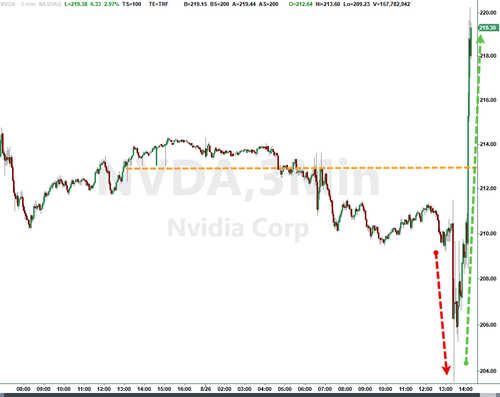
Nvidia Rises After Solid Earnings, Reversing Margin Concerns As Company Guides To 70% 2028 Revenue Growth Update (5:10pm): NVDA stock is very volatile, and after sliding 3% at first on solid earnings but weak margin guidance, the stock has since recovered and is up over 5% as the earnings call begins, on the following comments from Jensen Huang: *NVIDIA CFO SAYS SEEING DEMAND ACCELERATION EVEN AT OUR SCALE *NVIDIA CFO SAYS REVENUE TO GROW ABOUT 70% IN FISCAL 2028 *NVIDIA CFO SAYS SEEING DEMAND ACCELERATION EVEN AT OUR SCALE As Bloomberg notes, Amazon’s commitment to use a lot more Nvidia products and a strong prediction for growth in revenue of about 70%, well above whispers of about 40-50%, next year has shoved aside the naysayers. The 2028 guidance, which came unexpectedly and was intended precisely the spark a buying spree in the stock, did just that, and has pushed the shares about 5% after hours.  * * * Earlier: In our preview of NVDA earnings

Investors are likely to interpret Nvidia's earnings beat and forward‑looking guidance as a catalyst for renewed optimism in the broader technology sector, potentially lifting risk‑on sentiment across equity markets. By projecting a 70% revenue surge by 2028, the company signals confidence in sustained demand for AI‑driven hardware, reinforcing macro trends that link semiconductor growth to expanding cloud, data‑center, and generative‑AI deployments. This narrative may encourage capital allocation toward high‑growth, capital‑intensive firms, narrowing the spread between growth and value stocks as confidence in long‑term margins improves. At the same time, the reversal of earlier margin concerns could temper defensive positioning, prompting investors to increase exposure to cyclical and speculative assets. Overall, the upbeat outlook strengthens market confidence in the tech pipeline, supporting a more aggressive risk appetite while still leaving room for caution amid broader economic uncertainties.

Investors are likely to interpret Nvidia's earnings beat and forward‑looking guidance as a catalyst for renewed optimism in the broader technology sector, potentially lifting risk‑on sentiment across equity markets. By projecting a 70% revenue surge by 2028, the company signals confidence in sustained demand for AI‑driven hardware, reinforcing macro trends that link semiconductor growth to expanding cloud, data‑center, and generative‑AI deployments. This narrative may encourage capital allocation toward high‑growth, capital‑intensive firms, narrowing the spread between growth and value stocks as confidence in long‑term margins improves. At the same time, the reversal of earlier margin concerns could temper defensive positioning, prompting investors to increase exposure to cyclical and speculative assets. Overall, the upbeat outlook strengthens market confidence in the tech pipeline, supporting a more aggressive risk appetite while still leaving room for caution amid broader economic uncertainties.

#macro
▼ Bear
75/100
ZeroHedge 6h ago

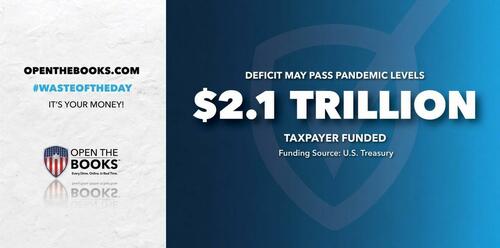
Waste Of The Day: Deficit Could Surpass $2 Trillion

Rewritten: Deficit May Exceed Two Trillion Dollars

Rising concerns that the fiscal shortfall could exceed $2 trillion are likely to reverberate across equity and fixed‑income markets, pressuring risk‑on assets as policymakers grapple with mounting debt service obligations. A widening deficit amplifies expectations of tighter monetary conditions, prompting investors to reassess valuation models that depend on low‑rate environments and to rotate toward defensive sectors. The development dovetails with broader macro narratives of fiscal sustainability, sovereign credit risk, and potential spillovers into emerging‑market financing, reinforcing a narrative of heightened systemic vulnerability. As confidence erodes, capital may flow into safe‑haven instruments, while leveraged positions face increased scrutiny, dampening overall risk appetite. Consequently, market participants may adopt a more cautious stance, calibrating exposure to growth‑oriented themes until clearer signals emerge regarding fiscal consolidation pathways and their impact on long‑term economic stability.

Rising concerns that the fiscal shortfall could exceed $2 trillion are likely to reverberate across equity and fixed‑income markets, pressuring risk‑on assets as policymakers grapple with mounting debt service obligations. A widening deficit amplifies expectations of tighter monetary conditions, prompting investors to reassess valuation models that depend on low‑rate environments and to rotate toward defensive sectors. The development dovetails with broader macro narratives of fiscal sustainability, sovereign credit risk, and potential spillovers into emerging‑market financing, reinforcing a narrative of heightened systemic vulnerability. As confidence erodes, capital may flow into safe‑haven instruments, while leveraged positions face increased scrutiny, dampening overall risk appetite. Consequently, market participants may adopt a more cautious stance, calibrating exposure to growth‑oriented themes until clearer signals emerge regarding fiscal consolidation pathways and their impact on long‑term economic stability.

#macro