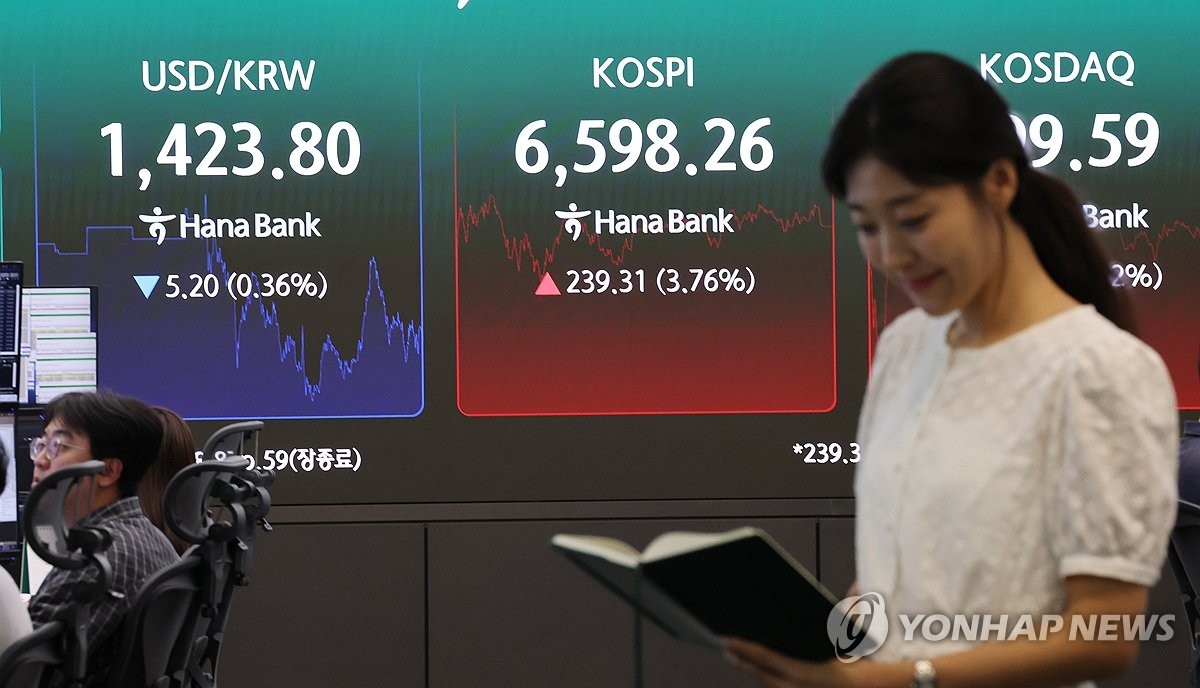
KOSPI breaks 6,500 level on foreign buying... led by semiconductor stocks
The KOSPI surged over 3% to surpass the 6,500 level on August 5, 2026, driven by strong foreign buying and robust performance in large-cap semiconductor stocks.
How this call is verified
The ▲ Bullish call is auto-verified against the actual S&P 500 price
in ~22h.
Bar: S&P 500 ±0.3% within 24h · every verdict lands on the public ledger
Key takeaway
"KOSPI breaks 6,500 level on foreign buying... led by semiconductor stocks" — BullBear's AI rates this story as a bullish (positive) signal for markets, with a market-impact score of 80 out of 100. The KOSPI surged over 3% to surpass the 6,500 level on August 5, 2026, driven by strong foreign buying and robust performance in large-cap semiconductor stocks. Reported by TokenPost on August 05, 2026. The call is verified against the actual 24-hour price move on BullBear's public conviction ledger.
Catch the next bull catalyst
Telegram alerts when our AI scores a story 80+/100 impact (~1-3 per day, no spam).
Verified 30d hit rate 48.2%.
Rewritten: Kospi's rise aided Lee, but could now threaten his presidency.
The Kospi Made South Korean President Lee Jae Myung; It May Yet Unmake Him...
The trajectory of the South Korean stock market, often viewed as a barometer for the incumbent administration, highlights a significant interdependency. A prolonged period of underperformance in the Kospi could diminish investor optimism, potentially leading to wider market repercussions by suggesting underlying economic fragilities or the ineffectiveness of current economic strategies. This environment would likely cultivate a more risk-averse market atmosphere, prompting investors to reassess their exposure to potential challenges. Furthermore, such a trend could intersect with prevailing global economic deceleration and geopolitical instability, intensifying apprehensions regarding the stability of emerging markets. The administration's capacity to effectively manage these economic pressures will be a critical determinant in attracting and retaining capital from both local and foreign investors, thereby influencing market liquidity and the valuation of South Korean assets.
#global
Get the next 80+ impact catalyst
Push notifications when our AI flags a high-impact bull/bear story. ~1–3 per day.