Choose language / Korean

EN / 한
Fed's Schmid: Tighter monetary policy required to bring inflation back to 2% target
Bull/Bear Index 48.2/100
macro ▼ Bear Impact 80/100 Google News Macroecon... 7h ago Read original ↗

Fed's Schmid: Tighter monetary policy required to bring inflation back to 2% target

Fed's Schmid stated that tighter monetary policy is necessary to bring inflation back to the 2% target.

How this call is verified

The ▼ Bearish call is auto-verified against the actual S&P 500 price in ~17h.

Bar: S&P 500 ±0.3% within 24h · every verdict lands on the public ledger

AI comment — why bearish

Federal Reserve Governor Schmid's remarks signaling the necessity for continued restrictive monetary policy to achieve the 2% inflation objective carry significant implications for the broader market. Such a stance suggests a prolonged period of higher interest rates, which typically dampens corporate earnings growth and can pressure equity valuations. This outlook is likely to foster a more cautious market sentiment, as investors recalibrate expectations for economic expansion and corporate profitability. The connection to macro themes is evident, underscoring the Fed's commitment to its inflation mandate even at the potential cost of slower economic activity. Consequently, investor confidence may be tested, leading to a reduced risk appetite and a preference for more defensive assets as the path to sustained price stability appears to require ongoing economic restraint.

Key takeaway

"Fed's Schmid: Tighter monetary policy required to bring inflation back to 2% target" — BullBear's AI rates this story as a bearish (negative) signal for markets, with a market-impact score of 80 out of 100. Fed's Schmid stated that tighter monetary policy is necessary to bring inflation back to the 2% target. Federal Reserve Governor Schmid's remarks signaling the necessity for continued restrictive monetary policy to achieve the 2% inflation objective carry significant implications for the broader market. Such a stance suggests a prolonged period of higher interest rates, which typically dampens corporate earnings growth and can pressure equity valuations. This outlook is likely to foster a more cautious market sentiment, as investors recalibrate expectations for economic expansion and corporate profitability. The connection to macro themes is evident, underscoring the Fed's commitment to its inflation mandate even at the potential cost of slower economic activity. Consequently, investor confidence may be tested, leading to a reduced risk appetite and a preference for more defensive assets as the path to sustained price stability appears to require ongoing economic restraint. That score reflects how strongly the story is likely to move Bitcoin, US equities, the dollar, and gold, and near-duplicate coverage of the same event is clustered so only the representative article is scored. Reported by Google News Macroeconomics (EN) on August 05, 2026. The call is verified against the actual 24-hour price move on BullBear's public conviction ledger.

Catch the next bear flag

Telegram alerts when our AI scores a story 80+/100 impact (~1-3 per day, no spam). Verified 30d hit rate 48.2%.

Join Telegram channel

📡 Tomorrow's Watch

Related news

40/100
ZeroHedge 1h ago

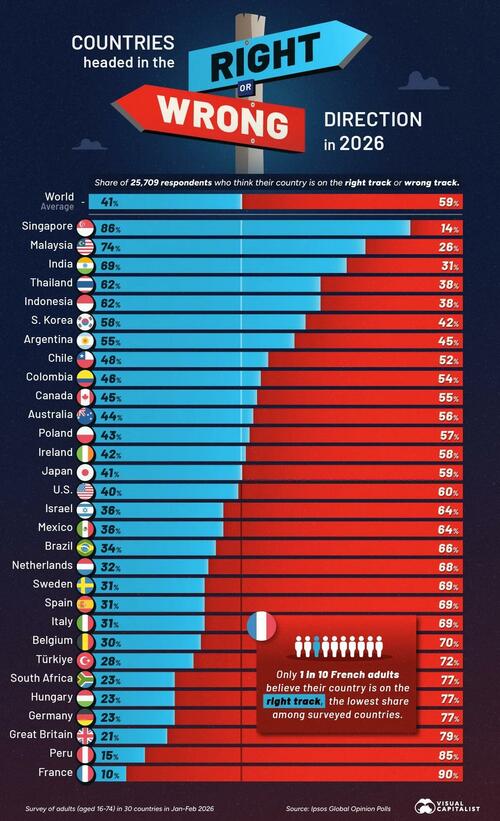
Which Countries Think They're On The Right Track?

Public confidence in national direction varies dramatically around the world. Respondents in several Asian countries are broadly optimistic, while majorities across much of Europe and the Americas believe their countries are on the wrong track.

#macro
▼ Bear
80/100
ZeroHedge 4h ago

Oil Markets Price In An Iran Deal That Does Not Exist Yet

Rewritten: Oil prices anticipate a non-existent Iran deal.

Oil prices tumbled as traders priced in a US-Iran agreement that has not yet been signed. Both West Texas Intermediate and Brent crude touched three-week lows.

Current oil market sentiment suggests that prices are reflecting a scenario where a formal agreement concerning Iran's nuclear program has been reached, despite the absence of such a finalized accord. This pricing behavior indicates that market participants are anticipating a potential increase in Iranian oil supply becoming available. Such an expectation, even without concrete confirmation, can influence current trading patterns and futures contracts. The market's forward-looking nature means that anticipated future events, particularly those with significant supply implications, can impact present price levels. This dynamic highlights the sensitivity of energy markets to geopolitical developments and the potential for supply disruptions or additions to be priced in ahead of their actual occurrence.

Current oil market sentiment suggests that prices are reflecting a scenario where a formal agreement concerning Iran's nuclear program has been reached, despite the absence of such a finalized accord. This pricing behavior indicates that market participants are anticipating a potential increase in Iranian oil supply becoming available. Such an expectation, even without concrete confirmation, can influence current trading patterns and futures contracts. The market's forward-looking nature means that anticipated future events, particularly those with significant supply implications, can impact present price levels. This dynamic highlights the sensitivity of energy markets to geopolitical developments and the potential for supply disruptions or additions to be priced in ahead of their actual occurrence.

#macro
▼ Bear
85/100
Google News Macroeconomics (EN) 5h ago

Kansas City Fed President Says Inflation "Too High," Stresses Need for Further Tightening

Rewritten: KC Fed Chief: Inflation High, More Tightening Needed

Kansas City Fed President stated that inflation is 'too high' and stressed the need for further tightening.

Kansas City Fed President Thomas Hoenig's assertion that inflation remains "too high" and the explicit call for continued monetary tightening signal a persistent hawkish stance from a key Federal Reserve policymaker. This sentiment, if broadly adopted by the FOMC, suggests a prolonged period of higher interest rates, which could dampen corporate earnings growth and increase borrowing costs across the economy. Market sentiment may shift towards caution as investors price in the likelihood of further restrictive policy, potentially leading to increased volatility and a reduced appetite for riskier assets. This aligns with the broader macroeconomic theme of combating persistent inflation, even at the potential expense of near-term economic growth. Consequently, investor confidence could be tested, leading to a more defensive posture and a re-evaluation of portfolio allocations away from growth-oriented investments.

Kansas City Fed President Thomas Hoenig's assertion that inflation remains "too high" and the explicit call for continued monetary tightening signal a persistent hawkish stance from a key Federal Reserve policymaker. This sentiment, if broadly adopted by the FOMC, suggests a prolonged period of higher interest rates, which could dampen corporate earnings growth and increase borrowing costs across the economy. Market sentiment may shift towards caution as investors price in the likelihood of further restrictive policy, potentially leading to increased volatility and a reduced appetite for riskier assets. This aligns with the broader macroeconomic theme of combating persistent inflation, even at the potential expense of near-term economic growth. Consequently, investor confidence could be tested, leading to a more defensive posture and a re-evaluation of portfolio allocations away from growth-oriented investments.

#macro
▼ Bear
📡 +2 85/100
Google News Macroeconomics (EN) 7h ago

Fed's Schmid Calls for Tighter Monetary Policy to Tamp Down on 'Too High' Inflation - U.S. News - Money

Rewritten: Fed official advocates tighter policy for high inflation.

Federal Reserve Governor Schmid called for tighter monetary policy to curb inflation that is considered 'too high'.

Recent commentary from a Federal Reserve official suggests a leaning towards more restrictive monetary policy measures. This perspective stems from a concern that current inflation levels remain elevated, posing a risk to economic stability. The implication is that existing policy may not be sufficiently contractionary to achieve the desired disinflationary outcome. Such a stance could signal a continued commitment to interest rate adjustments or other tools aimed at moderating aggregate demand. The focus on bringing inflation down from its current "too high" trajectory indicates a potential for further policy tightening if economic data continues to support this view. This approach prioritizes price stability, even if it means a slower pace of economic expansion in the near term.

Recent commentary from a Federal Reserve official suggests a leaning towards more restrictive monetary policy measures. This perspective stems from a concern that current inflation levels remain elevated, posing a risk to economic stability. The implication is that existing policy may not be sufficiently contractionary to achieve the desired disinflationary outcome. Such a stance could signal a continued commitment to interest rate adjustments or other tools aimed at moderating aggregate demand. The focus on bringing inflation down from its current "too high" trajectory indicates a potential for further policy tightening if economic data continues to support this view. This approach prioritizes price stability, even if it means a slower pace of economic expansion in the near term.

#macro