Choose language / Korean

EN / 한
So what’s the plan to bring down inflation? The new Fed chair and his White House allies say you shouldn’t ask. - MarketWatch
Bull/Bear Index 46.1/100
macro ▼ Bear Impact 90/100 Google News Macroecon... 20d ago Read original ↗

So what’s the plan to bring down inflation? The new Fed chair and his White House allies say you shouldn’t ask. - MarketWatch

How this call is verified

▼ Bearish call was checked against the actual S&P 500 price 24h later: — Flat (-0.16%, below the ±0.3% bar).

Our record on calls like this

1,284 scored calls here, 46.8% right (±9.2pp). Always answering up would have scored 61.8% — so we are -15.0pp.

Bar: S&P 500 ±0.3% within 24h · every verdict lands on the public ledger

AI comment — why bearish

The current economic climate is characterized by a divergence between official communication and market anticipation concerning inflation mitigation. This perceived lack of transparency regarding a concrete strategy could introduce significant uncertainty, potentially amplifying volatility across various investment vehicles as market participants attempt to interpret the prevailing economic trajectory. Such ambiguity may also contribute to a general softening of market sentiment, as the absence of a clearly articulated plan can undermine confidence in the effectiveness of implemented monetary policies. This environment could lend credence to macroeconomic concerns such as stagflation or extended periods of economic stagnation, particularly if inflationary pressures prove resilient without a discernible resolution pathway. Ultimately, this situation may lead to a decline in investor confidence, a reduced inclination for risk-taking, and a subsequent pivot towards more conservative investment strategies in anticipation of a potentially more difficult economic landscape.

Key takeaway

"So what’s the plan to bring down inflation? The new Fed chair and his White House allies say you shouldn’t ask. - MarketWatch" — BullBear's AI rates this story as a bearish (negative) signal for markets, with a market-impact score of 90 out of 100. The current economic climate is characterized by a divergence between official communication and market anticipation concerning inflation mitigation. This perceived lack of transparency regarding a concrete strategy could introduce significant uncertainty, potentially amplifying volatility across various investment vehicles as market participants attempt to interpret the prevailing economic trajectory. Such ambiguity may also contribute to a general softening of market sentiment, as the absence of a clearly articulated plan can undermine confidence in the effectiveness of implemented monetary policies. This environment could lend credence to macroeconomic concerns such as stagflation or extended periods of economic stagnation, particularly if inflationary pressures prove resilient without a discernible resolution pathway. Ultimately, this situation may lead to a decline in investor confidence, a reduced inclination for risk-taking, and a subsequent pivot towards more conservative investment strategies in anticipation of a potentially more difficult economic landscape. That score reflects how strongly the story is likely to move Bitcoin, US equities, the dollar, and gold, and near-duplicate coverage of the same event is clustered so only the representative article is scored. Reported by Google News Macroeconomics (EN) on August 04, 2026. The call is verified against the actual 24-hour price move on BullBear's public conviction ledger.

Catch the next bear flag

Telegram alerts when our AI scores a story 80+/100 impact (~1-3 per day, no spam). Verified 30d hit rate 42.4%.

Join Telegram channel

📡 Tomorrow's Watch

Related news

▼ Bear
68/100
ZeroHedge 2h ago

Death Of Europe's Industrial Base: 140,000 VW Jobs At Risk As Union Brands Turnaround Plan "Cloud Cuckoo Land"

Rewritten: European VW risks 140,000 jobs; union deems turnaround plan unrealistic

European investors are likely to interpret the looming loss of 140,000 Volkswagen positions as a warning sign for the continent’s manufacturing resilience, prompting a reassessment of exposure to auto and broader industrial equities. The episode underscores lingering structural challenges—such as high labor costs, supply‑chain bottlenecks and the transition to electric mobility—that have already strained profit margins across the sector. As confidence in the ability of legacy firms to execute turnaround strategies wanes, risk‑off sentiment may spill into related indices, reinforcing a broader shift toward defensive assets and cash. The development dovetails with macro‑level concerns about slower growth in the eurozone, persistent inflationary pressures and the need for fiscal support, all of which could dampen corporate earnings forecasts. Consequently, investors may curtail discretionary spending on riskier stocks, favoring sectors perceived as less vulnerable to industrial disruption.

European investors are likely to interpret the looming loss of 140,000 Volkswagen positions as a warning sign for the continent’s manufacturing resilience, prompting a reassessment of exposure to auto and broader industrial equities. The episode underscores lingering structural challenges—such as high labor costs, supply‑chain bottlenecks and the transition to electric mobility—that have already strained profit margins across the sector. As confidence in the ability of legacy firms to execute turnaround strategies wanes, risk‑off sentiment may spill into related indices, reinforcing a broader shift toward defensive assets and cash. The development dovetails with macro‑level concerns about slower growth in the eurozone, persistent inflationary pressures and the need for fiscal support, all of which could dampen corporate earnings forecasts. Consequently, investors may curtail discretionary spending on riskier stocks, favoring sectors perceived as less vulnerable to industrial disruption.

#macro
▼ Bear
75/100
MishTalk 4h ago

GDPNow Forecast Is 4 Miles High and Falling fast

Rewritten: GDPNow forecast indicates rapid decline.

A sharply elevated GDPNow projection that is now receding signals that near‑term growth expectations are being rapidly revised downward, which could pressure equity valuations that have been priced for robust expansion. As the forecast slides, investors may temper optimism, leading to a more cautious tone across sectors that are sensitive to economic momentum, such as consumer discretionary and industrials. The shift dovetails with broader macro concerns about lingering supply‑chain constraints, tighter monetary policy, and slower labor market gains, reinforcing narratives of a potential slowdown. Consequently, confidence in the outlook may erode, prompting a tilt toward defensive assets and lower‑risk positions. The waning appetite for risk could compress credit spreads and dampen demand for high‑beta equities, while reinforcing a preference for quality and liquidity until clearer growth signals emerge.

A sharply elevated GDPNow projection that is now receding signals that near‑term growth expectations are being rapidly revised downward, which could pressure equity valuations that have been priced for robust expansion. As the forecast slides, investors may temper optimism, leading to a more cautious tone across sectors that are sensitive to economic momentum, such as consumer discretionary and industrials. The shift dovetails with broader macro concerns about lingering supply‑chain constraints, tighter monetary policy, and slower labor market gains, reinforcing narratives of a potential slowdown. Consequently, confidence in the outlook may erode, prompting a tilt toward defensive assets and lower‑risk positions. The waning appetite for risk could compress credit spreads and dampen demand for high‑beta equities, while reinforcing a preference for quality and liquidity until clearer growth signals emerge.

#macro
▼ Bear
80/100
ZeroHedge 5h ago

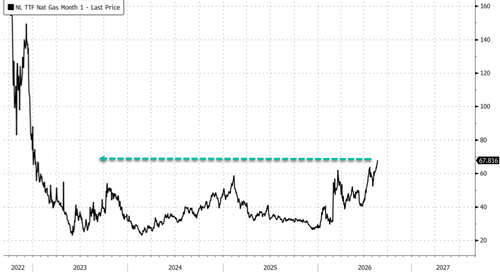
Goldman Sounds Alarm: Europe May Need €100 NatGas Shock To Refill Winter Storage

Rewritten: Europe's winter gas storage needs may hit €100 billion.

Goldman Sachs' warning regarding potential €100 per megawatt-hour natural gas prices in Europe injects a significant bearish element into energy markets, with ripple effects extending across broader financial landscapes. Such a price surge would likely exacerbate inflationary pressures, potentially forcing central banks to maintain a more hawkish stance on interest rates, thereby dampening economic growth prospects. This scenario directly challenges optimistic market sentiment, increasing volatility and fostering a risk-off environment as investors reassess their exposure to energy-intensive sectors and cyclical assets. The connection to macro themes of energy security, geopolitical instability, and the pace of the green transition becomes acutely apparent, as a supply crunch would highlight the vulnerabilities within current energy infrastructure. Consequently, investor confidence could erode, leading to a reduced risk appetite and a potential flight to perceived safe-haven assets, further complicating the economic outlook.

Goldman Sachs' warning regarding potential €100 per megawatt-hour natural gas prices in Europe injects a significant bearish element into energy markets, with ripple effects extending across broader financial landscapes. Such a price surge would likely exacerbate inflationary pressures, potentially forcing central banks to maintain a more hawkish stance on interest rates, thereby dampening economic growth prospects. This scenario directly challenges optimistic market sentiment, increasing volatility and fostering a risk-off environment as investors reassess their exposure to energy-intensive sectors and cyclical assets. The connection to macro themes of energy security, geopolitical instability, and the pace of the green transition becomes acutely apparent, as a supply crunch would highlight the vulnerabilities within current energy infrastructure. Consequently, investor confidence could erode, leading to a reduced risk appetite and a potential flight to perceived safe-haven assets, further complicating the economic outlook.

#macro