Choose language / Korean

EN / 한
Higher Interest Rates Could Hit Farmers Hard as Fed Faces Mounting Inflation Pressure
Bull/Bear Index 48.6/100
macro ▼ Bear Impact 75/100 Google News Macroecon... 15h ago Read original ↗

Higher Interest Rates Could Hit Farmers Hard as Fed Faces Mounting Inflation Pressure

Rising interest rates, driven by the Federal Reserve's efforts to combat inflation, could significantly burden farmers.

How this call is verified

The ▼ Bearish call is auto-verified against the actual S&P 500 price in ~9h.

Bar: S&P 500 ±0.3% within 24h · every verdict lands on the public ledger

AI comment — why bearish

The current inflationary environment is compelling central banks to consider more restrictive monetary policies, which typically translate to elevated interest rates. This shift in economic strategy is anticipated to have widespread effects, potentially moderating the pace of corporate profit expansion and increasing the expense of capital for businesses across various sectors. Such conditions could cultivate a more risk-averse market atmosphere, as participants adjust their expectations for economic growth. This development is consistent with a global effort to combat inflation, where the objective of price stability takes precedence over fostering immediate economic acceleration. As a result, investor sentiment may become more subdued, potentially leading to a decrease in the willingness to take on risk and a subsequent reallocation of capital towards assets perceived as less volatile.

Key takeaway

"Higher Interest Rates Could Hit Farmers Hard as Fed Faces Mounting Inflation Pressure" — BullBear's AI rates this story as a bearish (negative) signal for markets, with a market-impact score of 75 out of 100. Rising interest rates, driven by the Federal Reserve's efforts to combat inflation, could significantly burden farmers. The current inflationary environment is compelling central banks to consider more restrictive monetary policies, which typically translate to elevated interest rates. This shift in economic strategy is anticipated to have widespread effects, potentially moderating the pace of corporate profit expansion and increasing the expense of capital for businesses across various sectors. Such conditions could cultivate a more risk-averse market atmosphere, as participants adjust their expectations for economic growth. This development is consistent with a global effort to combat inflation, where the objective of price stability takes precedence over fostering immediate economic acceleration. As a result, investor sentiment may become more subdued, potentially leading to a decrease in the willingness to take on risk and a subsequent reallocation of capital towards assets perceived as less volatile. That score reflects how strongly the story is likely to move Bitcoin, US equities, the dollar, and gold, and near-duplicate coverage of the same event is clustered so only the representative article is scored. Reported by Google News Macroeconomics (EN) on August 03, 2026. The call is verified against the actual 24-hour price move on BullBear's public conviction ledger.

Catch the next bear flag

Telegram alerts when our AI scores a story 80+/100 impact (~1-3 per day, no spam). Verified 30d hit rate 48.2%.

Join Telegram channel

📡 Tomorrow's Watch

Related news

▼ Bear
80/100
ZeroHedge 3h ago

Iron Ore Below $100 As UBS Warns "Fundamentals Are Deteriorating"

Rewritten: Iron ore drops under $100; UBS sees worsening fundamentals.

Iron ore prices have fallen below $100, with UBS warning of deteriorating fundamentals due to weak Chinese demand and increasing supply.

The recent fall in iron ore prices below the $100 per tonne threshold, accompanied by an analyst's assessment of weakening underlying conditions, suggests a potential recalibration of market expectations. This price movement in a critical input for steel production may reflect a broader deceleration in industrial output and construction projects globally. Such a trend could reinforce existing concerns about persistent inflationary pressures and the impact of higher interest rates on economic activity. As a result, market participants might exhibit a diminished tolerance for risk, potentially leading to a reallocation of capital towards more secure assets. The implications of this bearish trend in a foundational commodity could necessitate a review of growth forecasts across a range of industries.

The recent fall in iron ore prices below the $100 per tonne threshold, accompanied by an analyst's assessment of weakening underlying conditions, suggests a potential recalibration of market expectations. This price movement in a critical input for steel production may reflect a broader deceleration in industrial output and construction projects globally. Such a trend could reinforce existing concerns about persistent inflationary pressures and the impact of higher interest rates on economic activity. As a result, market participants might exhibit a diminished tolerance for risk, potentially leading to a reallocation of capital towards more secure assets. The implications of this bearish trend in a foundational commodity could necessitate a review of growth forecasts across a range of industries.

#macro
▼ Bear
70/100
Google News Macroeconomics (EN) 4h ago

Gold Holds Steady Above $4,050; Hawkish Fed Bets Favor Bearish Traders

Rewritten: Gold steady over $4,050; Fed rate hike bets favor sellers.

Gold prices are holding firm above $4,050, but expectations of a hawkish stance from the Federal Reserve are benefiting bearish traders.

Gold's resilience above the $4,050 mark suggests a persistent underlying demand, potentially acting as a hedge against broader economic uncertainties. However, the increasing probability of hawkish monetary policy from the Federal Reserve is casting a shadow over market sentiment. This hawkish outlook, driven by inflation concerns and a robust labor market, typically dampens investor confidence and reduces risk appetite. Consequently, the precious metal's stability might be viewed as a temporary pause rather than a definitive bullish signal, as higher interest rates generally increase the opportunity cost of holding non-yielding assets like gold. Investors may therefore be reassessing their portfolio allocations, leaning towards assets perceived to benefit from a tightening monetary environment, while gold's role as a safe haven faces headwinds from these macroeconomic shifts.

Gold's resilience above the $4,050 mark suggests a persistent underlying demand, potentially acting as a hedge against broader economic uncertainties. However, the increasing probability of hawkish monetary policy from the Federal Reserve is casting a shadow over market sentiment. This hawkish outlook, driven by inflation concerns and a robust labor market, typically dampens investor confidence and reduces risk appetite. Consequently, the precious metal's stability might be viewed as a temporary pause rather than a definitive bullish signal, as higher interest rates generally increase the opportunity cost of holding non-yielding assets like gold. Investors may therefore be reassessing their portfolio allocations, leaning towards assets perceived to benefit from a tightening monetary environment, while gold's role as a safe haven faces headwinds from these macroeconomic shifts.

#macro
▼ Bear
80/100
ZeroHedge 4h ago

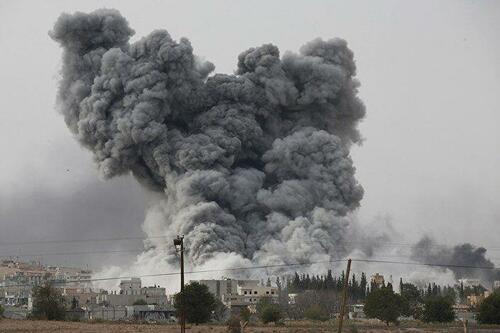
Huge Uptick In Israeli Airstrikes On Gaza Since Trump Hailed 'Historic' Hamas Deal

Rewritten: Israeli airstrikes on Gaza increase after Trump hails Hamas deal.

There has been a significant increase in Israeli airstrikes in the Gaza Strip since former President Trump hailed a 'historic' Hamas deal.

The recent surge in Israeli airstrikes on Gaza, occurring in the wake of statements regarding a significant Hamas agreement, injects a notable degree of geopolitical volatility. This intensified conflict could precipitate a cautious shift in global market sentiment, potentially leading to a more risk-averse stance among investors. Market participants will likely be scrutinizing the implications for regional stability and the integrity of established supply routes. This dynamic is occurring against a backdrop of broader global economic adjustments and increasing geopolitical complexities, which could influence the pricing of key commodities and energy resources. Such developments may contribute to a decline in investor confidence, potentially prompting a reevaluation of asset allocations and a preference for assets typically considered less susceptible to market downturns.

The recent surge in Israeli airstrikes on Gaza, occurring in the wake of statements regarding a significant Hamas agreement, injects a notable degree of geopolitical volatility. This intensified conflict could precipitate a cautious shift in global market sentiment, potentially leading to a more risk-averse stance among investors. Market participants will likely be scrutinizing the implications for regional stability and the integrity of established supply routes. This dynamic is occurring against a backdrop of broader global economic adjustments and increasing geopolitical complexities, which could influence the pricing of key commodities and energy resources. Such developments may contribute to a decline in investor confidence, potentially prompting a reevaluation of asset allocations and a preference for assets typically considered less susceptible to market downturns.

#macro