Choose language / 한국어

EN / 한
Warsh floats fewer Federal Reserve meetings to reduce market dependence
Bull/Bear Index 47.2/100
macro ▼ Bear Impact 75/100 Google News Macroecon... Aug 03, 2026 Read original ↗

Warsh floats fewer Federal Reserve meetings to reduce market dependence

How this call is verified

▼ Bearish call was checked against the actual S&P 500 price 24h later: ✗ Miss (+1.90%).

Our record on calls like this

1,109 scored calls here, 46.1% right (±7.8pp). Always answering up would have scored 61.1% on the same rows. Paired within the same day and asset, our directional edge is +0.9 pp ± 3.9 — inside the error bar, i.e. indistinguishable from zero.

Bar: S&P 500 ±0.3% within 24h · every verdict lands on the public ledger

AI comment — why bearish

A reduction in the number of scheduled Federal Reserve meetings could foster increased market autonomy, potentially leading to more pronounced price fluctuations between official announcements. This adjustment might lessen the market's dependence on immediate central bank pronouncements, encouraging a more independent interpretation of economic indicators. Such a development could resonate with a broader macroeconomic trend towards decentralization and a diminished emphasis on centralized control. Investor sentiment may face challenges as the predictability of monetary policy adjustments potentially decreases, possibly prompting a reassessment of risk tolerance. Consequently, financial markets might need to cultivate more resilient internal processes for price discovery and risk management, adapting to a landscape with less frequent, direct signaling from the central bank.

Key takeaway

"Warsh floats fewer Federal Reserve meetings to reduce market dependence" — BullBear's AI rates this story as a bearish (negative) signal for markets, with a market-impact score of 75 out of 100. That score reflects how strongly the story is likely to move Bitcoin, US equities, the dollar, and gold, and near-duplicate coverage of the same event is clustered so only the representative article is scored. Reported by Google News Macroeconomics (EN) on August 03, 2026. The call is verified against the actual 24-hour price move on BullBear's public conviction ledger.

Catch the next bear flag

Telegram alerts when our AI scores a story 80+/100 impact (~1-3 per day, no spam). Verified 30d hit rate 39.8%.


Join Telegram channel

📡 Tomorrow's Watch

Related news

▼ Bear
65/100
ZeroHedge 2h ago

Chinese Refiners Pay Record Premiums For Russian ESPO Crude

Paying record premiums for Russian ESPO crude signals that Chinese refiners are prioritizing supply security over cost efficiency, tightening global refined product margins and reinforcing a bearish outlook for oil price differentials. The premium underscores lingering concerns about Western sanctions and logistical bottlenecks, which dampen optimism for a swift normalization of trade flows. As refiners absorb higher input costs, downstream profitability may be squeezed, prompting a shift in market sentiment toward caution and potentially curbing speculative buying in the broader energy sector. This development dovetails with macro‑level themes of geopolitical risk, de‑globalization pressures, and the ongoing transition away from fossil fuels, all of which weigh on investor confidence. Consequently, risk appetite for oil‑linked assets may contract, encouraging a reallocation toward less volatile commodities or defensive positions.

Paying record premiums for Russian ESPO crude signals that Chinese refiners are prioritizing supply security over cost efficiency, tightening global refined product margins and reinforcing a bearish outlook for oil price differentials. The premium underscores lingering concerns about Western sanctions and logistical bottlenecks, which dampen optimism for a swift normalization of trade flows. As refiners absorb higher input costs, downstream profitability may be squeezed, prompting a shift in market sentiment toward caution and potentially curbing speculative buying in the broader energy sector. This development dovetails with macro‑level themes of geopolitical risk, de‑globalization pressures, and the ongoing transition away from fossil fuels, all of which weigh on investor confidence. Consequently, risk appetite for oil‑linked assets may contract, encouraging a reallocation toward less volatile commodities or defensive positions.

#macro
▼ Bear
70/100
ZeroHedge 4h ago

Asian LNG Prices Surge To Highest Since 2022 As Iran War Escalates

Rising Asian LNG spot rates, now at their strongest level since 2022, reflect tightening supply amid heightened geopolitical risk from the Iran‑Israel conflict. The price spike pressures downstream users and utilities, prompting concerns over cost‑pass‑through and possibly dampening demand growth in energy‑intensive economies. Market sentiment shifts toward caution as traders price in further supply disruptions and a possible re‑routing of cargoes away from vulnerable routes, reinforcing a broader risk‑off bias across commodities. The development dovetails with macro‑level themes of constrained energy supplies, inflationary pressure, and the ongoing realignment of global trade flows away from traditional exporters. Consequently, investor confidence in energy‑linked equities may erode, with capital rotating toward defensive assets and lower‑volatility sectors, curbing risk appetite and amplifying bearish pressure on related stocks and indices.

Rising Asian LNG spot rates, now at their strongest level since 2022, reflect tightening supply amid heightened geopolitical risk from the Iran‑Israel conflict. The price spike pressures downstream users and utilities, prompting concerns over cost‑pass‑through and possibly dampening demand growth in energy‑intensive economies. Market sentiment shifts toward caution as traders price in further supply disruptions and a possible re‑routing of cargoes away from vulnerable routes, reinforcing a broader risk‑off bias across commodities. The development dovetails with macro‑level themes of constrained energy supplies, inflationary pressure, and the ongoing realignment of global trade flows away from traditional exporters. Consequently, investor confidence in energy‑linked equities may erode, with capital rotating toward defensive assets and lower‑volatility sectors, curbing risk appetite and amplifying bearish pressure on related stocks and indices.

#macro
▼ Bear
65/100
Wolf Street 5h ago

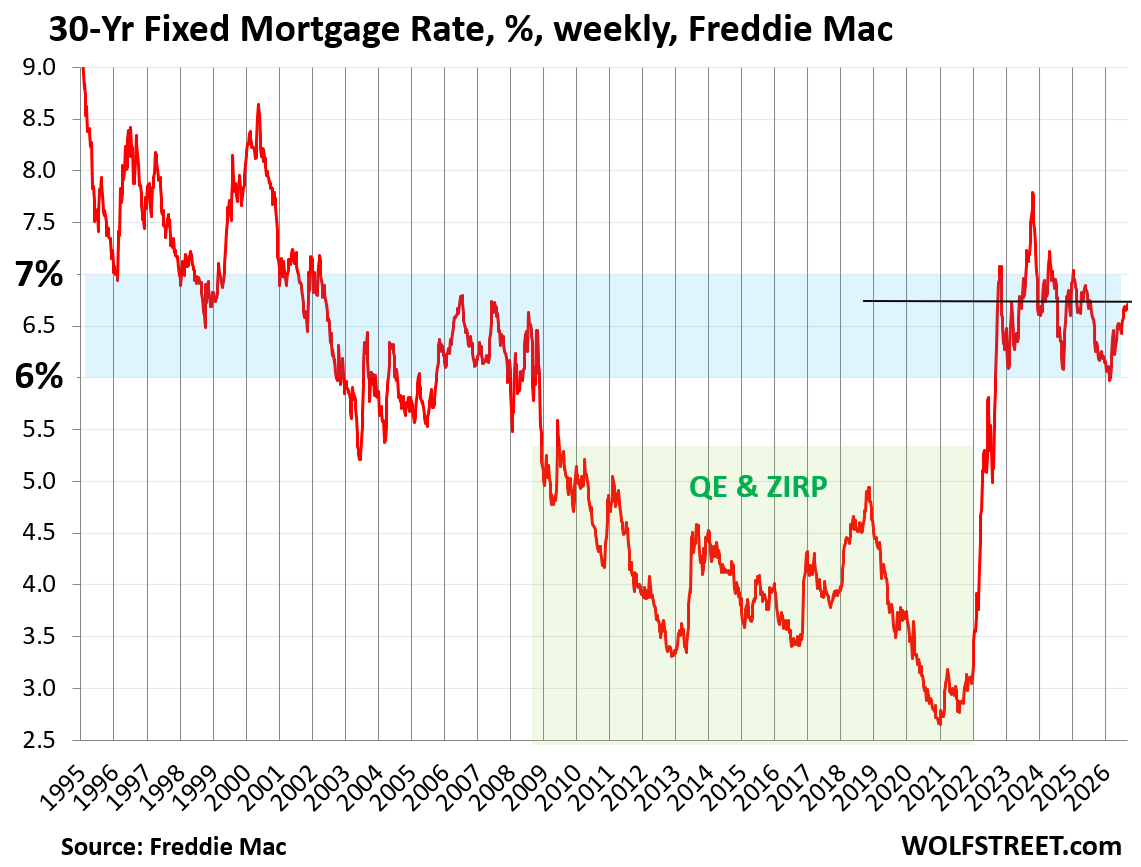
The Spread between 10-Year Treasury Yield & 30-Year Mortgage Rate Has Been Stuck at 2 Percentage Points despite Fannie & Freddie MBS Buybacks: Some Thoughts

The persistent 2‑point gap between the 10‑year Treasury yield and the 30‑year mortgage rate signals that mortgage‑backed‑securities support from Fannie Mae and Freddie Mac is not translating into tighter financing conditions, a pattern that could weigh on housing‑related equities and broader credit markets. With mortgage rates remaining elevated relative to risk‑free yields, home‑buyer demand may stay subdued, reinforcing expectations of slower residential construction activity and dampening consumer‑spending outlooks. This decoupling also underscores lingering inflationary pressures and the Federal Reserve’s cautious stance on rate cuts, reinforcing a macro environment where yield curves stay flat and risk premia stay high. Consequently, investor confidence in rate‑sensitive sectors may erode, prompting a tilt toward defensive assets and reducing overall risk appetite across equity and fixed‑income portfolios. Such dynamics may also influence credit spreads and the pricing of agency MBS, further shaping portfolio allocations.

The persistent 2‑point gap between the 10‑year Treasury yield and the 30‑year mortgage rate signals that mortgage‑backed‑securities support from Fannie Mae and Freddie Mac is not translating into tighter financing conditions, a pattern that could weigh on housing‑related equities and broader credit markets. With mortgage rates remaining elevated relative to risk‑free yields, home‑buyer demand may stay subdued, reinforcing expectations of slower residential construction activity and dampening consumer‑spending outlooks. This decoupling also underscores lingering inflationary pressures and the Federal Reserve’s cautious stance on rate cuts, reinforcing a macro environment where yield curves stay flat and risk premia stay high. Consequently, investor confidence in rate‑sensitive sectors may erode, prompting a tilt toward defensive assets and reducing overall risk appetite across equity and fixed‑income portfolios. Such dynamics may also influence credit spreads and the pricing of agency MBS, further shaping portfolio allocations.

#macro