Choose language / Korean

EN / 한
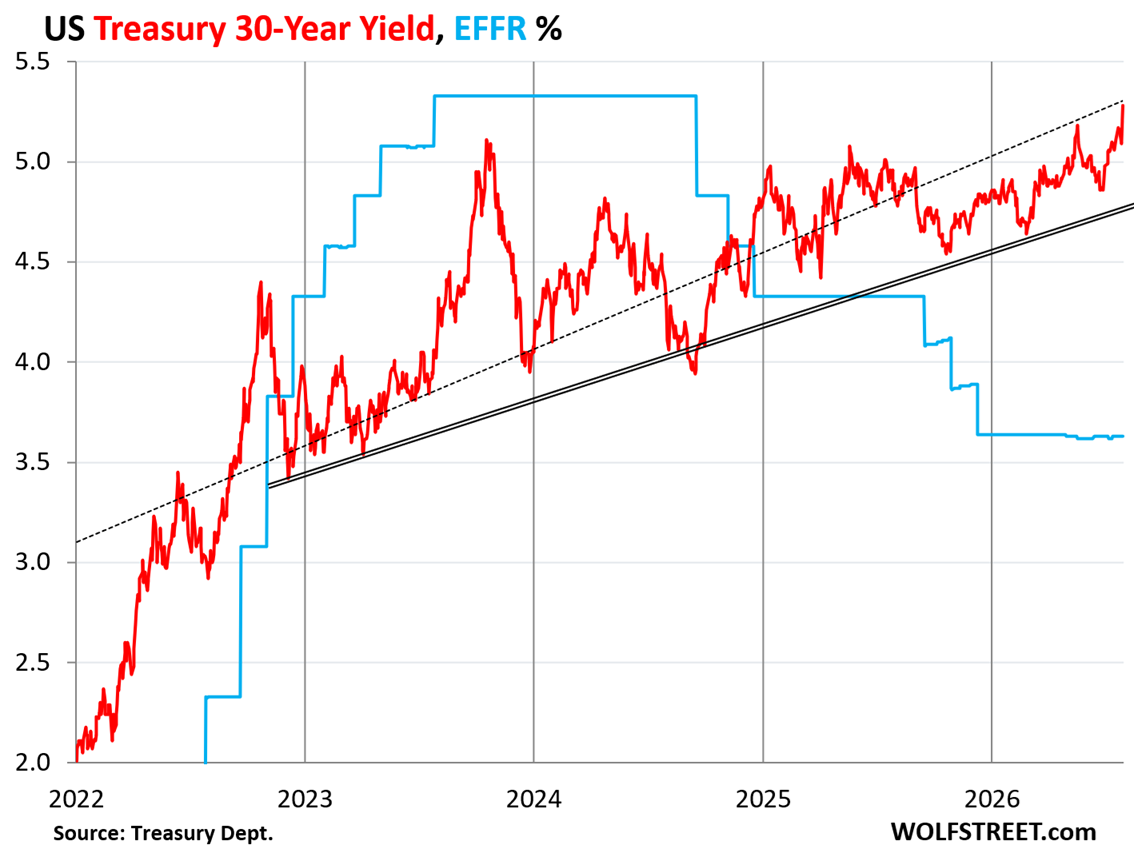
Six Years into Bond Bear Market, 30-Year Treasury Yield Hits 5.28%, Yield Curve Steepens, but Spreads Are still too Narrow
Bull/Bear Index 47.0/100
macro ▼ Bear Impact 85/100 Wolf Street 1h ago Read original ↗

Six Years into Bond Bear Market, 30-Year Treasury Yield Hits 5.28%, Yield Curve Steepens, but Spreads Are still too Narrow

The 30-year Treasury yield has reached 5.28%, marking a significant point in the ongoing bond bear market. The yield curve is steepening, indicating that the market is focusing on inflation and economic fundamentals rather than solely on the Federal Reserve's actions.

How this call is verified

The ▼ Bearish call is auto-verified against the actual S&P 500 price in ~23h.

Bar: S&P 500 ±0.3% within 24h · every verdict lands on the public ledger

AI comment — why bearish

The sustained pressure on the bond market, evidenced by the 30-year Treasury yield reaching 5.28%, signals a prolonged period of rising interest rates. This environment typically dampens broader market enthusiasm, as the cost of capital increases, potentially impacting corporate earnings and equity valuations. Market sentiment may shift towards caution, with investors re-evaluating risk exposures and seeking safer havens. This trend is intrinsically linked to ongoing macroeconomic themes of inflation persistence and central bank tightening cycles. Consequently, investor confidence could be tested, leading to a reduced appetite for riskier assets as the perceived reward for taking on such risk diminishes relative to the higher yields available in fixed income. The steepening yield curve, while indicating expectations of future economic growth or inflation, is juxtaposed by still-narrow spreads, suggesting that the market may not be fully pricing in the potential for significant economic divergence or stress.

Key takeaway

"Six Years into Bond Bear Market, 30-Year Treasury Yield Hits 5.28%, Yield Curve Steepens, but Spreads Are still too Narrow" — BullBear's AI rates this story as a bearish (negative) signal for markets, with a market-impact score of 85 out of 100. The 30-year Treasury yield has reached 5.28%, marking a significant point in the ongoing bond bear market. The yield curve is steepening, indicating that the market is focusing on inflation and economic fundamentals rather than solely on the Federal Reserve's actions. The sustained pressure on the bond market, evidenced by the 30-year Treasury yield reaching 5.28%, signals a prolonged period of rising interest rates. This environment typically dampens broader market enthusiasm, as the cost of capital increases, potentially impacting corporate earnings and equity valuations. Market sentiment may shift towards caution, with investors re-evaluating risk exposures and seeking safer havens. This trend is intrinsically linked to ongoing macroeconomic themes of inflation persistence and central bank tightening cycles. Consequently, investor confidence could be tested, leading to a reduced appetite for riskier assets as the perceived reward for taking on such risk diminishes relative to the higher yields available in fixed income. The steepening yield curve, while indicating expectations of future economic growth or inflation, is juxtaposed by still-narrow spreads, suggesting that the market may not be fully pricing in the potential for significant economic divergence or stress. That score reflects how strongly the story is likely to move Bitcoin, US equities, the dollar, and gold, and near-duplicate coverage of the same event is clustered so only the representative article is scored. Reported by Wolf Street on August 02, 2026. The call is verified against the actual 24-hour price move on BullBear's public conviction ledger.

Catch the next bear flag

Telegram alerts when our AI scores a story 80+/100 impact (~1-3 per day, no spam). Verified 30d hit rate 49.6%.

Join Telegram channel

📡 Tomorrow's Watch

Related news

30/100
ZeroHedge 3h ago

Michigan Waves The White Flag On Child 'Conversion Therapy' Ban

Michigan has backed down on enforcing its ban against 'conversion therapy' for children experiencing 'gender dysphoria,' agreeing to a permanent court order barring enforcement. This decision impacts the debate around gender identity and therapeutic approaches.

#macro
▼ Bear
80/100
ZeroHedge 9h ago

The Real Threat To Young Americans' Jobs Isn't AI. It's The National Debt...

Rewritten: National debt, not AI, threatens young Americans' jobs.

The national debt, rather than AI, is presented as a more significant threat to the jobs of young Americans.

A burgeoning national debt presents a significant, often overlooked, headwind for the future job market, particularly for younger generations. This fiscal burden could translate into higher taxes, reduced government spending on crucial infrastructure and education, and potentially slower economic growth, all of which dampen long-term employment prospects. The broader market implications include a potential drag on corporate earnings and a less dynamic entrepreneurial landscape. Market sentiment may shift towards caution as investors grapple with the long-term implications of fiscal irresponsibility, potentially increasing demand for safer assets and reducing appetite for riskier growth stocks. This connects directly to macro themes of fiscal sustainability and intergenerational equity. Investor confidence could erode if the debt trajectory appears unsustainable, leading to a more risk-averse stance and a preference for capital preservation over aggressive expansion.

A burgeoning national debt presents a significant, often overlooked, headwind for the future job market, particularly for younger generations. This fiscal burden could translate into higher taxes, reduced government spending on crucial infrastructure and education, and potentially slower economic growth, all of which dampen long-term employment prospects. The broader market implications include a potential drag on corporate earnings and a less dynamic entrepreneurial landscape. Market sentiment may shift towards caution as investors grapple with the long-term implications of fiscal irresponsibility, potentially increasing demand for safer assets and reducing appetite for riskier growth stocks. This connects directly to macro themes of fiscal sustainability and intergenerational equity. Investor confidence could erode if the debt trajectory appears unsustainable, leading to a more risk-averse stance and a preference for capital preservation over aggressive expansion.

#macro
▼ Bear
📡 +1 85/100
Google News Macroeconomics (EN) 10h ago

Fed officials warn not raising interest rates was a mistake

Rewritten: Fed officials: Not raising rates was an error.

Federal Reserve officials have warned that not raising interest rates was a mistake.

Recent commentary from Federal Reserve officials suggesting that holding interest rates steady was a misstep carries significant implications for the broader market. Such pronouncements can foster a more cautious market sentiment, potentially leading to a recalibration of risk appetite as investors digest the possibility of a more prolonged period of restrictive monetary policy than previously anticipated. This narrative aligns with macro themes of persistent inflation and the central bank's commitment to price stability, even at the potential cost of slower economic growth. Consequently, investor confidence may face headwinds, as the prospect of higher-for-longer rates could dampen enthusiasm for riskier assets and encourage a flight towards more defensive positions. The market will likely be closely watching for any further signals that might confirm this shift in the Fed's outlook.

Recent commentary from Federal Reserve officials suggesting that holding interest rates steady was a misstep carries significant implications for the broader market. Such pronouncements can foster a more cautious market sentiment, potentially leading to a recalibration of risk appetite as investors digest the possibility of a more prolonged period of restrictive monetary policy than previously anticipated. This narrative aligns with macro themes of persistent inflation and the central bank's commitment to price stability, even at the potential cost of slower economic growth. Consequently, investor confidence may face headwinds, as the prospect of higher-for-longer rates could dampen enthusiasm for riskier assets and encourage a flight towards more defensive positions. The market will likely be closely watching for any further signals that might confirm this shift in the Fed's outlook.

#macro