Choose language / 한국어

EN / 한
Is the government lying to us about inflation?
Bull/Bear Index 47.6/100
macro ▼ Bear Impact 75/100 Google News Macroecon... Aug 01, 2026 Read original ↗

Is the government lying to us about inflation?

How this call is verified

▼ Bearish call was checked against the actual S&P 500 price 24h later: — Flat (+0.00%, below the ±0.3% bar).

Our record on calls like this

1,134 scored calls here, 46.9% right (±7.7pp). Always answering up would have scored 60.1% on the same rows. Paired within the same day and asset, our directional edge is +1.9 pp ± 4.3 — inside the error bar, i.e. indistinguishable from zero.

Bar: S&P 500 ±0.3% within 24h · every verdict lands on the public ledger

AI comment — why bearish

Persistent doubts regarding the accuracy of official inflation statistics may significantly influence investor sentiment. A perceived divergence between reported economic data and the tangible experiences of consumers and businesses could erode trust in economic indicators. This skepticism, if widespread, could lead to a reduced willingness to take on investment risk, thereby contributing to a more cautious market outlook. Such a sentiment aligns with bearish macroeconomic perspectives, potentially signaling expectations of slower economic expansion and subdued corporate profit growth. Consequently, markets might experience heightened volatility as participants navigate the uncertainties surrounding the actual inflation rate and the efficacy of governmental economic policies. A prolonged decline in investor confidence could precipitate a reassessment of asset values, potentially shifting preference towards assets perceived as less susceptible to economic downturns.

Key takeaway

"Is the government lying to us about inflation?" — BullBear's AI rates this story as a bearish (negative) signal for markets, with a market-impact score of 75 out of 100. That score reflects how strongly the story is likely to move Bitcoin, US equities, the dollar, and gold, and near-duplicate coverage of the same event is clustered so only the representative article is scored. Reported by Google News Macroeconomics (EN) on August 01, 2026. The call is verified against the actual 24-hour price move on BullBear's public conviction ledger.

Catch the next bear flag

Telegram alerts when our AI scores a story 80+/100 impact (~1-3 per day, no spam). Verified 30d hit rate 46.2%.

Join Telegram channel

📡 Tomorrow's Watch

Related news

▼ Bear
65/100
Wolf Street 1h ago

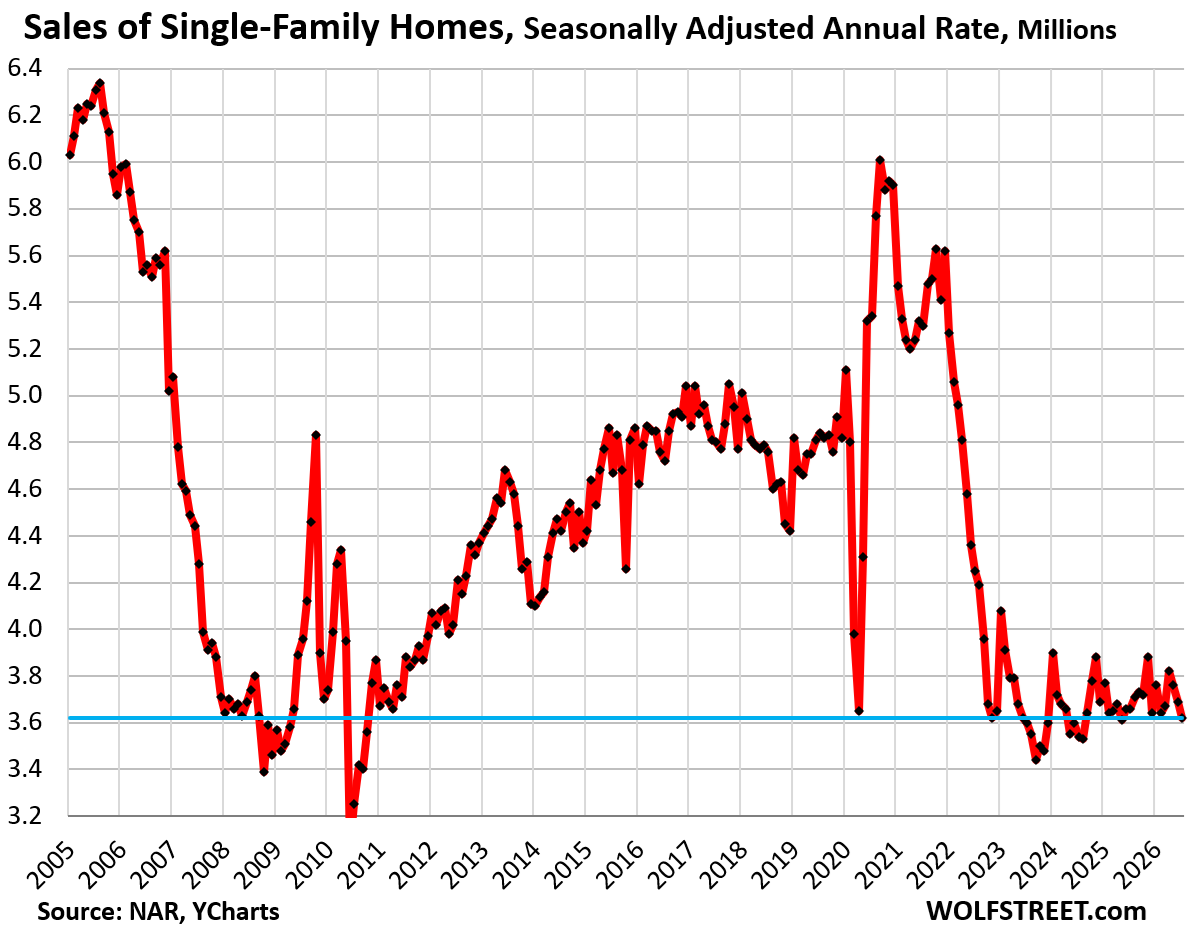
Sales of Existing Single-Family Homes Sag Further, Supply Spikes to Decade High. Condo Sales Drop to Data-Low, Supply Spikes to 14-Year High

Weakening demand for existing single-family homes, now posting another decline, combined with a supply surge to its highest level in a decade, signals a cooling residential market that could reverberate across related sectors. The parallel plunge in condo transactions, hitting a data‑low while inventory climbs to a 14‑year peak, reinforces concerns that price appreciation is stalling and that buyers are becoming more price‑sensitive. These trends dovetail with broader macro pressures—rising mortgage rates, tighter credit conditions, and lingering inflationary headwinds—suggesting that the housing market is reacting to higher financing costs and uncertain economic outlooks. Consequently, sentiment among home‑buyers and investors alike is turning more cautious, eroding confidence in near‑term price gains and prompting a shift toward lower‑risk assets, which may dampen risk appetite in real‑estate‑linked equities and REITs.

Weakening demand for existing single-family homes, now posting another decline, combined with a supply surge to its highest level in a decade, signals a cooling residential market that could reverberate across related sectors. The parallel plunge in condo transactions, hitting a data‑low while inventory climbs to a 14‑year peak, reinforces concerns that price appreciation is stalling and that buyers are becoming more price‑sensitive. These trends dovetail with broader macro pressures—rising mortgage rates, tighter credit conditions, and lingering inflationary headwinds—suggesting that the housing market is reacting to higher financing costs and uncertain economic outlooks. Consequently, sentiment among home‑buyers and investors alike is turning more cautious, eroding confidence in near‑term price gains and prompting a shift toward lower‑risk assets, which may dampen risk appetite in real‑estate‑linked equities and REITs.

#macro
▼ Bear
75/100
ZeroHedge 3h ago

Trump Warns 'Activity' Seen At Iran's Pickaxe Mountain Nuclear Site: 'Don't Get Cute'

Trump’s warning that activity at Iran’s Pickaxe Mountain nuclear site could be escalating tensions injects fresh geopolitical risk into markets, prompting a shift toward defensive positioning. Heightened uncertainty tends to depress risk‑on assets such as high‑growth tech equities while bolstering safe‑haven demand for gold and Treasury yields, and it may reignite concerns over oil supply disruptions that could spur price volatility. The commentary dovetails with broader macro themes of rising great‑power rivalry and the potential for sanctions or military escalation, reinforcing a narrative of constrained global growth and elevated inflationary pressures. Consequently, investor confidence may wane as risk appetite contracts, leading to broader market sell‑offs and a preference for assets perceived as more resilient to geopolitical shocks. Such dynamics could also pressure emerging‑market currencies and increase volatility in equity indices across the region.

Trump’s warning that activity at Iran’s Pickaxe Mountain nuclear site could be escalating tensions injects fresh geopolitical risk into markets, prompting a shift toward defensive positioning. Heightened uncertainty tends to depress risk‑on assets such as high‑growth tech equities while bolstering safe‑haven demand for gold and Treasury yields, and it may reignite concerns over oil supply disruptions that could spur price volatility. The commentary dovetails with broader macro themes of rising great‑power rivalry and the potential for sanctions or military escalation, reinforcing a narrative of constrained global growth and elevated inflationary pressures. Consequently, investor confidence may wane as risk appetite contracts, leading to broader market sell‑offs and a preference for assets perceived as more resilient to geopolitical shocks. Such dynamics could also pressure emerging‑market currencies and increase volatility in equity indices across the region.

#macro
▼ Bear
85/100
ZeroHedge 3h ago

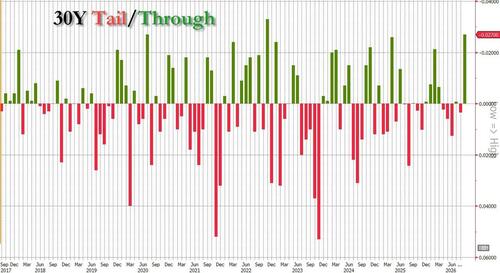
Record-Breaking 30Y Auction Sees Huge Stop Through, 2nd Highest Foreign Demand On Record

An unprecedented volume in the 30‑year Treasury auction, coupled with a sizable stop‑through and the second‑largest foreign demand on record, signals deepening concerns over the yield curve’s steepening and the Federal Reserve’s tightening trajectory. The excess supply absorption suggests that investors are still seeking safe‑haven assets despite higher rates, yet the aggressive bidding by overseas buyers reflects a search for yield differentials amid divergent monetary policies abroad. Such dynamics pressure market sentiment, reinforcing a cautious outlook as participants weigh the prospect of further rate hikes against lingering inflationary pressures. The episode underscores a broader macro theme of tightening liquidity and heightened geopolitical risk, which together dampen confidence in riskier assets and tilt risk appetite toward defensive positions, potentially curbing equity inflows in the near term.

An unprecedented volume in the 30‑year Treasury auction, coupled with a sizable stop‑through and the second‑largest foreign demand on record, signals deepening concerns over the yield curve’s steepening and the Federal Reserve’s tightening trajectory. The excess supply absorption suggests that investors are still seeking safe‑haven assets despite higher rates, yet the aggressive bidding by overseas buyers reflects a search for yield differentials amid divergent monetary policies abroad. Such dynamics pressure market sentiment, reinforcing a cautious outlook as participants weigh the prospect of further rate hikes against lingering inflationary pressures. The episode underscores a broader macro theme of tightening liquidity and heightened geopolitical risk, which together dampen confidence in riskier assets and tilt risk appetite toward defensive positions, potentially curbing equity inflows in the near term.

#macro
▼ Bear
65/100
ZeroHedge 4h ago

Perfectly Timed AI Panic Resurrects 'Bipartisan AI Safety Bill'

A sudden resurgence of bipartisan AI safety legislation, sparked by heightened panic over rapid AI deployment, is likely to reverberate across equity markets, especially within the technology sector. Investors may interpret the move as a signal that regulatory scrutiny will intensify, prompting a reassessment of valuations for AI‑driven firms and potentially dampening recent rally momentum. The development dovetails with broader macro trends of tightening oversight on emerging technologies and a cautious stance from policymakers concerned about systemic risk, reinforcing a narrative of heightened compliance costs. As sentiment shifts toward prudence, risk‑averse capital could flow out of high‑growth, speculative positions toward more defensive assets, modestly curbing overall market risk appetite. While the bill’s bipartisan backing may reassure some that a clear regulatory framework is forthcoming, the immediate effect is likely a short‑term contraction in confidence among investors betting on unfettered AI expansion.

A sudden resurgence of bipartisan AI safety legislation, sparked by heightened panic over rapid AI deployment, is likely to reverberate across equity markets, especially within the technology sector. Investors may interpret the move as a signal that regulatory scrutiny will intensify, prompting a reassessment of valuations for AI‑driven firms and potentially dampening recent rally momentum. The development dovetails with broader macro trends of tightening oversight on emerging technologies and a cautious stance from policymakers concerned about systemic risk, reinforcing a narrative of heightened compliance costs. As sentiment shifts toward prudence, risk‑averse capital could flow out of high‑growth, speculative positions toward more defensive assets, modestly curbing overall market risk appetite. While the bill’s bipartisan backing may reassure some that a clear regulatory framework is forthcoming, the immediate effect is likely a short‑term contraction in confidence among investors betting on unfettered AI expansion.

#macro