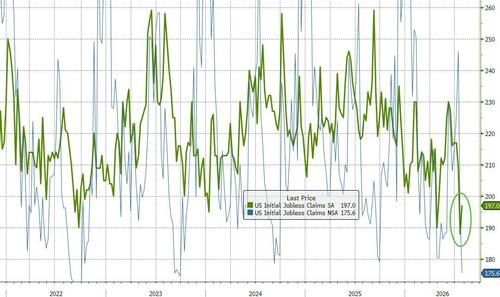
US Savings Rate Tumbles Despite Lowest Jobless Claims Data In 57 Years
How this call is verified
▼ Bearish call was checked against the actual S&P 500 price 24h later: ✗ Miss (+0.36%).
Our record on calls like this
1,128 scored calls here, 46.7% right (±7.7pp). Always answering up would have scored 60.4% on the same rows. Paired within the same day and asset, our directional edge is +1.9 pp ± 4.3 — inside the error bar, i.e. indistinguishable from zero.
Bar: S&P 500 ±0.3% within 24h · every verdict lands on the public ledger
AI comment — why bearish
The precipitous drop in the US savings rate, occurring concurrently with historically low jobless claims, presents a complex macroeconomic signal. This divergence suggests a potential disconnect between labor market strength and household financial health, hinting at inflationary pressures eroding purchasing power or a shift towards discretionary spending. For broader markets, this could translate to increased consumer demand driving corporate revenues, but also fuel concerns about sustained inflation and the Federal Reserve's monetary policy response. Market sentiment may become more cautious as investors weigh the implications of a potentially unsustainable spending pattern against the backdrop of tightening financial conditions. This situation connects to macro themes of post-pandemic economic normalization and the ongoing debate about the persistence of inflation. Investor confidence could be tested as the perceived stability of household finances comes into question, potentially dampening risk appetite and leading to a more defensive market posture.
Key takeaway
"US Savings Rate Tumbles Despite Lowest Jobless Claims Data In 57 Years" — BullBear's AI rates this story as a bearish (negative) signal for markets, with a market-impact score of 75 out of 100. That score reflects how strongly the story is likely to move Bitcoin, US equities, the dollar, and gold, and near-duplicate coverage of the same event is clustered so only the representative article is scored. Reported by ZeroHedge on July 30, 2026. The call is verified against the actual 24-hour price move on BullBear's public conviction ledger.
Catch the next bear flag
Telegram alerts when our AI scores a story 80+/100 impact (~1-3 per day, no spam). Verified 30d hit rate 45.2%.