Choose language / Korean

EN / 한
Feedom Of Navigation
Bull/Bear Index 44.6/100
macro ▼ Bear Impact 80/100 ZeroHedge 2h ago Read original ↗

Feedom Of Navigation

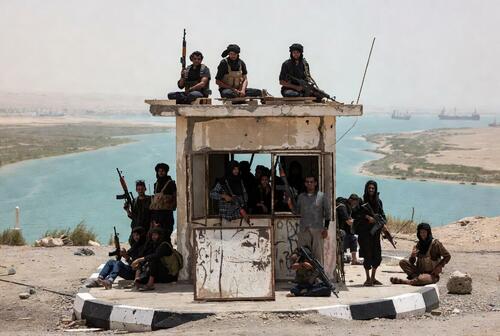
The Houthis are considering charging fees on vessels sailing through the Bab el-Mandeb Strait. Reuters reported that the plan was discussed with Iran’s leadership, who have offered help to set up an authority to collect the toll. Besides the potential revenue source, the aim of the Bab el-Mandeb fees would reportedly be to normalize the idea of charging fees on international waters.

How this call is verified

The ▼ Bearish call is auto-verified against the actual S&P 500 price in ~22h.

Bar: S&P 500 ±0.3% within 24h · every verdict lands on the public ledger

AI comment — why bearish

The current economic environment presents a significant challenge for market participants seeking to forecast future trends. An inability to clearly discern the direction of economic growth and stability introduces a widespread sense of uncertainty. This ambiguity can translate into a more risk-averse market sentiment, as investors face a heightened degree of unpredictability. These conditions are consistent with broader macroeconomic shifts, including fluctuating inflation rates and evolving monetary policy stances from central banks, which make definitive outcomes harder to anticipate. As a result, investor confidence may decline, potentially leading to a decreased willingness to engage with higher-risk assets and a possible movement towards assets considered less volatile.

Key takeaway

"Feedom Of Navigation" — BullBear's AI rates this story as a bearish (negative) signal for markets, with a market-impact score of 80 out of 100. The Houthis are considering charging fees on vessels sailing through the Bab el-Mandeb Strait. Reuters reported that the plan was discussed with Iran’s leadership, who have offered help to set up an authority to collect the toll. Besides the potential revenue source, the aim of the Bab el-Mandeb fees would reportedly be to normalize the idea of charging fees on international waters. The current economic environment presents a significant challenge for market participants seeking to forecast future trends. An inability to clearly discern the direction of economic growth and stability introduces a widespread sense of uncertainty. This ambiguity can translate into a more risk-averse market sentiment, as investors face a heightened degree of unpredictability. These conditions are consistent with broader macroeconomic shifts, including fluctuating inflation rates and evolving monetary policy stances from central banks, which make definitive outcomes harder to anticipate. As a result, investor confidence may decline, potentially leading to a decreased willingness to engage with higher-risk assets and a possible movement towards assets considered less volatile. That score reflects how strongly the story is likely to move Bitcoin, US equities, the dollar, and gold, and near-duplicate coverage of the same event is clustered so only the representative article is scored. Reported by ZeroHedge on July 30, 2026. The call is verified against the actual 24-hour price move on BullBear's public conviction ledger.

Catch the next bear flag

Telegram alerts when our AI scores a story 80+/100 impact (~1-3 per day, no spam). Verified 30d hit rate 51.4%.

Join Telegram channel

📡 Tomorrow's Watch

Related news

▼ Bear
70/100
Google News Macroeconomics (EN) 40m ago

Resilient economy faces mounting risks from Iran and inflation - WJAC

Rewritten: Economy withstands threats from Iran and inflation.

Resilient economy faces mounting risks from Iran and inflation WJAC

The current economic environment is characterized by a significant increase in downside risks, primarily driven by escalating geopolitical tensions involving Iran and ongoing inflationary pressures. This combination is creating a more cautious sentiment among market participants, potentially leading to a decrease in overall investor confidence. The underlying vulnerabilities in global supply chains, exacerbated by geopolitical instability, contribute to a less predictable economic outlook. As a result, there may be a shift in investment strategies, with a greater emphasis on capital preservation rather than aggressive growth pursuits. This could lead to increased demand for defensive sectors and assets traditionally considered safe havens, while assets with higher growth potential might experience increased volatility. The possibility of unforeseen disruptions originating from either the geopolitical or inflation fronts underscores the need for careful risk management within investment portfolios.

The current economic environment is characterized by a significant increase in downside risks, primarily driven by escalating geopolitical tensions involving Iran and ongoing inflationary pressures. This combination is creating a more cautious sentiment among market participants, potentially leading to a decrease in overall investor confidence. The underlying vulnerabilities in global supply chains, exacerbated by geopolitical instability, contribute to a less predictable economic outlook. As a result, there may be a shift in investment strategies, with a greater emphasis on capital preservation rather than aggressive growth pursuits. This could lead to increased demand for defensive sectors and assets traditionally considered safe havens, while assets with higher growth potential might experience increased volatility. The possibility of unforeseen disruptions originating from either the geopolitical or inflation fronts underscores the need for careful risk management within investment portfolios.

#macro