Choose language / Korean

EN / 한
The Fed Chair’s 2% Inflation Rhetoric Is Starting to Feel Empty
Bull/Bear Index 44.6/100
macro ▼ Bear Impact 85/100 Google News Macroecon... 1h ago Read original ↗

The Fed Chair’s 2% Inflation Rhetoric Is Starting to Feel Empty

The Federal Reserve Chair's rhetoric regarding the 2% inflation target is beginning to feel empty, raising concerns about the Fed's ability to control inflation and potentially leading to prolonged high interest rates.

How this call is verified

The ▼ Bearish call is auto-verified against the actual S&P 500 price in ~23h.

Bar: S&P 500 ±0.3% within 24h · every verdict lands on the public ledger

AI comment — why bearish

The sustained elevation of inflation above the Federal Reserve's stated objective is fostering a noticeable divergence between official communications and observable economic conditions. This discrepancy can contribute to a climate of market uncertainty, as participants may begin to question the effectiveness of current monetary policy strategies. The persistent challenge in moderating price increases, even with assertive policy language, points to the enduring influence of complex macroeconomic factors. These include ongoing considerations regarding the robustness of supply chains and the dynamics of wage-price interactions, which appear to be more deeply embedded than earlier projections suggested. As a result, investor sentiment could shift towards a more conservative stance, prompting a reassessment of risk tolerance. This evolving landscape may see increased interest in assets designed to preserve purchasing power or those exhibiting lower sensitivity to changes in interest rates, while sectors characterized by higher growth speculation might encounter greater headwinds.

Key takeaway

"The Fed Chair’s 2% Inflation Rhetoric Is Starting to Feel Empty" — BullBear's AI rates this story as a bearish (negative) signal for markets, with a market-impact score of 85 out of 100. The Federal Reserve Chair's rhetoric regarding the 2% inflation target is beginning to feel empty, raising concerns about the Fed's ability to control inflation and potentially leading to prolonged high interest rates. The sustained elevation of inflation above the Federal Reserve's stated objective is fostering a noticeable divergence between official communications and observable economic conditions. This discrepancy can contribute to a climate of market uncertainty, as participants may begin to question the effectiveness of current monetary policy strategies. The persistent challenge in moderating price increases, even with assertive policy language, points to the enduring influence of complex macroeconomic factors. These include ongoing considerations regarding the robustness of supply chains and the dynamics of wage-price interactions, which appear to be more deeply embedded than earlier projections suggested. As a result, investor sentiment could shift towards a more conservative stance, prompting a reassessment of risk tolerance. This evolving landscape may see increased interest in assets designed to preserve purchasing power or those exhibiting lower sensitivity to changes in interest rates, while sectors characterized by higher growth speculation might encounter greater headwinds. That score reflects how strongly the story is likely to move Bitcoin, US equities, the dollar, and gold, and near-duplicate coverage of the same event is clustered so only the representative article is scored. Reported by Google News Macroeconomics (EN) on July 30, 2026. The call is verified against the actual 24-hour price move on BullBear's public conviction ledger.

Catch the next bear flag

Telegram alerts when our AI scores a story 80+/100 impact (~1-3 per day, no spam). Verified 30d hit rate 51.5%.

Join Telegram channel

📡 Tomorrow's Watch

Related news

▼ Bear
85/100
Google News Macroeconomics (EN) 41m ago

Why the Bond Market Is Getting the Last Word in Its Fight With the Fed - Barron's

Rewritten: Bond market prevails over Federal Reserve's policy.

Why the Bond Market Is Getting the Last Word in Its Fight With the Fed  Barron's

The bond market's growing sway indicates a widening gap between the valuations of fixed-income securities and the Federal Reserve's communicated policy objectives. This divergence may contribute to a more cautious outlook for riskier investments, as market participants assess the impact of elevated long-term yields in conjunction with the Fed's restrictive monetary stance. Such a development is consistent with prevailing macroeconomic trends, including sustained inflationary pressures and the possibility of decelerating economic expansion. The market appears to be incorporating expectations of a less accommodative monetary policy trajectory than was previously factored into pricing. This could lead to increased scrutiny of investment strategies and a potential recalibration of risk tolerance among investors.

The bond market's growing sway indicates a widening gap between the valuations of fixed-income securities and the Federal Reserve's communicated policy objectives. This divergence may contribute to a more cautious outlook for riskier investments, as market participants assess the impact of elevated long-term yields in conjunction with the Fed's restrictive monetary stance. Such a development is consistent with prevailing macroeconomic trends, including sustained inflationary pressures and the possibility of decelerating economic expansion. The market appears to be incorporating expectations of a less accommodative monetary policy trajectory than was previously factored into pricing. This could lead to increased scrutiny of investment strategies and a potential recalibration of risk tolerance among investors.

#macro
▼ Bear
80/100
Google News Macroeconomics (EN) 1h ago

Kevin Warsh’s stripped-back Fed communication ‘already backfiring’, say investors - Financial Times

Rewritten: Investors: Warsh's simpler Fed talk is failing.

Kevin Warsh’s stripped-back Fed communication ‘already backfiring’, say investors  Financial Times

Investor reactions to former Federal Reserve Governor Kevin Warsh's critique of the central bank's communication strategy signal a growing unease within financial markets. The perceived lack of clarity, as highlighted by the Financial Times, could exacerbate existing anxieties surrounding inflation and the pace of monetary policy tightening. This sentiment shift may translate into increased market volatility as participants grapple with uncertainty, potentially dampening risk appetite. The connection to broader macro themes like the persistence of inflationary pressures and the Fed's balancing act between controlling prices and avoiding recession becomes more pronounced. Consequently, investor confidence may erode, leading to a more cautious approach to asset allocation and a preference for safer havens as the market digests the implications of less transparent Fed messaging.

Investor reactions to former Federal Reserve Governor Kevin Warsh's critique of the central bank's communication strategy signal a growing unease within financial markets. The perceived lack of clarity, as highlighted by the Financial Times, could exacerbate existing anxieties surrounding inflation and the pace of monetary policy tightening. This sentiment shift may translate into increased market volatility as participants grapple with uncertainty, potentially dampening risk appetite. The connection to broader macro themes like the persistence of inflationary pressures and the Fed's balancing act between controlling prices and avoiding recession becomes more pronounced. Consequently, investor confidence may erode, leading to a more cautious approach to asset allocation and a preference for safer havens as the market digests the implications of less transparent Fed messaging.

#macro
▼ Bear
80/100
Google News Macroeconomics (EN) 2h ago

Tariffs, debt, and a stubborn Fed are squeezing consumers - Fortune

Rewritten: Trade, debt, and Fed policy pressure consumers.

Consumers are facing pressure from tariffs, rising debt levels, and the Federal Reserve's persistent monetary policy stance, which collectively dampen economic activity.

The current economic climate is characterized by a convergence of factors that are collectively impacting consumer purchasing power and, by extension, market dynamics. Increased trade barriers, coupled with a growing national debt burden, place additional strain on household finances. This is further amplified by the Federal Reserve's commitment to maintaining a restrictive monetary policy stance. These combined pressures are anticipated to lead to a reduction in discretionary spending, potentially affecting corporate revenues and profit margins across various sectors. The prevailing macroeconomic narrative is one of inflation concerns, fiscal prudence, and the ongoing effects of interest rate adjustments. This environment may foster a more risk-averse sentiment among market participants, potentially leading to a re-evaluation of asset allocations and a greater emphasis on capital preservation. The interplay of these forces suggests a period of elevated market uncertainty and a potential inclination towards more conservative investment approaches.

The current economic climate is characterized by a convergence of factors that are collectively impacting consumer purchasing power and, by extension, market dynamics. Increased trade barriers, coupled with a growing national debt burden, place additional strain on household finances. This is further amplified by the Federal Reserve's commitment to maintaining a restrictive monetary policy stance. These combined pressures are anticipated to lead to a reduction in discretionary spending, potentially affecting corporate revenues and profit margins across various sectors. The prevailing macroeconomic narrative is one of inflation concerns, fiscal prudence, and the ongoing effects of interest rate adjustments. This environment may foster a more risk-averse sentiment among market participants, potentially leading to a re-evaluation of asset allocations and a greater emphasis on capital preservation. The interplay of these forces suggests a period of elevated market uncertainty and a potential inclination towards more conservative investment approaches.

#macro
▼ Bear
📡 +1 90/100
Google News Macroeconomics (EN) 2h ago

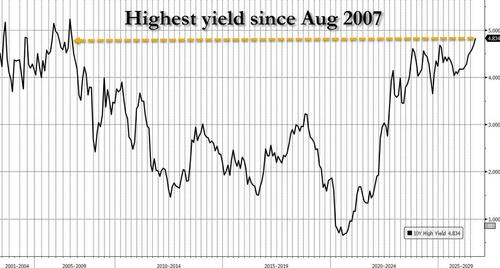
US borrowing costs hit 19-year high as Fed holds interest rates - The Guardian

Rewritten: US borrowing costs reach 19-year peak; Fed keeps rates steady.

US borrowing costs hit 19-year high as Fed holds interest rates  The Guardian

The recent surge in US borrowing costs, reaching a level not seen in approximately nineteen years, occurs concurrently with the Federal Reserve's stance of holding benchmark interest rates steady. This confluence of factors suggests a sustained environment of elevated financing expenses for both governments and corporations. Such a scenario typically exerts downward pressure on asset valuations, particularly equities, as higher capital costs translate into increased discount rates for future earnings. Consequently, investor sentiment may lean towards conservatism, prompting a re-assessment of corporate earnings potential and the overall trajectory of economic expansion. The persistence of these elevated borrowing costs could amplify concerns regarding inflation and the feasibility of a smooth economic transition, potentially leading to a reduction in risk tolerance and a reallocation of capital towards less volatile investment avenues.

The recent surge in US borrowing costs, reaching a level not seen in approximately nineteen years, occurs concurrently with the Federal Reserve's stance of holding benchmark interest rates steady. This confluence of factors suggests a sustained environment of elevated financing expenses for both governments and corporations. Such a scenario typically exerts downward pressure on asset valuations, particularly equities, as higher capital costs translate into increased discount rates for future earnings. Consequently, investor sentiment may lean towards conservatism, prompting a re-assessment of corporate earnings potential and the overall trajectory of economic expansion. The persistence of these elevated borrowing costs could amplify concerns regarding inflation and the feasibility of a smooth economic transition, potentially leading to a reduction in risk tolerance and a reallocation of capital towards less volatile investment avenues.

#macro
▼ Bear
80/100
Google News Macroeconomics (EN) 2h ago

Housing is the ‘collateral damage’ in Fed’s fight on inflation — what to know to give yourself an edge in today’s market

Rewritten: Housing suffers as Fed battles inflation; market insights.

The housing market is suffering 'collateral damage' in the Federal Reserve's battle against inflation, and understanding this dynamic is key to gaining an edge in the current market.

The Federal Reserve's aggressive monetary tightening, aimed at curbing inflation, is increasingly manifesting as significant collateral damage within the housing sector. This slowdown in housing activity, characterized by declining sales and moderating price growth, has broader market implications by impacting related industries like construction and home furnishings, potentially dampening overall economic expansion. Consequently, market sentiment is shifting towards caution, as investors digest the implications of a cooling housing market on corporate earnings and economic stability. This directly connects to the overarching macro theme of inflation control versus economic growth, creating a delicate balancing act for policymakers. The persistent uncertainty surrounding the Fed's trajectory and its impact on key economic drivers like housing erodes investor confidence, leading to a reduced risk appetite and a preference for more defensive asset allocations as the market navigates this challenging environment.

The Federal Reserve's aggressive monetary tightening, aimed at curbing inflation, is increasingly manifesting as significant collateral damage within the housing sector. This slowdown in housing activity, characterized by declining sales and moderating price growth, has broader market implications by impacting related industries like construction and home furnishings, potentially dampening overall economic expansion. Consequently, market sentiment is shifting towards caution, as investors digest the implications of a cooling housing market on corporate earnings and economic stability. This directly connects to the overarching macro theme of inflation control versus economic growth, creating a delicate balancing act for policymakers. The persistent uncertainty surrounding the Fed's trajectory and its impact on key economic drivers like housing erodes investor confidence, leading to a reduced risk appetite and a preference for more defensive asset allocations as the market navigates this challenging environment.

#macro