Choose language / Korean

EN / 한
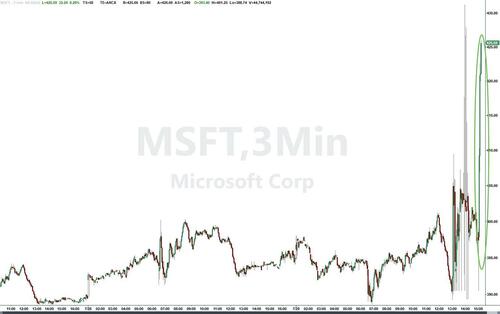
MSFT Bounces After Revenue Beat On Cloud Strength, CapEx In Line
Bull/Bear Index 46.1/100
macro ▲ Bull Impact 85/100 ZeroHedge 20d ago Read original ↗

MSFT Bounces After Revenue Beat On Cloud Strength, CapEx In Line

How this call is verified

▲ Bullish call was checked against the actual S&P 500 price 24h later: ✓ Hit (+1.66%).

Our record on calls like this

1,274 scored calls here, 46.8% right (±9.2pp). Always answering up would have scored 61.9% — so we are -15.1pp.

Bar: S&P 500 ±0.3% within 24h · every verdict lands on the public ledger

AI comment — why bullish

The recent financial results indicate a notable period of growth for the technology company, primarily fueled by the sustained expansion of its cloud computing division. This outperformance against revenue expectations, coupled with capital expenditure figures aligning with projections, points to effective resource management and a continued strong demand for the company's foundational technology offerings. Such a performance can contribute to a more favorable outlook among market participants, especially as they contend with broader economic uncertainties, including inflation and interest rate adjustments. The demonstrated stability and value creation by a significant technology entity can serve to temper market anxieties and potentially encourage a cautious increase in investor willingness to take on risk. This outcome underscores the enduring importance of digital infrastructure as a key component of investment considerations.

Key takeaway

"MSFT Bounces After Revenue Beat On Cloud Strength, CapEx In Line" — BullBear's AI rates this story as a bullish (positive) signal for markets, with a market-impact score of 85 out of 100. The recent financial results indicate a notable period of growth for the technology company, primarily fueled by the sustained expansion of its cloud computing division. This outperformance against revenue expectations, coupled with capital expenditure figures aligning with projections, points to effective resource management and a continued strong demand for the company's foundational technology offerings. Such a performance can contribute to a more favorable outlook among market participants, especially as they contend with broader economic uncertainties, including inflation and interest rate adjustments. The demonstrated stability and value creation by a significant technology entity can serve to temper market anxieties and potentially encourage a cautious increase in investor willingness to take on risk. This outcome underscores the enduring importance of digital infrastructure as a key component of investment considerations. That score reflects how strongly the story is likely to move Bitcoin, US equities, the dollar, and gold, and near-duplicate coverage of the same event is clustered so only the representative article is scored. Reported by ZeroHedge on July 29, 2026. The call is verified against the actual 24-hour price move on BullBear's public conviction ledger.

Catch the next bull catalyst

Telegram alerts when our AI scores a story 80+/100 impact (~1-3 per day, no spam). Verified 30d hit rate 45.2%.


Join Telegram channel

📡 Tomorrow's Watch

Related news

▲ Bull
58/100
ZeroHedge 3h ago

Trump Pauses 50% Canada Tariffs At 11th Hour, Declares "We Have A Deal"

US May Halve Canada Metals Tariffs As Friday Deal Deadline Looms Summary: US-Canada Trade Deal Would Cut Metals Tariffs to 25%: Report Trump: "It's good for everybody, but our farmers are going to be thrilled. Our manufacturers are going to be thrilled." Trump Pauses 50% Canada Tariffs At 11th Hour, Declares "We Have A Deal" US-Canada Trade Deal Would Cut Metals Tariffs to 25%: Report Sources told Bloomberg that a tentative trade deal would cut US tariffs on certain Canadian steel and aluminum exports to 25% from 50%. The report continued: The details have yet to be finalized and are not expected to apply across the board. Different rates could apply to some derivative products that include those metals, said some of the people, who requested anonymity to discuss terms of the agreement before it is announced. US and Canadian trade advisers continued negotiations Wednesday, less than 24 hours after President Donald Trump paused planned 50% tariffs on billions of dollars of Canadian goods for three days. The metals concessions could help the two countries reach a broader agreement before the pause expires Friday. President Trump earlier nodded to US concessions in the trade talks. 🚨 BOOM: President Trump just confirmed he's r

#macro
▼ Bear
📡 +1 72/100
ZeroHedge 3h ago

Ugly, Tailing 20Y Auction Prices At 2nd Highest Yield On Record; Would Have Been Highest If Bessent Hadn't Panicked

Rewritten: year auction yields trail, second-highest; Bessent panic averted record

The unusually weak demand in the recent 20‑year Treasury auction, pushing yields to the second‑highest level on record, signals tightening financing conditions across the curve and underscores lingering inflation concerns. With the yield spike narrowly missing a historic peak due to a brief panic‑driven sell‑off by Bessent, market participants are interpreting the episode as a reminder of limited depth in long‑dated sovereign debt, prompting a modest shift toward shorter maturities. This development dovetails with broader macro narratives of a Federal Reserve that remains hawkish amid sticky price pressures, reinforcing expectations of higher policy rates for longer. Investor confidence is consequently bruised, as risk‑averse capital retreats from longer‑term fixed‑income exposure, dampening appetite for riskier assets and heightening volatility in equity and credit markets. The episode may also prompt issuers to reconsider timing and pricing strategies, while fund managers reassess duration allocations amid heightened uncertainty.

The unusually weak demand in the recent 20‑year Treasury auction, pushing yields to the second‑highest level on record, signals tightening financing conditions across the curve and underscores lingering inflation concerns. With the yield spike narrowly missing a historic peak due to a brief panic‑driven sell‑off by Bessent, market participants are interpreting the episode as a reminder of limited depth in long‑dated sovereign debt, prompting a modest shift toward shorter maturities. This development dovetails with broader macro narratives of a Federal Reserve that remains hawkish amid sticky price pressures, reinforcing expectations of higher policy rates for longer. Investor confidence is consequently bruised, as risk‑averse capital retreats from longer‑term fixed‑income exposure, dampening appetite for riskier assets and heightening volatility in equity and credit markets. The episode may also prompt issuers to reconsider timing and pricing strategies, while fund managers reassess duration allocations amid heightened uncertainty.

#macro
▼ Bear
60/100
ZeroHedge 5h ago

La-Z-Boy Crashes Most Since 2022 As Frozen Housing Market Crushes Sofa Demand

Rewritten: La-Z-Boy shares tumble, largest drop since 2022, as slump hits sofa demand

An abrupt drop in La‑Z‑Boy’s share price, the steepest since 2022, signals that the lingering slowdown in residential construction is beginning to bite discretionary manufacturers. As mortgage rates stay elevated and new‑home starts remain flat, demand for high‑margin furniture such as recliners and sofas is weakening, pressuring earnings forecasts across the broader consumer‑durable sector. The sell‑off reverberates through equity markets, reinforcing a risk‑off bias that has been building since the Federal Reserve’s tightening cycle intensified. Investors are interpreting the move as a barometer of reduced household spending power, prompting a shift toward more defensive holdings and a reevaluation of exposure to cyclical retail names. Consequently, confidence in sectors tied to housing activity is eroding, and the appetite for speculative bets on growth‑oriented companies is likely to stay constrained until clearer signs of a housing market rebound emerge.

An abrupt drop in La‑Z‑Boy’s share price, the steepest since 2022, signals that the lingering slowdown in residential construction is beginning to bite discretionary manufacturers. As mortgage rates stay elevated and new‑home starts remain flat, demand for high‑margin furniture such as recliners and sofas is weakening, pressuring earnings forecasts across the broader consumer‑durable sector. The sell‑off reverberates through equity markets, reinforcing a risk‑off bias that has been building since the Federal Reserve’s tightening cycle intensified. Investors are interpreting the move as a barometer of reduced household spending power, prompting a shift toward more defensive holdings and a reevaluation of exposure to cyclical retail names. Consequently, confidence in sectors tied to housing activity is eroding, and the appetite for speculative bets on growth‑oriented companies is likely to stay constrained until clearer signs of a housing market rebound emerge.

#macro