Choose language / Korean

EN / 한
KOSPI Plunges 30%: Severe Correction After Surge
Bull/Bear Index 44.2/100
global ▼ Bear Impact 85/100 TokenPost 2h ago Read original ↗

KOSPI Plunges 30%: Severe Correction After Surge

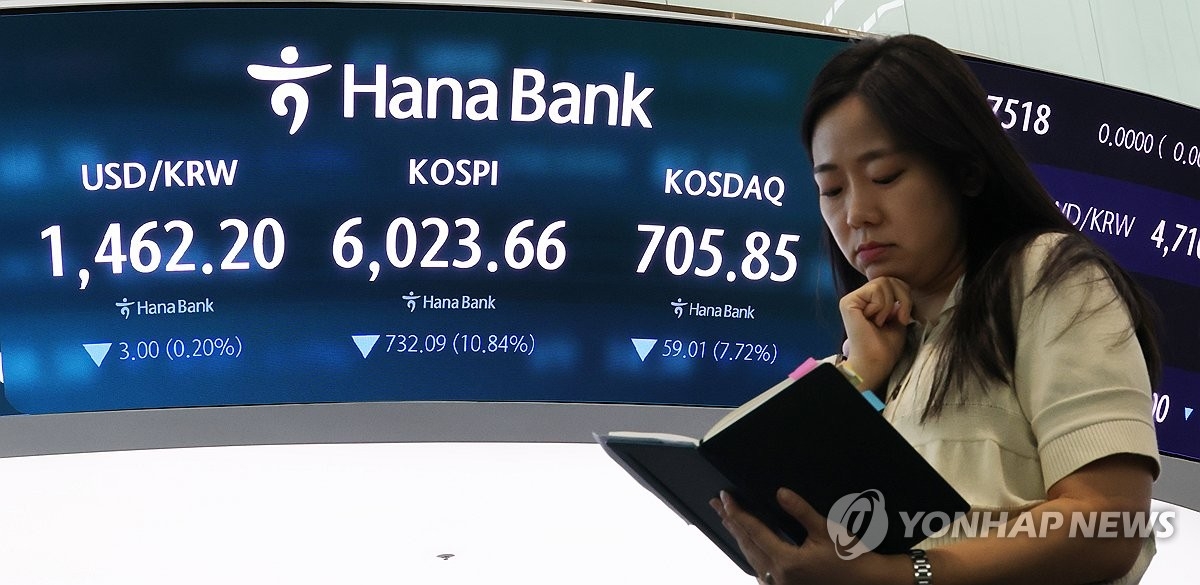
The KOSPI has fallen nearly 30% in July, significantly reversing the record highs of the first half of the year within a month. On the 28th, the KOSPI closed at 6,023.66, down 732.09 points (10.84%) from the previous day, marking the fourth-largest daily decline in history. The KOSDAQ also closed at 705.85, down 59.01 points (7.72%). Compared to its intraday high of 9,385.59 on June 19th, the KOSPI has fallen 35.8%, and the KOSDAQ is down 42% from its intraday high of 1,229.42 on April 27th. During trading, circuit breakers were simultaneously triggered on both the KOSPI and KOSDAQ, halting trading for 20 minutes due to sharp stock price volatility, including ETFs.

How this call is verified

The ▼ Bearish call is auto-verified against the actual S&P 500 price in ~22h.

Bar: S&P 500 ±0.3% within 24h · every verdict lands on the public ledger

Key takeaway

"KOSPI Plunges 30%: Severe Correction After Surge" — BullBear's AI rates this story as a bearish (negative) signal for markets, with a market-impact score of 85 out of 100. The KOSPI has fallen nearly 30% in July, significantly reversing the record highs of the first half of the year within a month. On the 28th, the KOSPI closed at 6,023.66, down 732.09 points (10.84%) from the previous day, marking the fourth-largest daily decline in history. The KOSDAQ also closed at 705.85, down 59.01 points (7.72%). Compared to its intraday high of 9,385.59 on June 19th, the KOSPI has fallen 35.8%, and the KOSDAQ is down 42% from its intraday high of 1,229.42 on April 27th. During trading, circuit breakers were simultaneously triggered on both the KOSPI and KOSDAQ, halting trading for 20 minutes due to sharp stock price volatility, including ETFs. Reported by TokenPost on July 28, 2026. The call is verified against the actual 24-hour price move on BullBear's public conviction ledger.

Catch the next bear flag

Telegram alerts when our AI scores a story 80+/100 impact (~1-3 per day, no spam). Verified 30d hit rate 51.4%.

Join Telegram channel

📡 Tomorrow's Watch

Related news

▼ Bear
80/100
ZeroHedge 5h ago

Korea Barbeque'd: Kospi Crashes As Chip Stocks Tank, AI Token Index Spirals Lower

Rewritten: Korean stocks plummet amid chip and AI token declines.

South Korean stocks (Kospi) plunged due to concerns over circular AI financing and China's expanding DUV lithography capabilities, with chip stocks and the AI Token Index also falling.

Recent market performance in South Korea has been characterized by a significant downturn, primarily driven by a sharp decline in the technology sector, particularly semiconductor stocks. This weakness in a key industry segment has exerted considerable downward pressure on the broader Kospi index. Concurrently, an index tracking artificial intelligence-related tokens has experienced a substantial downward spiral, indicating a loss of investor confidence or a reassessment of valuations within this emerging digital asset class. The combined effect of these movements suggests a challenging environment for growth-oriented technology and digital assets, contributing to the overall bearish sentiment observed in the market.

Recent market performance in South Korea has been characterized by a significant downturn, primarily driven by a sharp decline in the technology sector, particularly semiconductor stocks. This weakness in a key industry segment has exerted considerable downward pressure on the broader Kospi index. Concurrently, an index tracking artificial intelligence-related tokens has experienced a substantial downward spiral, indicating a loss of investor confidence or a reassessment of valuations within this emerging digital asset class. The combined effect of these movements suggests a challenging environment for growth-oriented technology and digital assets, contributing to the overall bearish sentiment observed in the market.

#global
▼ Bear
75/100
Google News Bitcoin (EN) 9h ago

Bitcoin slides 2% after U.S. close while Korea’s Kospi plunges 10%

Rewritten: Bitcoin drops 2%, Kospi falls 10% post-U.S. market close.

Bitcoin slides 2% after U.S. close while Korea’s Kospi plunges 10%

The divergence in performance between Bitcoin and the Kospi highlights distinct pressures affecting global risk assets. Bitcoin's modest decline suggests a degree of resilience or perhaps a more concentrated sell-off, while the Kospi's significant plunge points to broader anxieties within traditional equity markets, potentially driven by regional economic concerns or geopolitical tensions. This disparity can foster a cautious market sentiment, as investors weigh the specific risks impacting different asset classes. Macroeconomic headwinds, such as inflation data or central bank policy shifts, likely continue to influence investor confidence, leading to a reduced risk appetite across the board. The contrasting movements may prompt a reassessment of portfolio allocations, with some investors seeking perceived safe havens while others deleverage from more volatile positions.

The divergence in performance between Bitcoin and the Kospi highlights distinct pressures affecting global risk assets. Bitcoin's modest decline suggests a degree of resilience or perhaps a more concentrated sell-off, while the Kospi's significant plunge points to broader anxieties within traditional equity markets, potentially driven by regional economic concerns or geopolitical tensions. This disparity can foster a cautious market sentiment, as investors weigh the specific risks impacting different asset classes. Macroeconomic headwinds, such as inflation data or central bank policy shifts, likely continue to influence investor confidence, leading to a reduced risk appetite across the board. The contrasting movements may prompt a reassessment of portfolio allocations, with some investors seeking perceived safe havens while others deleverage from more volatile positions.

#global
▼ Bear
75/100
Google News Bitcoin (EN) 10h ago

Chip Shock Rocks Asia: KOSPI Plunges, Bitcoin Under Pressure

Rewritten: Asian markets fall on chip sector news.

A chip shock is impacting Asia, causing the KOSPI index to plunge and putting Bitcoin under pressure.

The recent sharp decline observed in key equity indices, particularly within Asian markets, alongside downward pressure on cryptocurrency valuations, indicates a notable shift in investor sentiment. This broad market movement suggests underlying concerns regarding the health of the global technology sector and its associated supply chains. The synchronized nature of these declines points towards a potential confluence of factors, including the impact of evolving monetary policies and broader anxieties about global economic expansion. Such a pronounced market reaction can lead to a recalibration of risk appetites, potentially prompting a reallocation of capital away from growth-oriented or speculative assets. Consequently, this trend may necessitate a re-evaluation of asset valuations across a wider spectrum of industries and geographies that are significantly influenced by technological advancements and global economic conditions.

The recent sharp decline observed in key equity indices, particularly within Asian markets, alongside downward pressure on cryptocurrency valuations, indicates a notable shift in investor sentiment. This broad market movement suggests underlying concerns regarding the health of the global technology sector and its associated supply chains. The synchronized nature of these declines points towards a potential confluence of factors, including the impact of evolving monetary policies and broader anxieties about global economic expansion. Such a pronounced market reaction can lead to a recalibration of risk appetites, potentially prompting a reallocation of capital away from growth-oriented or speculative assets. Consequently, this trend may necessitate a re-evaluation of asset valuations across a wider spectrum of industries and geographies that are significantly influenced by technological advancements and global economic conditions.

#global
▼ Bear
75/100
Wolf Street 10h ago

Korean KOSPI Crashes 10.8% Today, -34% in 25 Days, after 300% Spike, as Consensual Hallucination Fades

Rewritten: KOSPI Plunges 10.8% Today, Down 34% From Peak

Amid general chipmaker bloodbath, SK Hynix and Samsung, which make up half of the index, crashed even more.

The precipitous decline in the Korean KOSPI, following an extended period of parabolic gains, signals a potential shift in global risk sentiment. Such a sharp correction, particularly after a significant speculative run, can trigger broader market contagion fears, as investors reassess valuations across various asset classes. This event is likely to dampen investor confidence, leading to a pronounced aversion to risk and a potential flight to perceived safe-haven assets. The unwinding of what appears to have been a "consensual hallucination" underscores the fragility of speculative bubbles and their susceptibility to macro-economic shifts, such as tightening monetary policy or geopolitical uncertainties, which may now be exerting a more tangible influence on market psychology. The rapid evaporation of gains suggests a swift recalibration of expectations, impacting not only regional markets but also potentially influencing the risk appetite of global institutional investors.

The precipitous decline in the Korean KOSPI, following an extended period of parabolic gains, signals a potential shift in global risk sentiment. Such a sharp correction, particularly after a significant speculative run, can trigger broader market contagion fears, as investors reassess valuations across various asset classes. This event is likely to dampen investor confidence, leading to a pronounced aversion to risk and a potential flight to perceived safe-haven assets. The unwinding of what appears to have been a "consensual hallucination" underscores the fragility of speculative bubbles and their susceptibility to macro-economic shifts, such as tightening monetary policy or geopolitical uncertainties, which may now be exerting a more tangible influence on market psychology. The rapid evaporation of gains suggests a swift recalibration of expectations, impacting not only regional markets but also potentially influencing the risk appetite of global institutional investors.

#global
▼ Bear
75/100
Google News Stock Market (EN) 13h ago

U.S. stock futures slip, South Korea's Kospi plunges over 8%: Live updates - CNBC

Rewritten: US futures fall; South Korea's Kospi drops 8%

U.S. stock futures slip, South Korea's Kospi plunges over 8%: Live updates CNBC

A notable dip in U.S. stock futures, coupled with a significant decline in South Korea's Kospi, signals a cautious to negative sentiment permeating global markets. This broad market implication suggests investors are reassessing risk exposure, potentially driven by ongoing macroeconomic concerns such as inflation pressures and tightening monetary policy. The sharp sell-off in a key Asian market can amplify existing anxieties, leading to a palpable impact on market sentiment and a discernible shift away from riskier assets. Such events tend to erode investor confidence, prompting a more defensive stance and a reduced appetite for speculative investments as participants prioritize capital preservation amidst heightened uncertainty. The interconnectedness of global financial systems means regional downturns can quickly translate into broader market jitters, influencing trading decisions worldwide.

A notable dip in U.S. stock futures, coupled with a significant decline in South Korea's Kospi, signals a cautious to negative sentiment permeating global markets. This broad market implication suggests investors are reassessing risk exposure, potentially driven by ongoing macroeconomic concerns such as inflation pressures and tightening monetary policy. The sharp sell-off in a key Asian market can amplify existing anxieties, leading to a palpable impact on market sentiment and a discernible shift away from riskier assets. Such events tend to erode investor confidence, prompting a more defensive stance and a reduced appetite for speculative investments as participants prioritize capital preservation amidst heightened uncertainty. The interconnectedness of global financial systems means regional downturns can quickly translate into broader market jitters, influencing trading decisions worldwide.

#global