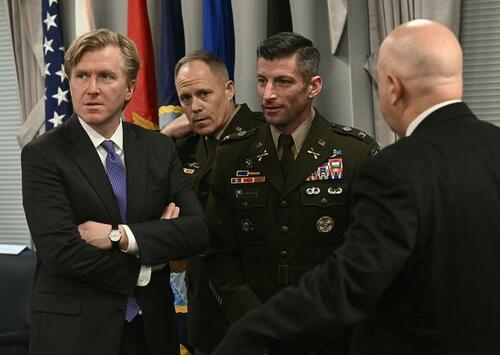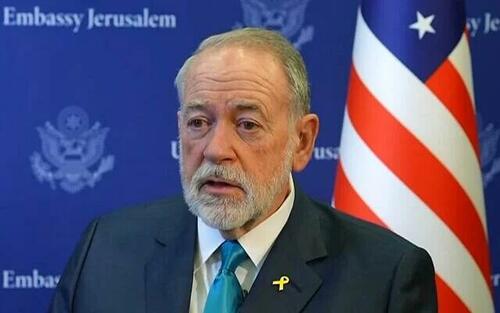
Not Giving The Pentagon $1.5 Trillion Is the 'Greatest Threat' Facing The US, Hegseth Claims
How this call is verified
▼ Bearish call was checked against the actual S&P 500 price 24h later: — Flat (+0.00%, below the ±0.3% bar).
Our record on calls like this
1,129 scored calls here, 46.8% right (±7.7pp). Always answering up would have scored 60.3% on the same rows. Paired within the same day and asset, our directional edge is +1.9 pp ± 4.3 — inside the error bar, i.e. indistinguishable from zero.
Bar: S&P 500 ±0.3% within 24h · every verdict lands on the public ledger
AI comment — why bearish
A substantial decrease in defense expenditure, as implied by the assertion that withholding $1.5 trillion from the Pentagon constitutes the primary risk to the United States, could precipitate widespread market ramifications. Such a budgetary adjustment might be construed as a diminution of the nation's security framework, potentially fostering a negative shift in investor sentiment by amplifying geopolitical instability. This scenario intersects with broader macroeconomic considerations concerning international equilibrium and the influence of military strength on global commerce and capital deployment. A perceived erosion of defense readiness could diminish investor assurance, prompting a contraction in risk tolerance as financial assets migrate towards more secure alternatives. While certain industries might experience advantages from redirected financial resources, the prevailing market mood could adopt a bearish disposition owing to intensified global apprehensions.
Key takeaway
"Not Giving The Pentagon $1.5 Trillion Is the 'Greatest Threat' Facing The US, Hegseth Claims" — BullBear's AI rates this story as a bearish (negative) signal for markets, with a market-impact score of 65 out of 100. That score reflects how strongly the story is likely to move Bitcoin, US equities, the dollar, and gold, and near-duplicate coverage of the same event is clustered so only the representative article is scored. Reported by ZeroHedge on July 25, 2026. The call is verified against the actual 24-hour price move on BullBear's public conviction ledger.
Catch the next bear flag
Telegram alerts when our AI scores a story 80+/100 impact (~1-3 per day, no spam). Verified 30d hit rate 45.5%.