Choose language / Korean

EN / 한
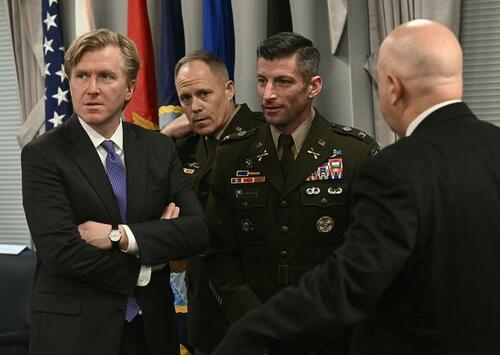
Death Toll Revised Lower: Trump Admin Accused Of Playing Politics With Iran War Casualties
Bull/Bear Index 47.9/100
macro ▼ Bear Impact 60/100 ZeroHedge 22d ago Read original ↗

Death Toll Revised Lower: Trump Admin Accused Of Playing Politics With Iran War Casualties

How this call is verified

▼ Bearish call was checked against the actual S&P 500 price 24h later: — Flat (+0.00%, below the ±0.3% bar).

Our record on calls like this

1,253 scored calls here, 46.3% right (±9.3pp). Always answering up would have scored 62.6% — so we are -16.3pp.

Bar: S&P 500 ±0.3% within 24h · every verdict lands on the public ledger

AI comment — why bearish

Revised casualty figures related to Iran, coupled with accusations of political influence, introduce a degree of uncertainty into the assessment of geopolitical risks. This situation could lead to a more cautious market sentiment, particularly affecting industries reliant on regional stability, such as the energy and defense sectors. Investors may find themselves scrutinizing the interplay between political discourse and economic realities, which can have indirect consequences for global trade and investment strategies. The development also highlights the broader influence of domestic political considerations on international relations and foreign policy. As a result, market participants might adopt a more risk-averse approach, re-evaluating the dependability of official data and its potential implications for future geopolitical events and their subsequent economic ramifications.

Key takeaway

"Death Toll Revised Lower: Trump Admin Accused Of Playing Politics With Iran War Casualties" — BullBear's AI rates this story as a bearish (negative) signal for markets, with a market-impact score of 60 out of 100. Revised casualty figures related to Iran, coupled with accusations of political influence, introduce a degree of uncertainty into the assessment of geopolitical risks. This situation could lead to a more cautious market sentiment, particularly affecting industries reliant on regional stability, such as the energy and defense sectors. Investors may find themselves scrutinizing the interplay between political discourse and economic realities, which can have indirect consequences for global trade and investment strategies. The development also highlights the broader influence of domestic political considerations on international relations and foreign policy. As a result, market participants might adopt a more risk-averse approach, re-evaluating the dependability of official data and its potential implications for future geopolitical events and their subsequent economic ramifications. That score reflects how strongly the story is likely to move Bitcoin, US equities, the dollar, and gold, and near-duplicate coverage of the same event is clustered so only the representative article is scored. Reported by ZeroHedge on July 24, 2026. The call is verified against the actual 24-hour price move on BullBear's public conviction ledger.

Catch the next bear flag

Telegram alerts when our AI scores a story 80+/100 impact (~1-3 per day, no spam). Verified 30d hit rate 47.3%.

Join Telegram channel

📡 Tomorrow's Watch

Related news

▼ Bear
70/100
ZeroHedge 4h ago

Ukraine Hits Key Russian Space Facility With Flamingo Cruise Missiles

Rewritten: Ukraine strikes Russian space hub with Flamingo cruise missiles

The strike on a major Russian space launch complex underscores heightened geopolitical risk, prompting investors to reassess exposure to defense‑linked equities and commodities tied to the conflict. Heightened tension may weigh on risk‑off sentiment, bolstering safe‑haven assets such as gold and the U.S. dollar while pressuring emerging‑market currencies that are already vulnerable to sanctions‑related supply chain disruptions. The episode dovetails with broader macro concerns about energy security, as any escalation could tighten Russian fuel exports, reinforcing inflationary pressures and complicating central‑bank policy paths. Consequently, confidence in markets that depend on stable geopolitical conditions may erode, leading risk‑averse participants to trim positions in cyclical sectors and seek diversification. While the immediate impact on global indices may be modest, the incident reinforces a narrative of persistent volatility that could dampen appetite for higher‑yield, higher‑risk assets.

The strike on a major Russian space launch complex underscores heightened geopolitical risk, prompting investors to reassess exposure to defense‑linked equities and commodities tied to the conflict. Heightened tension may weigh on risk‑off sentiment, bolstering safe‑haven assets such as gold and the U.S. dollar while pressuring emerging‑market currencies that are already vulnerable to sanctions‑related supply chain disruptions. The episode dovetails with broader macro concerns about energy security, as any escalation could tighten Russian fuel exports, reinforcing inflationary pressures and complicating central‑bank policy paths. Consequently, confidence in markets that depend on stable geopolitical conditions may erode, leading risk‑averse participants to trim positions in cyclical sectors and seek diversification. While the immediate impact on global indices may be modest, the incident reinforces a narrative of persistent volatility that could dampen appetite for higher‑yield, higher‑risk assets.

#macro
▼ Bear
62/100
ZeroHedge 6h ago

Lutnick Draws Red Line: "Great American Companies" Shouldn't Use Chinese Memory Chips

Rewritten: Lutnick says top U.S. firms must avoid Chinese memory chips

By publicly urging American firms to shun Chinese‑made memory chips, the CEO amplifies geopolitical risk concerns that have already been feeding into supply‑chain diversification strategies. Investors may interpret the stance as a signal that regulatory pressure could intensify, prompting a reassessment of exposure to firms reliant on Asian semiconductor components and potentially widening sector spreads. This sentiment dovetails with broader macro themes of de‑globalisation and heightened U.S.–China tensions, reinforcing expectations of tighter export controls and a shift toward domestic sourcing. As confidence in the resilience of technology supply chains wanes, risk‑averse capital could migrate toward safer assets, dampening appetite for equities tied to hardware manufacturing while bolstering defensive positions. Overall, the remarks could temper optimism in the broader market, prompting a more cautious investment outlook.

By publicly urging American firms to shun Chinese‑made memory chips, the CEO amplifies geopolitical risk concerns that have already been feeding into supply‑chain diversification strategies. Investors may interpret the stance as a signal that regulatory pressure could intensify, prompting a reassessment of exposure to firms reliant on Asian semiconductor components and potentially widening sector spreads. This sentiment dovetails with broader macro themes of de‑globalisation and heightened U.S.–China tensions, reinforcing expectations of tighter export controls and a shift toward domestic sourcing. As confidence in the resilience of technology supply chains wanes, risk‑averse capital could migrate toward safer assets, dampening appetite for equities tied to hardware manufacturing while bolstering defensive positions. Overall, the remarks could temper optimism in the broader market, prompting a more cautious investment outlook.

#macro