Choose language / 한국어

EN / 한
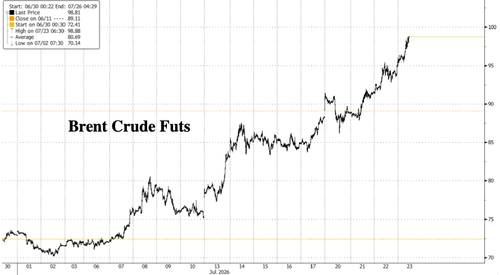
RBC Commodities Chief Warns "War Entering Dangerous Phase" As Chokepoint Chaos Risks Oil Above 2008 Peak
Bull/Bear Index 46.6/100
macro ▼ Bear Impact 90/100 ZeroHedge Jul 23, 2026 Read original ↗

RBC Commodities Chief Warns "War Entering Dangerous Phase" As Chokepoint Chaos Risks Oil Above 2008 Peak

How this call is verified

▼ Bearish call was checked against the actual S&P 500 price 24h later: — Flat (-0.20%, below the ±0.3% bar).

Our record on calls like this

1,108 scored calls here, 46.1% right (±7.8pp). Always answering up would have scored 61.1% on the same rows. Paired within the same day and asset, our directional edge is +0.9 pp ± 3.9 — inside the error bar, i.e. indistinguishable from zero.

Bar: S&P 500 ±0.3% within 24h · every verdict lands on the public ledger

AI comment — why bearish

Geopolitical tensions are escalating, creating significant upward pressure on global energy markets. Disruptions to key shipping routes, particularly those vital for oil and gas transit, are intensifying, leading to concerns about supply chain stability. This heightened risk of chokepoint blockades or severe operational impediments could trigger substantial price volatility. Analysts are observing that the current market dynamics, characterized by these supply-side vulnerabilities and ongoing conflict escalation, bear resemblance to periods of extreme price surges seen in past commodity cycles. The potential for further supply constraints, coupled with persistent demand, suggests a scenario where energy prices could reach levels not observed in over a decade. This situation warrants close monitoring as it could impact inflation and economic growth globally.

Key takeaway

"RBC Commodities Chief Warns "War Entering Dangerous Phase" As Chokepoint Chaos Risks Oil Above 2008 Peak" — BullBear's AI rates this story as a bearish (negative) signal for markets, with a market-impact score of 90 out of 100. That score reflects how strongly the story is likely to move Bitcoin, US equities, the dollar, and gold, and near-duplicate coverage of the same event is clustered so only the representative article is scored. Reported by ZeroHedge on July 23, 2026. The call is verified against the actual 24-hour price move on BullBear's public conviction ledger.

Catch the next bear flag

Telegram alerts when our AI scores a story 80+/100 impact (~1-3 per day, no spam). Verified 30d hit rate 40.0%.


Join Telegram channel

📡 Tomorrow's Watch

Related news

40/100
ZeroHedge 2h ago

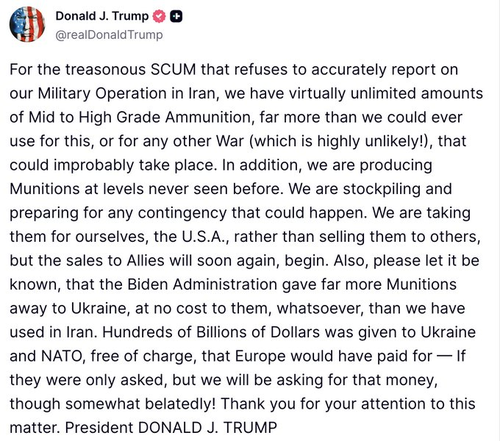
Trump Rages Against 'Treasonous Scum' In Media For Iran War Coverage

Trump Rages Against 'Treasonous Scum' In Media For Iran War Coverage President Trump took to Truth Social on Thursday to rage against US media coverage of the Iran war (not for the first time), following Treasury Scott Bessent giving similar scathing remarks earlier this week. Trump particularly singled out recent and ongoing reports of US missile and interceptor shortages, which he has slammed as false. He called out the "treasonous SCUM" in the media for issuing supposedly inaccurate reports on "our Military Operation in Iran" - claiming that the US has "virtually unlimited amounts of Mid to High Grade Ammunition". But also notably, and in a seeming implicit contradiction, he said the USA is not at the moment "selling them to others" but is producing and stockpiling at "levels never seen before." This is amid an ongoing scramble for Europe to find an avenue to transfer more Patriots to Ukraine, as Zelensky is essentially betting for more missiles. Trump once again further blamed the prior Biden administration for handing

#macro
▼ Bear
60/100
ZeroHedge 3h ago

'Crisis Preparedness': Dutch Move Billions In Gold Out Of US As Goldman Warns Of 'Geographic Concentration Risk'

The shift of billions of dollars worth of gold out of the United States by Dutch investors, prompted by Goldman Sachs' warning about geographic concentration risk, underscores a growing awareness of systemic exposure in precious‑metal holdings. By reallocating assets to more diversified jurisdictions, market participants signal heightened caution, which could dampen demand for U.S.-based bullion and pressure spot prices. The move dovetails with broader macro concerns over supply‑chain resilience, geopolitical tensions, and the concentration of financial assets in a single market, reinforcing narratives of de‑globalisation and risk dispersion. Investor confidence may erode as the episode highlights vulnerability to regional shocks, prompting a tilt toward broader commodity baskets or alternative safe‑haven assets. Consequently, risk appetite in the precious‑metal sector could contract, while capital flows may favor jurisdictions perceived as offering greater geopolitical stability and regulatory transparency.

The shift of billions of dollars worth of gold out of the United States by Dutch investors, prompted by Goldman Sachs' warning about geographic concentration risk, underscores a growing awareness of systemic exposure in precious‑metal holdings. By reallocating assets to more diversified jurisdictions, market participants signal heightened caution, which could dampen demand for U.S.-based bullion and pressure spot prices. The move dovetails with broader macro concerns over supply‑chain resilience, geopolitical tensions, and the concentration of financial assets in a single market, reinforcing narratives of de‑globalisation and risk dispersion. Investor confidence may erode as the episode highlights vulnerability to regional shocks, prompting a tilt toward broader commodity baskets or alternative safe‑haven assets. Consequently, risk appetite in the precious‑metal sector could contract, while capital flows may favor jurisdictions perceived as offering greater geopolitical stability and regulatory transparency.

#macro
▼ Bear
70/100
ZeroHedge 3h ago

'Non-Market': The One Word That Blew Up The G20 Communiqué

The insertion of the term “non‑market” into the G20 communiqué has sparked a sharp reaction across equity and currency markets, as participants interpret it as a signal that policymakers may tolerate distortions in pricing mechanisms. By highlighting concerns over state‑driven interventions, the language reinforces a narrative of heightened regulatory risk, dampening sentiment and prompting a modest shift toward defensive assets. This development dovetails with broader macro themes of tightening monetary policy and geopolitical uncertainty, where authorities are balancing growth support against inflationary pressures. Investor confidence is likely to erode further as the ambiguity surrounding the phrase fuels doubts about the consistency of policy frameworks, curbing risk appetite and encouraging a reallocation toward cash, high‑quality bonds, and commodities perceived as safe havens in the near term.

The insertion of the term “non‑market” into the G20 communiqué has sparked a sharp reaction across equity and currency markets, as participants interpret it as a signal that policymakers may tolerate distortions in pricing mechanisms. By highlighting concerns over state‑driven interventions, the language reinforces a narrative of heightened regulatory risk, dampening sentiment and prompting a modest shift toward defensive assets. This development dovetails with broader macro themes of tightening monetary policy and geopolitical uncertainty, where authorities are balancing growth support against inflationary pressures. Investor confidence is likely to erode further as the ambiguity surrounding the phrase fuels doubts about the consistency of policy frameworks, curbing risk appetite and encouraging a reallocation toward cash, high‑quality bonds, and commodities perceived as safe havens in the near term.

#macro