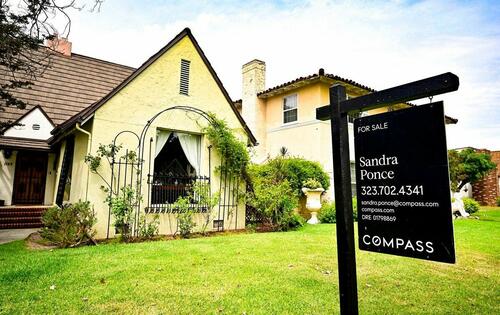
30-Year Fixed-Rate Mortgage Reaches Highest Level In Almost A Year
How this call is verified
▼ Bearish call was checked against the actual S&P 500 price 24h later: ✗ Miss (+0.42%).
Our record on calls like this
1,108 scored calls here, 46.1% right (±7.8pp). Always answering up would have scored 61.1% on the same rows. Paired within the same day and asset, our directional edge is +0.9 pp ± 3.9 — inside the error bar, i.e. indistinguishable from zero.
Bar: S&P 500 ±0.3% within 24h · every verdict lands on the public ledger
AI comment — why bearish
The recent surge in the 30-year fixed-rate mortgage to a level not seen in nearly twelve months indicates a discernible tightening within the credit markets. This upward trajectory in borrowing costs is likely to exert downward pressure on consumer discretionary spending and could significantly temper activity within the real estate sector. Such a trend is consistent with prevailing inflationary pressures and the Federal Reserve's continued commitment to managing price stability through its monetary policy framework. As a result, market participants may adopt a more conservative stance, scrutinizing the potential ramifications of elevated financing expenses on corporate profitability and the overall trajectory of economic expansion. This environment could foster a decrease in risk tolerance, potentially prompting a reallocation of capital towards more secure assets as economic predictability diminishes. The resulting shift in investor sentiment may necessitate a reassessment of investment portfolios and a greater inclination towards defensive investment approaches.
Key takeaway
"30-Year Fixed-Rate Mortgage Reaches Highest Level In Almost A Year" — BullBear's AI rates this story as a bearish (negative) signal for markets, with a market-impact score of 80 out of 100. That score reflects how strongly the story is likely to move Bitcoin, US equities, the dollar, and gold, and near-duplicate coverage of the same event is clustered so only the representative article is scored. Reported by ZeroHedge on July 20, 2026. The call is verified against the actual 24-hour price move on BullBear's public conviction ledger.
Catch the next bear flag
Telegram alerts when our AI scores a story 80+/100 impact (~1-3 per day, no spam). Verified 30d hit rate 40.4%.