Choose language / Korean

400+ Ukrainian Drones Launched On Moscow In One Of Biggest Attack Waves To Date
Bull/Bear Index 46.4/100
macro ▼ Bear Impact 85/100 ZeroHedge 14h ago Read original ↗

400+ Ukrainian Drones Launched On Moscow In One Of Biggest Attack Waves To Date

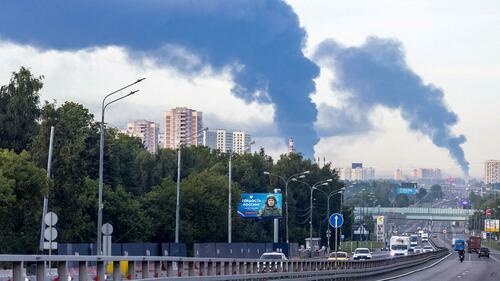
The Russian capital has been hit with a massive drone wave from Ukraine, which injured at least ten people - including three Chinese citizens - local authorities say. Moscow Mayor Sergei Sobyanin has stated that more than 400 UAVs were launched toward Moscow and its suburbs overnight in one of the largest single raids since the war's start.

AI Insight

The recent large-scale drone activity targeting Moscow highlights an escalating geopolitical landscape, which introduces considerable uncertainty into global financial markets. Such events can prompt a shift towards less volatile assets, potentially diminishing investor enthusiasm for riskier investments. This heightened caution stems from growing concerns about potential disruptions to global supply chains and the stability of energy resources. These developments align with broader macroeconomic concerns regarding the protracted economic consequences of ongoing conflict, including persistent inflationary pressures and a potential slowdown in global economic expansion. As a result, market participants may experience a decline in confidence, leading to increased price fluctuations across various asset classes as they re-evaluate the impact of geopolitical risk premiums on corporate profitability and overall economic resilience. The persistent nature of these attacks also underscores the evolving dynamics of modern conflict and its tangible effects on international commerce and financial systems.

Key takeaway

"400+ Ukrainian Drones Launched On Moscow In One Of Biggest Attack Waves To Date" — BullBear's AI rates this story as a bearish (negative) signal for markets, with a market-impact score of 85 out of 100. The Russian capital has been hit with a massive drone wave from Ukraine, which injured at least ten people - including three Chinese citizens - local authorities say. Moscow Mayor Sergei Sobyanin has stated that more than 400 UAVs were launched toward Moscow and its suburbs overnight in one of the largest single raids since the war's start. The recent large-scale drone activity targeting Moscow highlights an escalating geopolitical landscape, which introduces considerable uncertainty into global financial markets. Such events can prompt a shift towards less volatile assets, potentially diminishing investor enthusiasm for riskier investments. This heightened caution stems from growing concerns about potential disruptions to global supply chains and the stability of energy resources. These developments align with broader macroeconomic concerns regarding the protracted economic consequences of ongoing conflict, including persistent inflationary pressures and a potential slowdown in global economic expansion. As a result, market participants may experience a decline in confidence, leading to increased price fluctuations across various asset classes as they re-evaluate the impact of geopolitical risk premiums on corporate profitability and overall economic resilience. The persistent nature of these attacks also underscores the evolving dynamics of modern conflict and its tangible effects on international commerce and financial systems. That score reflects how strongly the story is likely to move Bitcoin, US equities, the dollar, and gold, and near-duplicate coverage of the same event is clustered so only the representative article is scored. Reported by ZeroHedge on July 20, 2026. The call is verified against the actual 24-hour price move on BullBear's public conviction ledger.

Catch the next bear flag

Telegram alerts when our AI scores a story 80+/100 impact (~1-3 per day, no spam). Verified 30d hit rate 52.2%.

Join Telegram channel

📡 Tomorrow's Watch

Related news

▼ Bear
80/100
Google News Macroeconomics (EN) 1h ago

Analysts Warn High Oil Prices Could Renew Inflation Pressure

Rewritten: Here are a few options, keeping the meaning and constraints: * **Oil

Analysts warn that high oil prices could renew inflation pressure.

Sustained high crude oil prices pose a considerable challenge to economic equilibrium, carrying the potential to reintroduce inflationary pressures that had begun to recede. Such a scenario could lead to a recalibration of market sentiment, drawing attention back to the impact of rising costs on households and potentially overshadowing discussions of economic expansion. The influence of energy prices on the broader economic landscape is undeniable, as they are a fundamental component of production and consumption across various sectors. This could foster a more risk-averse investment climate, prompting a re-evaluation of asset values and projected corporate profitability. Consequently, sectors perceived as more resilient to economic downturns might gain favor, while industries heavily reliant on consumer spending or susceptible to escalating input costs could face increased headwinds.

Sustained high crude oil prices pose a considerable challenge to economic equilibrium, carrying the potential to reintroduce inflationary pressures that had begun to recede. Such a scenario could lead to a recalibration of market sentiment, drawing attention back to the impact of rising costs on households and potentially overshadowing discussions of economic expansion. The influence of energy prices on the broader economic landscape is undeniable, as they are a fundamental component of production and consumption across various sectors. This could foster a more risk-averse investment climate, prompting a re-evaluation of asset values and projected corporate profitability. Consequently, sectors perceived as more resilient to economic downturns might gain favor, while industries heavily reliant on consumer spending or susceptible to escalating input costs could face increased headwinds.

#macro
▼ Bear
65/100
Google News Macroeconomics (EN) 1h ago

Palladium Falls as Oil, Fed Bets Weigh - TradingView

Rewritten: Here are a few options, keeping the meaning and word count: *

Palladium prices are falling as oil prices rise and bets on further Federal Reserve interest rate hikes increase.

The recent downward movement in palladium prices, influenced by fluctuations in crude oil markets and adjustments in anticipated Federal Reserve monetary policy, suggests a broader reassessment of risk premiums across various financial instruments. This pressure on a significant industrial commodity could foster a more risk-averse market environment. Investors are likely evaluating the dual impact of elevated energy expenses and the possibility of prolonged higher interest rates. These macro-economic factors are closely tied to global inflation management and the trajectory of economic expansion, which in turn may temper overall investor optimism. As a result, a contraction in risk tolerance could emerge, potentially prompting a shift towards assets perceived as more stable, as market participants re-evaluate their allocations within commodities and other sectors sensitive to economic growth.

The recent downward movement in palladium prices, influenced by fluctuations in crude oil markets and adjustments in anticipated Federal Reserve monetary policy, suggests a broader reassessment of risk premiums across various financial instruments. This pressure on a significant industrial commodity could foster a more risk-averse market environment. Investors are likely evaluating the dual impact of elevated energy expenses and the possibility of prolonged higher interest rates. These macro-economic factors are closely tied to global inflation management and the trajectory of economic expansion, which in turn may temper overall investor optimism. As a result, a contraction in risk tolerance could emerge, potentially prompting a shift towards assets perceived as more stable, as market participants re-evaluate their allocations within commodities and other sectors sensitive to economic growth.

#macro
▼ Bear
70/100
Google News Macroeconomics (EN) 3h ago

Money Market Funds Flee Interest Rate Risk

Rewritten: Here are a few options, keeping the meaning, under 12 words, and

Money market funds are reportedly moving to reduce their exposure to interest rate risk.

The observed substantial withdrawals from money market funds indicate a discernible trend of investors reducing their exposure to interest rate sensitivity. This reallocation suggests a prevailing sentiment of caution, where the emphasis shifts towards safeguarding principal rather than maximizing returns, particularly amidst an environment characterized by ambiguity in monetary policy direction. Such investor behavior is frequently correlated with broader economic anxieties, including concerns about persistent inflation and the possibility of an economic deceleration, which collectively drive a movement towards assets perceived as more secure. This heightened focus on capital preservation can translate into a noticeable impact on overall investor confidence, potentially leading to a subdued appetite for riskier assets and a greater inclination towards defensive portfolio strategies. This pattern of investor action may serve as an early indicator or a concurrent development alongside broader market adjustments as market participants reassess their outlook on future economic trajectories and the potential responses from central banking authorities.

The observed substantial withdrawals from money market funds indicate a discernible trend of investors reducing their exposure to interest rate sensitivity. This reallocation suggests a prevailing sentiment of caution, where the emphasis shifts towards safeguarding principal rather than maximizing returns, particularly amidst an environment characterized by ambiguity in monetary policy direction. Such investor behavior is frequently correlated with broader economic anxieties, including concerns about persistent inflation and the possibility of an economic deceleration, which collectively drive a movement towards assets perceived as more secure. This heightened focus on capital preservation can translate into a noticeable impact on overall investor confidence, potentially leading to a subdued appetite for riskier assets and a greater inclination towards defensive portfolio strategies. This pattern of investor action may serve as an early indicator or a concurrent development alongside broader market adjustments as market participants reassess their outlook on future economic trajectories and the potential responses from central banking authorities.

#macro
▼ Bear
70/100
Google News Macroeconomics (EN) 6h ago

Gold edges lower to near $4,000 as US-Iran tensions fuel inflation worries - FXStreet

Rewritten: Here are a few options, keeping the meaning and constraints: * Gold

Gold prices have edged lower to near $4,000 amid rising US-Iran tensions that are fueling inflation worries.

The slight decline in gold prices, despite underlying inflationary concerns stemming from US-Iran tensions, suggests a complex interplay of factors influencing safe-haven demand. While geopolitical instability typically bolsters gold, its current trajectory may indicate that broader market participants are prioritizing other asset classes or that the inflationary impact is being absorbed elsewhere in the economic system. This could lead to a more cautious market sentiment, as investors weigh the dual forces of geopolitical risk and potential economic headwinds. The connection to macro themes remains strong, with energy price volatility and supply chain disruptions continuing to be key drivers. Consequently, investor confidence might see a nuanced impact, with risk appetite potentially tempered by the uncertainty surrounding both geopolitical developments and their inflationary consequences, leading to a more defensive posture in portfolio allocations.

The slight decline in gold prices, despite underlying inflationary concerns stemming from US-Iran tensions, suggests a complex interplay of factors influencing safe-haven demand. While geopolitical instability typically bolsters gold, its current trajectory may indicate that broader market participants are prioritizing other asset classes or that the inflationary impact is being absorbed elsewhere in the economic system. This could lead to a more cautious market sentiment, as investors weigh the dual forces of geopolitical risk and potential economic headwinds. The connection to macro themes remains strong, with energy price volatility and supply chain disruptions continuing to be key drivers. Consequently, investor confidence might see a nuanced impact, with risk appetite potentially tempered by the uncertainty surrounding both geopolitical developments and their inflationary consequences, leading to a more defensive posture in portfolio allocations.

#macro