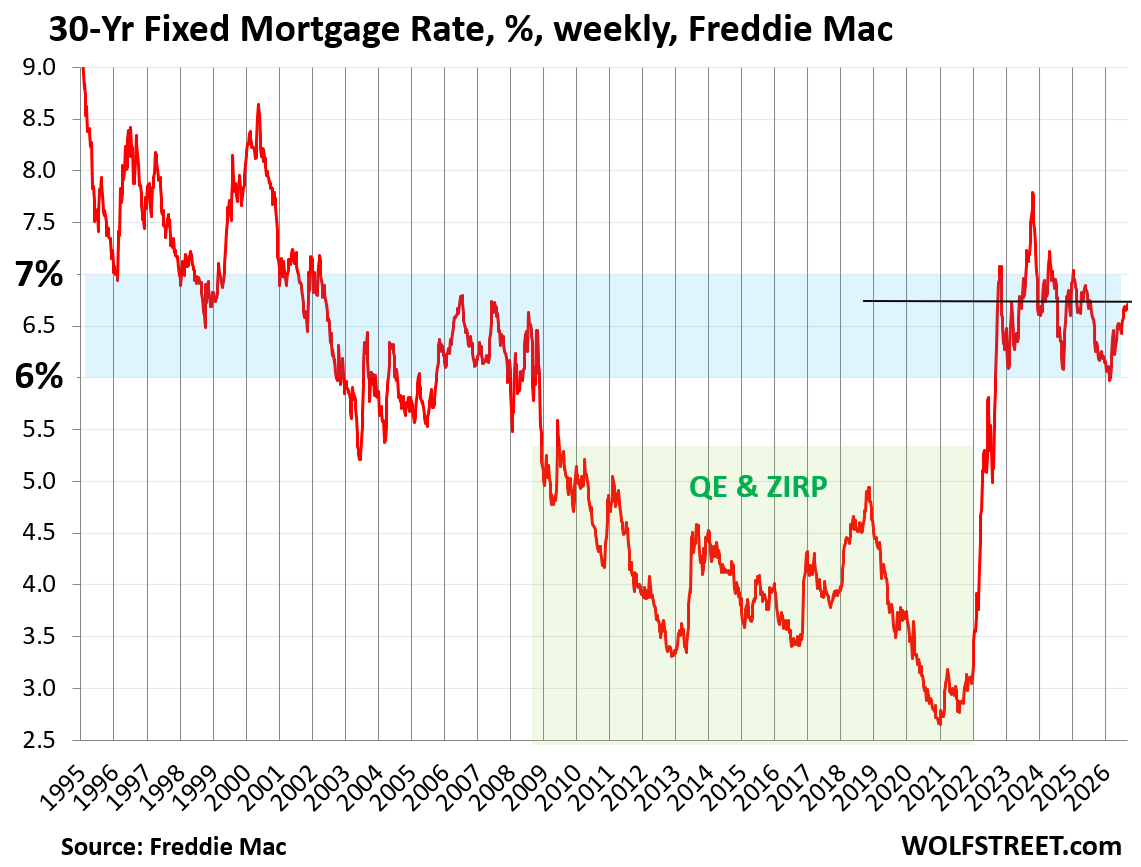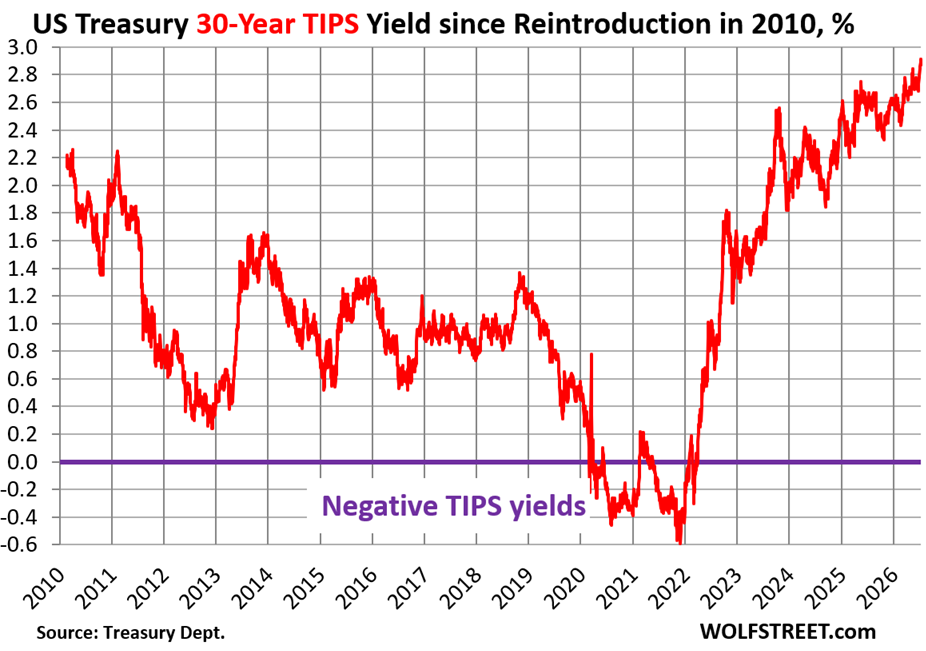
30-Year Treasury Yield still 5.06%, 30-Year TIPS Yield Highest since 2010 Reintroduction, Yield Curve Prepped for Rate Hike
How this call is verified
▼ Bearish call was checked against the actual S&P 500 price 24h later: — Flat (+0.00%, below the ±0.3% bar).
Our record on calls like this
1,109 scored calls here, 46.1% right (±7.8pp). Always answering up would have scored 61.1% on the same rows. Paired within the same day and asset, our directional edge is +0.9 pp ± 3.9 — inside the error bar, i.e. indistinguishable from zero.
Bar: S&P 500 ±0.3% within 24h · every verdict lands on the public ledger
AI comment — why bearish
The sustained high level of the 30-year Treasury yield, alongside the most elevated 30-year Treasury Inflation-Protected Securities (TIPS) yield observed since their reintroduction, suggests a market environment anticipating continued monetary policy tightening. This elevated long-term borrowing cost structure can act as a headwind for broader market sentiment. By increasing the discount rate applied to projected future corporate earnings, these higher yields may exert downward pressure on equity valuations. Consequently, investor positioning could shift towards a more cautious stance, potentially favoring assets perceived as defensive and reducing allocations to more speculative market segments. This trend is consistent with prevailing macroeconomic narratives of persistent inflationary pressures and the central bank's stated objective of achieving price stability, even if it entails a slower pace of economic expansion. Such conditions may challenge investor confidence, leading to a reduced inclination for risk-taking as the market prioritizes capital preservation and the pursuit of yield in an environment characterized by higher interest rates.
Key takeaway
"30-Year Treasury Yield still 5.06%, 30-Year TIPS Yield Highest since 2010 Reintroduction, Yield Curve Prepped for Rate Hike" — BullBear's AI rates this story as a bearish (negative) signal for markets, with a market-impact score of 85 out of 100. That score reflects how strongly the story is likely to move Bitcoin, US equities, the dollar, and gold, and near-duplicate coverage of the same event is clustered so only the representative article is scored. Reported by Wolf Street on July 19, 2026. The call is verified against the actual 24-hour price move on BullBear's public conviction ledger.
Catch the next bear flag
Telegram alerts when our AI scores a story 80+/100 impact (~1-3 per day, no spam). Verified 30d hit rate 39.8%.