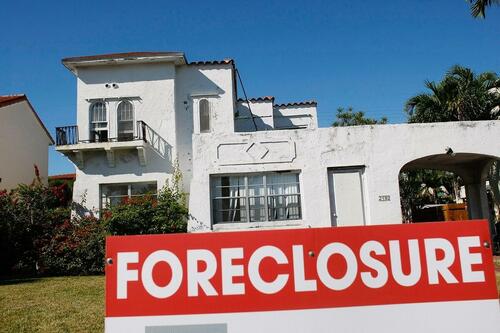
More Than 227,000 US Property Foreclosure Filings In First Half Of 2026
How this call is verified
▼ Bearish call was checked against the actual S&P 500 price 24h later: — Flat (+0.00%, below the ±0.3% bar).
Our record on calls like this
1,107 scored calls here, 46.2% right (±7.8pp). Always answering up would have scored 61.1% on the same rows. Paired within the same day and asset, our directional edge is +0.9 pp ± 3.9 — inside the error bar, i.e. indistinguishable from zero.
Bar: S&P 500 ±0.3% within 24h · every verdict lands on the public ledger
AI comment — why bearish
An observed increase in property foreclosure filings indicates potential challenges for the real estate market, with possible spillover effects into wider financial systems. A prolonged rise in properties entering foreclosure could lead to increased supply, potentially putting downward pressure on home values. This scenario may affect the performance of real estate-backed assets and pose risks for financial entities with substantial mortgage portfolios. Such conditions could contribute to a more cautious investor sentiment, prompting a reevaluation of market expectations. These trends are consistent with broader economic considerations concerning household financial stability and the valuation of various asset classes. As a result, investor risk appetite may diminish, leading to a shift towards more conservative investments. The ramifications could extend to industries dependent on consumer expenditure and housing market dynamics, suggesting a potential period of economic adjustment.
Key takeaway
"More Than 227,000 US Property Foreclosure Filings In First Half Of 2026" — BullBear's AI rates this story as a bearish (negative) signal for markets, with a market-impact score of 75 out of 100. That score reflects how strongly the story is likely to move Bitcoin, US equities, the dollar, and gold, and near-duplicate coverage of the same event is clustered so only the representative article is scored. Reported by ZeroHedge on July 18, 2026. The call is verified against the actual 24-hour price move on BullBear's public conviction ledger.
Catch the next bear flag
Telegram alerts when our AI scores a story 80+/100 impact (~1-3 per day, no spam). Verified 30d hit rate 39.9%.