Choose language / 한국어

EN / 한
Federal Reserve's Logan proposes regulatory overhaul that could shrink the Fed's $6.7 trillion balance sheet
Bull/Bear Index 46.0/100
macro ▼ Bear Impact 75/100 Google News Macroecon... Jul 16, 2026 Read original ↗

Federal Reserve's Logan proposes regulatory overhaul that could shrink the Fed's $6.7 trillion balance sheet

How this call is verified

▼ Bearish call was checked against the actual S&P 500 price 24h later: ✓ Hit (-1.11%).

Our record on calls like this

1,106 scored calls here, 46.2% right (±7.8pp). Always answering up would have scored 61.0% on the same rows. Paired within the same day and asset, our directional edge is +0.9 pp ± 3.9 — inside the error bar, i.e. indistinguishable from zero.

Bar: S&P 500 ±0.3% within 24h · every verdict lands on the public ledger

AI comment — why bearish

Federal Reserve Governor Michelle Bowman has put forth regulatory proposals that could significantly influence the central bank's extensive balance sheet. The potential implications of these changes suggest a move towards a less accommodative monetary stance. This could translate into a decrease in the overall liquidity available within financial markets, which, in turn, might exert downward pressure on the valuations of various assets. Furthermore, such a shift could lead to an increase in the cost of borrowing for businesses and consumers. Consequently, market participants may adopt a more conservative outlook, reassessing their expectations for economic growth and the inherent risks associated with different investments. This development is consistent with ongoing efforts to manage inflationary pressures and to gradually reverse the expansive monetary policies implemented during the recent global health crisis. The market's reaction may involve a reevaluation of investment strategies and a potential preference for assets perceived as more stable.

Key takeaway

"Federal Reserve's Logan proposes regulatory overhaul that could shrink the Fed's $6.7 trillion balance sheet" — BullBear's AI rates this story as a bearish (negative) signal for markets, with a market-impact score of 75 out of 100. That score reflects how strongly the story is likely to move Bitcoin, US equities, the dollar, and gold, and near-duplicate coverage of the same event is clustered so only the representative article is scored. Reported by Google News Macroeconomics (EN) on July 16, 2026. The call is verified against the actual 24-hour price move on BullBear's public conviction ledger.

Catch the next bear flag

Telegram alerts when our AI scores a story 80+/100 impact (~1-3 per day, no spam). Verified 30d hit rate 41.2%.
Join Telegram channel

📡 Tomorrow's Watch

Related news

▼ Bear
70/100
ZeroHedge 3h ago

Ukraine's Drone Warfare Devouring 4% Of Global Germanium Demand As China Chokes Supplies

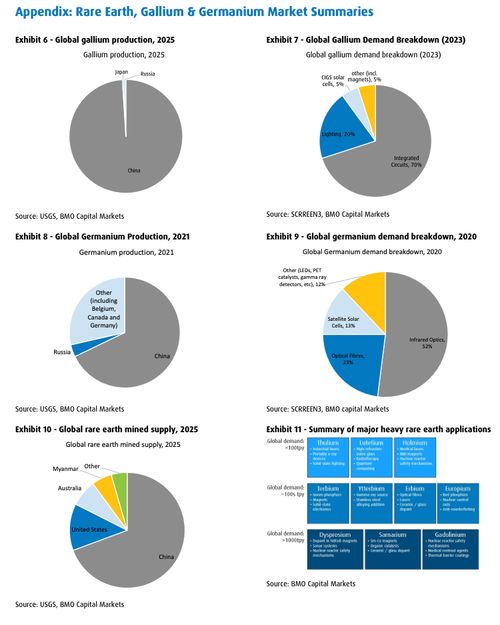
Rising consumption of germanium for Ukraine’s drone operations, now accounting for roughly four percent of global demand, intensifies pressure on an already tight supply chain dominated by Chinese exporters. The resulting scarcity is likely to lift germanium prices, tightening margins for semiconductor and optics manufacturers that rely on the material, while prompting investors to reassess exposure to firms with limited alternative sourcing. Market sentiment may tilt toward caution as the geopolitical flashpoint underscores broader supply‑chain vulnerabilities and reinforces the macro trend of resource nationalism. At the same time, heightened demand from defense applications could attract capital to niche producers, yet the overall risk appetite may contract as traders price in potential escalation and further export restrictions from China. Consequently, confidence in related equities could waver, with a bias toward defensive positioning and diversification away from concentrated commodity exposures.

Rising consumption of germanium for Ukraine’s drone operations, now accounting for roughly four percent of global demand, intensifies pressure on an already tight supply chain dominated by Chinese exporters. The resulting scarcity is likely to lift germanium prices, tightening margins for semiconductor and optics manufacturers that rely on the material, while prompting investors to reassess exposure to firms with limited alternative sourcing. Market sentiment may tilt toward caution as the geopolitical flashpoint underscores broader supply‑chain vulnerabilities and reinforces the macro trend of resource nationalism. At the same time, heightened demand from defense applications could attract capital to niche producers, yet the overall risk appetite may contract as traders price in potential escalation and further export restrictions from China. Consequently, confidence in related equities could waver, with a bias toward defensive positioning and diversification away from concentrated commodity exposures.

#macro
▼ Bear
80/100
ZeroHedge 11h ago

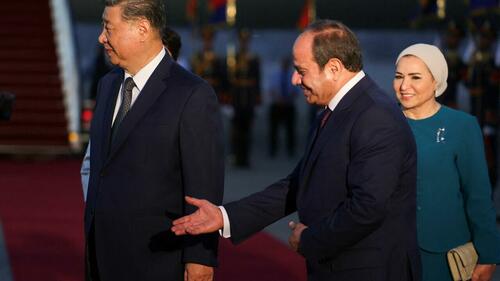
Xi In Rare Egypt Visit Blasts 'External Interference' In Mideast, As Iran War Drags On

Xi's remarks in Cairo condemning external interference and highlighting the protracted Iran conflict inject fresh geopolitical uncertainty into global markets, reinforcing a risk‑off bias that has already been heightened by lingering supply‑chain strains and divergent monetary policies. Investors are likely to reassess exposure to emerging‑market equities and commodities tied to Middle‑East stability, such as oil and copper, as any escalation could tighten energy supplies and dampen demand. The visit also underscores China's strategic outreach to African and Arab partners, feeding into broader macro narratives about shifting trade corridors and the search for alternative growth engines beyond the West. Consequently, confidence in risk‑on assets may wane, prompting a tilt toward safe‑haven currencies and government bonds, while heightened caution could suppress appetite for higher‑yielding but volatile sectors.

Xi's remarks in Cairo condemning external interference and highlighting the protracted Iran conflict inject fresh geopolitical uncertainty into global markets, reinforcing a risk‑off bias that has already been heightened by lingering supply‑chain strains and divergent monetary policies. Investors are likely to reassess exposure to emerging‑market equities and commodities tied to Middle‑East stability, such as oil and copper, as any escalation could tighten energy supplies and dampen demand. The visit also underscores China's strategic outreach to African and Arab partners, feeding into broader macro narratives about shifting trade corridors and the search for alternative growth engines beyond the West. Consequently, confidence in risk‑on assets may wane, prompting a tilt toward safe‑haven currencies and government bonds, while heightened caution could suppress appetite for higher‑yielding but volatile sectors.

#macro
▼ Bear
68/100
ZeroHedge 20h ago

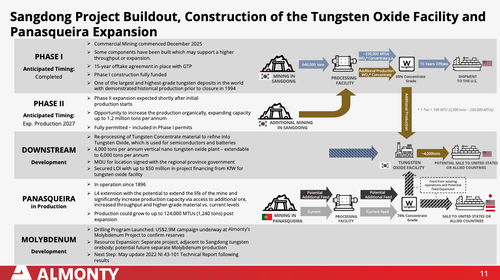
The West's Answer To Break China's Tungsten Stranglehold Before Historic Rearmament Cycle Ramps

A potential shift in tungsten supply dynamics, driven by Western initiatives to counter China’s near‑monopoly, could reverberate across industrial and defense markets as the upcoming rearmament cycle accelerates. By diversifying sources and investing in alternative extraction projects, the West may alleviate price pressures that have historically constrained manufacturers, thereby supporting broader commodity stability. However, the strategic maneuver also underscores heightened geopolitical tension, feeding a cautious market sentiment that balances optimism over supply security with wariness of policy‑driven volatility. In the macro context, the move aligns with broader de‑globalisation trends and the push for resilient supply chains, reinforcing narratives of strategic autonomy. Investor confidence may be tempered; while the prospect of reduced dependency is positive, the associated policy uncertainty and potential cost escalations could dampen risk appetite, especially in sectors sensitive to raw‑material pricing.

A potential shift in tungsten supply dynamics, driven by Western initiatives to counter China’s near‑monopoly, could reverberate across industrial and defense markets as the upcoming rearmament cycle accelerates. By diversifying sources and investing in alternative extraction projects, the West may alleviate price pressures that have historically constrained manufacturers, thereby supporting broader commodity stability. However, the strategic maneuver also underscores heightened geopolitical tension, feeding a cautious market sentiment that balances optimism over supply security with wariness of policy‑driven volatility. In the macro context, the move aligns with broader de‑globalisation trends and the push for resilient supply chains, reinforcing narratives of strategic autonomy. Investor confidence may be tempered; while the prospect of reduced dependency is positive, the associated policy uncertainty and potential cost escalations could dampen risk appetite, especially in sectors sensitive to raw‑material pricing.

#macro