Choose language / Korean

EN / 한
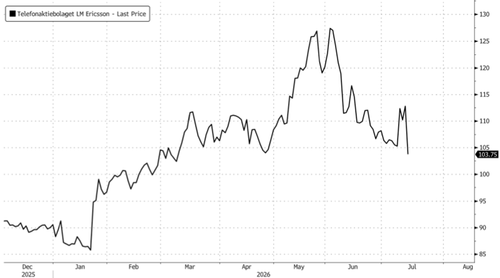
Ericsson Tumbles On Margin Headwinds Sparked By Memory Chip Inflation
Bull/Bear Index 47.9/100
macro ▼ Bear Impact 70/100 ZeroHedge 20d ago Read original ↗

Ericsson Tumbles On Margin Headwinds Sparked By Memory Chip Inflation

Ericsson Tumbles On Margin Headwinds Sparked By Memory Chip Inflation

How this call is verified

▼ Bearish call was checked against the actual S&P 500 price 24h later: ✗ Miss (+0.38%).

Bar: S&P 500 ±0.3% within 24h · every verdict lands on the public ledger

Key takeaway

"Ericsson Tumbles On Margin Headwinds Sparked By Memory Chip Inflation" — BullBear's AI rates this story as a bearish (negative) signal for markets, with a market-impact score of 70 out of 100. Ericsson Tumbles On Margin Headwinds Sparked By Memory Chip Inflation Reported by ZeroHedge on July 14, 2026. The call is verified against the actual 24-hour price move on BullBear's public conviction ledger.

Catch the next bear flag

Telegram alerts when our AI scores a story 80+/100 impact (~1-3 per day, no spam). Verified 30d hit rate 48.6%.

Join Telegram channel

📡 Tomorrow's Watch

Related news

▲ Bull
70/100
MishTalk 1h ago

Copper Imports Surge the Most in 12 Years in Tariff Front-Running Move

Rewritten: Copper imports hit 12-year high amid tariff anticipation.

US copper imports have surged the most in 12 years, interpreted as a move to front-run potential tariffs, leading to record high copper stockpiles.

Recent data indicates a significant acceleration in copper imports, reaching levels not observed in over a decade. This surge suggests a strategic pre-emptive action by market participants in anticipation of potential trade policy changes. The substantial increase in inbound shipments points to a desire to secure supply before any new tariffs or import restrictions might be implemented. This behavior reflects a proactive approach to mitigate future cost increases or supply chain disruptions. The heightened import activity could be interpreted as a signal of underlying demand, coupled with a strategic maneuver to lock in current pricing and availability, thereby influencing short-term market dynamics and potentially impacting global copper inventories.

Recent data indicates a significant acceleration in copper imports, reaching levels not observed in over a decade. This surge suggests a strategic pre-emptive action by market participants in anticipation of potential trade policy changes. The substantial increase in inbound shipments points to a desire to secure supply before any new tariffs or import restrictions might be implemented. This behavior reflects a proactive approach to mitigate future cost increases or supply chain disruptions. The heightened import activity could be interpreted as a signal of underlying demand, coupled with a strategic maneuver to lock in current pricing and availability, thereby influencing short-term market dynamics and potentially impacting global copper inventories.

#macro
▼ Bear
50/100
ZeroHedge 1h ago

Louisiana AG Announces Investigation Into Fauci

The Louisiana Attorney General has announced an investigation into Dr. Anthony Fauci, with officials in three states reportedly investigating or planning to investigate him.

#macro
▲ Bull
70/100
Google News Macroeconomics (EN) 2h ago

Gold steadies as oil slump cools inflation pressure, equities rally

Rewritten: Gold stable, oil drop eases inflation, stocks rise.

Gold prices stabilized as a slump in oil prices eased inflationary pressures, leading to a rally in equities.

The recent stabilization in gold prices, occurring concurrently with a downturn in oil markets, indicates a potential moderation in inflation expectations. This development could lessen the impetus for aggressive monetary policy tightening by central banks. Such a scenario may contribute to a more constructive market environment, providing support for equity markets and potentially drawing in additional investor capital. The relationship between commodity price movements and the broader inflation outlook continues to be a significant factor in assessing economic stability. With immediate inflationary concerns appearing to diminish, there is a possibility of a modest increase in investor confidence, leading to a slightly greater willingness to embrace risk as market participants evaluate evolving economic indicators and search for investment avenues beyond immediate price pressures.

The recent stabilization in gold prices, occurring concurrently with a downturn in oil markets, indicates a potential moderation in inflation expectations. This development could lessen the impetus for aggressive monetary policy tightening by central banks. Such a scenario may contribute to a more constructive market environment, providing support for equity markets and potentially drawing in additional investor capital. The relationship between commodity price movements and the broader inflation outlook continues to be a significant factor in assessing economic stability. With immediate inflationary concerns appearing to diminish, there is a possibility of a modest increase in investor confidence, leading to a slightly greater willingness to embrace risk as market participants evaluate evolving economic indicators and search for investment avenues beyond immediate price pressures.

#macro
▼ Bear
60/100
Reuters via Google News EN 2h ago

Democratic US states sue to challenge Trump's latest tariffs

Rewritten: Blue states sue over Trump's new tariffs.

Democratic states in the US have filed lawsuits challenging the Trump administration's latest tariff implementations.

Legal challenges initiated by several US states against recent tariff impositions introduce a layer of uncertainty regarding the future trajectory of trade policy. This opposition could potentially lead to delays in the enforcement of these measures or necessitate modifications to their scope and application. Such domestic friction surrounding economic strategy may contribute to a more cautious investor sentiment, reflecting broader debates about protectionist versus free trade approaches and their influence on international supply networks. The prospect of extended legal proceedings could therefore foster a more risk-averse market environment, as stakeholders assess the potential long-term consequences for businesses and consumer markets. This period of legal deliberation suggests a heightened possibility of market fluctuations until a definitive resolution is reached.

Legal challenges initiated by several US states against recent tariff impositions introduce a layer of uncertainty regarding the future trajectory of trade policy. This opposition could potentially lead to delays in the enforcement of these measures or necessitate modifications to their scope and application. Such domestic friction surrounding economic strategy may contribute to a more cautious investor sentiment, reflecting broader debates about protectionist versus free trade approaches and their influence on international supply networks. The prospect of extended legal proceedings could therefore foster a more risk-averse market environment, as stakeholders assess the potential long-term consequences for businesses and consumer markets. This period of legal deliberation suggests a heightened possibility of market fluctuations until a definitive resolution is reached.

#macro