US CPI and Fed Chair Warsh take center stage this week.
How this call is verified
▼ Bearish
call was checked against the actual S&P 500 price 24h later:
✓ Hit (-0.35%).
Our record on calls like this
1,284 scored calls here,
46.8% right (±9.2pp).
Always answering up would have scored 61.8% —
so we are
-15.0pp.
Bar: S&P 500 ±0.3% within 24h · every verdict lands on the public ledger
Key takeaway
"US CPI and Fed Chair Warsh take center stage this week." — BullBear's AI rates this story as a bearish (negative) signal for markets, with a market-impact score of 85 out of 100. Reported by Google News Macroeconomics (EN) on July 12, 2026. The call is verified against the actual 24-hour price move on BullBear's public conviction ledger.
Rewritten: US imposes 50% tariffs on Canadian goods, sparking trade dispute.
Canada-US Trade War Erupts, Setting New 50% Tariffs On Canadian Goods
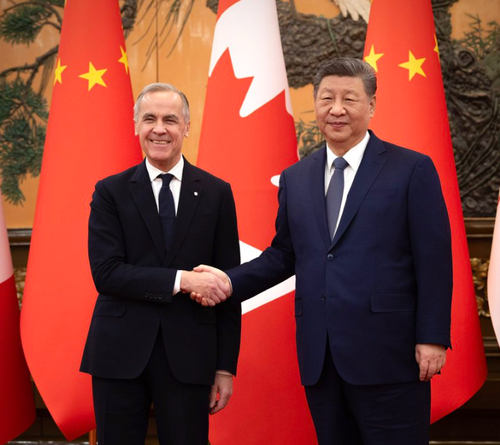
US-Canada trade negotiations collapsed at the 11th hour, just before the midnight deadline, triggering 50% tariffs on about $20 billion worth of Canadian goods (under a never-before- used Section 338 provision of the Tariff Act of 1930) and prompting globalist-aligned, China-sympathizing Prime Minister Mark Carney to promise an equivalent response.
"Tonight, Canada declined to finalize the trade deal under the terms agreed earlier this week," the United States Trade Representative wrote on X early Saturday morning.
The USTR continued:
Despite the U.S. offer to Canada to receive the best treatment of any major exporter to our market, new demands and walk-backs of other commitments by Canada have upended the careful balance reached in the past days. In addition, Canada is continuing to maintain its prolonged retaliation against the United States, including, among other things, flat-out prohibitions on certain American goods and services
The recent implementation of substantial tariffs on Canadian products by the United States signals a significant escalation in trade relations, introducing a period of heightened uncertainty across North American economic landscapes. This policy shift is poised to negatively impact business operations by raising the cost of goods and potentially disrupting established supply networks, which could, in turn, affect corporate profitability and investment decisions. The imposition of these tariffs challenges existing trade frameworks and may contribute to upward price pressures, a factor already under scrutiny in the current economic climate. As a result, market participants may adopt a more cautious stance, potentially leading to a recalibration of asset allocations as investors prioritize stability. The broader implications of this trade friction could extend to global commerce and international capital movements, creating a more complex operating environment for businesses and investors alike.
The recent implementation of substantial tariffs on Canadian products by the United States signals a significant escalation in trade relations, introducing a period of heightened uncertainty across North American economic landscapes. This policy shift is poised to negatively impact business operations by raising the cost of goods and potentially disrupting established supply networks, which could, in turn, affect corporate profitability and investment decisions. The imposition of these tariffs challenges existing trade frameworks and may contribute to upward price pressures, a factor already under scrutiny in the current economic climate. As a result, market participants may adopt a more cautious stance, potentially leading to a recalibration of asset allocations as investors prioritize stability. The broader implications of this trade friction could extend to global commerce and international capital movements, creating a more complex operating environment for businesses and investors alike.
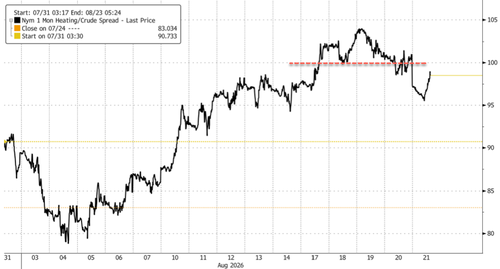
Rewritten: Diesel crack spread widens amid Russia refining crisis.
The persistent upward pressure on diesel prices, driven by the intricate challenge of isolating Russia's refining output from international trade, is a significant factor contributing to ongoing supply chain disruptions. This situation amplifies existing concerns about inflation and fosters a more cautious outlook among market participants. The complex geopolitical landscape and its direct consequences on energy availability highlight the vulnerability of global economic recovery efforts and raise questions about the potential for sustained periods of high inflation coupled with sluggish growth. As a result, investor sentiment may continue to weaken, leading to a decreased willingness to take on risk. The absence of a straightforward solution to the integration of Russian refining capacity indicates that elevated energy costs and market uncertainty are likely to persist, impacting global commerce and industrial production.
The persistent upward pressure on diesel prices, driven by the intricate challenge of isolating Russia's refining output from international trade, is a significant factor contributing to ongoing supply chain disruptions. This situation amplifies existing concerns about inflation and fosters a more cautious outlook among market participants. The complex geopolitical landscape and its direct consequences on energy availability highlight the vulnerability of global economic recovery efforts and raise questions about the potential for sustained periods of high inflation coupled with sluggish growth. As a result, investor sentiment may continue to weaken, leading to a decreased willingness to take on risk. The absence of a straightforward solution to the integration of Russian refining capacity indicates that elevated energy costs and market uncertainty are likely to persist, impacting global commerce and industrial production.
The abrupt halt in trade discussions with Canada injects considerable unpredictability into the North American economic landscape, which may negatively impact overall stock market performance. Businesses heavily dependent on the seamless flow of goods and services across the border could encounter renewed operational challenges. This situation is likely to cultivate a more hesitant market atmosphere, prompting investors to re-evaluate the dependability of existing trade agreements and the possibility of escalating protectionist policies. Such an outcome resonates with prevailing macroeconomic trends characterized by geopolitical fragmentation and escalating trade disputes, factors that have already contributed to market fluctuations. As a result, investor assurance might diminish, potentially leading to a decreased willingness to take on risk and a possible inclination towards more conservative investment strategies as the perceived dangers associated with disruptions in international commerce grow.
The abrupt halt in trade discussions with Canada injects considerable unpredictability into the North American economic landscape, which may negatively impact overall stock market performance. Businesses heavily dependent on the seamless flow of goods and services across the border could encounter renewed operational challenges. This situation is likely to cultivate a more hesitant market atmosphere, prompting investors to re-evaluate the dependability of existing trade agreements and the possibility of escalating protectionist policies. Such an outcome resonates with prevailing macroeconomic trends characterized by geopolitical fragmentation and escalating trade disputes, factors that have already contributed to market fluctuations. As a result, investor assurance might diminish, potentially leading to a decreased willingness to take on risk and a possible inclination towards more conservative investment strategies as the perceived dangers associated with disruptions in international commerce grow.
Rewritten: Russia says ready for new US proposals to end Ukraine war
The expressed willingness by Moscow to consider alternative proposals from Washington on the Ukraine conflict introduces a variable that could moderate the current geopolitical risk premium embedded in global markets. A de‑escalation scenario would likely attenuate pressure on energy and commodity price volatility, which have been amplified by sanctions and supply‑chain disruptions, thereby easing inflationary pressures in economies that remain sensitive to external shocks. Reduced tension may also improve the predictability of trade routes and logistics, supporting a gradual stabilization of input costs for manufacturers. In addition, a softer geopolitical environment could encourage a modest reallocation of capital toward higher‑yielding assets as investors reassess risk‑adjusted returns, while sovereign and corporate financing conditions might benefit from lower uncertainty premiums. Overall, the prospect of diplomatic progress, even if preliminary, adds a counterbalancing force to the broader macroeconomic outlook.
The expressed willingness by Moscow to consider alternative proposals from Washington on the Ukraine conflict introduces a variable that could moderate the current geopolitical risk premium embedded in global markets. A de‑escalation scenario would likely attenuate pressure on energy and commodity price volatility, which have been amplified by sanctions and supply‑chain disruptions, thereby easing inflationary pressures in economies that remain sensitive to external shocks. Reduced tension may also improve the predictability of trade routes and logistics, supporting a gradual stabilization of input costs for manufacturers. In addition, a softer geopolitical environment could encourage a modest reallocation of capital toward higher‑yielding assets as investors reassess risk‑adjusted returns, while sovereign and corporate financing conditions might benefit from lower uncertainty premiums. Overall, the prospect of diplomatic progress, even if preliminary, adds a counterbalancing force to the broader macroeconomic outlook.
#macro
Get the next 80+ impact catalyst
Push notifications when our AI flags a high-impact bull/bear story. ~1–3 per day.