Choose language / Korean

EN / 한
Stocks Fight Fed as U.S.-Iran War Stokes Renewed Inflation Risks
Bull/Bear Index 46.7/100
macro ▼ Bear Impact 90/100 Google News Macroecon... 20d ago Read original ↗

Stocks Fight Fed as U.S.-Iran War Stokes Renewed Inflation Risks

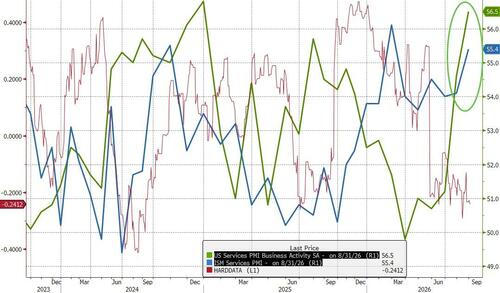
Stocks are fighting the Fed's tightening policy, but the U.S.-Iran war is stoking renewed inflation risks.

How this call is verified

▼ Bearish call was checked against the actual S&P 500 price 24h later: ✓ Hit (-0.79%).

Bar: S&P 500 ±0.3% within 24h · every verdict lands on the public ledger

Key takeaway

"Stocks Fight Fed as U.S.-Iran War Stokes Renewed Inflation Risks" — BullBear's AI rates this story as a bearish (negative) signal for markets, with a market-impact score of 90 out of 100. Stocks are fighting the Fed's tightening policy, but the U.S.-Iran war is stoking renewed inflation risks. Reported by Google News Macroeconomics (EN) on July 13, 2026. The call is verified against the actual 24-hour price move on BullBear's public conviction ledger.

Catch the next bear flag

Telegram alerts when our AI scores a story 80+/100 impact (~1-3 per day, no spam). Verified 30d hit rate 49.6%.

Join Telegram channel

📡 Tomorrow's Watch

Related news

▼ Bear
80/100
Google News Macroeconomics (EN) 1h ago

US Fed Reserve’s inflation challenge

Rewritten: Fed faces inflation fight.

The US Federal Reserve faces the ongoing challenge of controlling inflation, which can have significant implications for the market.

Ongoing inflationary pressures within the United States present a complex scenario for financial markets. The Federal Reserve's sustained efforts to address this challenge suggest a potential for elevated interest rates to persist, which can influence investor sentiment and encourage a more cautious approach. This dynamic is intrinsically linked to macroeconomic considerations, specifically the ongoing effort to reconcile robust economic expansion with the imperative of price stability. A prolonged period of elevated inflation could potentially diminish investor confidence, leading to a decreased willingness to assume risk and a migration of capital towards assets perceived as more secure. The uncertainty surrounding the Fed's ability to effectively manage inflation may contribute to heightened market fluctuations and a shift towards more defensive investment strategies, thereby influencing asset allocation decisions.

Ongoing inflationary pressures within the United States present a complex scenario for financial markets. The Federal Reserve's sustained efforts to address this challenge suggest a potential for elevated interest rates to persist, which can influence investor sentiment and encourage a more cautious approach. This dynamic is intrinsically linked to macroeconomic considerations, specifically the ongoing effort to reconcile robust economic expansion with the imperative of price stability. A prolonged period of elevated inflation could potentially diminish investor confidence, leading to a decreased willingness to assume risk and a migration of capital towards assets perceived as more secure. The uncertainty surrounding the Fed's ability to effectively manage inflation may contribute to heightened market fluctuations and a shift towards more defensive investment strategies, thereby influencing asset allocation decisions.

#macro
▼ Bear
📡 +1 85/100
Google News Macroeconomics (EN) 1h ago

The Federal Reserve Just Did Something That No One's Witnessed in 56 Years -- and It Has Significant Implications for the Stock Market

Rewritten: Fed action, unseen in 56 years, impacts stocks.

The Federal Reserve has taken an unprecedented action, not seen in 56 years, which has significant implications for the stock market.

The Federal Reserve's recent policy adjustment, an event not observed in over five decades, is poised to reshape market dynamics. This departure from established precedents is expected to cultivate a more circumspect outlook among investors. The action directly influences prevailing macroeconomic narratives, specifically concerning inflation outlooks and the path of monetary policy tightening. As a result, this development may dampen investor optimism, potentially leading to a decreased inclination towards speculative investments as market participants re-evaluate their holdings in response to this exceptional policy stance. The enduring effects on market liquidity and the valuation of various asset classes will be critical areas for ongoing analysis.

The Federal Reserve's recent policy adjustment, an event not observed in over five decades, is poised to reshape market dynamics. This departure from established precedents is expected to cultivate a more circumspect outlook among investors. The action directly influences prevailing macroeconomic narratives, specifically concerning inflation outlooks and the path of monetary policy tightening. As a result, this development may dampen investor optimism, potentially leading to a decreased inclination towards speculative investments as market participants re-evaluate their holdings in response to this exceptional policy stance. The enduring effects on market liquidity and the valuation of various asset classes will be critical areas for ongoing analysis.

#macro
▲ Bull
📡 +1 65/100
Reuters via Google News EN 2h ago

India central bank to stay on hold even as peers pivot to rate hikes - Reuters

Rewritten: India's central bank holds rates as others raise them.

India central bank to stay on hold even as peers pivot to rate hikes

The Reserve Bank of India's anticipated decision to maintain its current interest rate stance, contrasting with global central bank tightening cycles, suggests a divergence in monetary policy approaches. This divergence could lead to varied capital flows as investors seek higher yields elsewhere, potentially impacting currency valuations and emerging market debt. Market sentiment may become bifurcated, with some viewing India's stability as a safe haven while others prioritize growth opportunities in economies undergoing rate adjustments. This situation connects to broader macro themes of inflation management, economic growth differentials, and the ongoing recalibration of global liquidity. Investor confidence in India's economic management might be bolstered by this perceived stability, potentially encouraging a measured increase in risk appetite within the domestic market, though caution regarding international economic shifts will likely persist.

The Reserve Bank of India's anticipated decision to maintain its current interest rate stance, contrasting with global central bank tightening cycles, suggests a divergence in monetary policy approaches. This divergence could lead to varied capital flows as investors seek higher yields elsewhere, potentially impacting currency valuations and emerging market debt. Market sentiment may become bifurcated, with some viewing India's stability as a safe haven while others prioritize growth opportunities in economies undergoing rate adjustments. This situation connects to broader macro themes of inflation management, economic growth differentials, and the ongoing recalibration of global liquidity. Investor confidence in India's economic management might be bolstered by this perceived stability, potentially encouraging a measured increase in risk appetite within the domestic market, though caution regarding international economic shifts will likely persist.

#macro
50/100
Google News Macroeconomics (EN) 3h ago

Who Needs the Federal Reserve?

The article questions the necessity and role of the Federal Reserve.

#macro