macro
▼ BearImpact 70/100Google News Macroecon...21d ago
Read original ↗
FX weekly forecast: Slowing inflation to weigh on the US dollar?
How this call is verified
▼ Bearish
call was checked against the actual S&P 500 price 24h later:
✓ Hit (-0.79%).
Bar: S&P 500 ±0.3% within 24h · every verdict lands on the public ledger
Key takeaway
"FX weekly forecast: Slowing inflation to weigh on the US dollar?" — BullBear's AI rates this story as a bearish (negative) signal for markets, with a market-impact score of 70 out of 100. FX weekly forecast: Slowing inflation to weigh on the US dollar? Reported by Google News Macroeconomics (EN) on July 13, 2026. The call is verified against the actual 24-hour price move on BullBear's public conviction ledger.
Catch the next bear flag
Telegram alerts when our AI scores a story 80+/100 impact (~1-3 per day, no spam).
Verified 30d hit rate 48.9%.
Falling oil prices help calm worries about inflation, and Wall Street rallies
Declining energy prices are contributing to a more favorable environment for equity markets, indicating a possible easing of inflationary concerns that have previously impacted consumer expenditures and business profitability. This shift in the inflation outlook may foster a more positive market sentiment, as market participants anticipate a reduced probability of significant monetary policy adjustments by central banking authorities. The implications extend to broader macroeconomic considerations, as falling commodity prices can reflect either a moderation in global economic activity or an expansion of supply, both of which can influence future economic growth patterns. Therefore, this trend could enhance investor confidence, potentially leading to increased interest in riskier assets as the immediate pressure of high inflation diminishes, which may, in turn, encourage wider market engagement and a more positive outlook for stock performance.
Rewritten: DeepSeek's AI model offers significant cost savings.
China's DeepSeek has released a new AI model that costs significantly less to run than industry leaders, intensifying price competition in the AI sector and potentially lowering the cost of AI services globally.
The emergence of significantly more cost-effective AI models from Chinese firms like DeepSeek signals a potential paradigm shift in the global AI landscape. This development could democratize access to advanced AI capabilities, fostering innovation across a wider range of industries and potentially challenging the dominance of established Western players. Such a competitive jolt might temper speculative exuberance surrounding AI stocks, encouraging a more grounded assessment of valuation and a focus on tangible ROI. From a macro perspective, this could accelerate the trend of technological decoupling, as nations increasingly pursue indigenous AI development. Investor sentiment may shift towards companies demonstrating efficient resource utilization and clear monetization strategies, potentially increasing risk appetite for those that can navigate this evolving competitive dynamic and decrease it for those perceived as lagging in cost-efficiency.
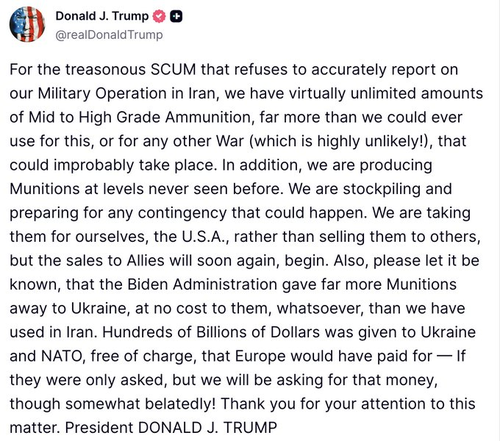
The US President has halted strikes on Iran and teased a diplomatic breakthrough, leading to a fall in Brent crude prices and a rally in risk currencies and equity markets.
A recurring pattern in market behavior, reminiscent of a familiar cycle, suggests a potential for renewed upward momentum across various asset classes. This repetition, often perceived as predictable, can foster a sense of stability, potentially bolstering investor confidence and encouraging a greater willingness to engage with riskier investments. Such cyclicality aligns with broader macroeconomic narratives that emphasize periods of consolidation followed by expansion, hinting at a sustained economic recovery. The psychological impact of witnessing a familiar positive trend unfold can reinforce bullish sentiment, creating a self-perpetuating environment where optimism drives further gains and reduces apprehension about potential downturns. This established trajectory may lead to a recalibration of risk appetites, as investors become more comfortable with their existing positions and seek out new opportunities within the prevailing market conditions.
Rewritten: Silver falls on strong US data, Fed hawkishness.
The price of silver has fallen as strong US Purchasing Managers' Index (PMI) data has bolstered expectations of a hawkish stance from the Federal Reserve.
Recent economic data from the United States has indicated a stronger-than-anticipated performance in manufacturing and services sectors, as reflected in Purchasing Managers' Index (PMI) figures. This robustness suggests continued economic resilience, which in turn has influenced expectations regarding the Federal Reserve's monetary policy stance. The prevailing interpretation of these economic indicators points towards a greater likelihood of the Federal Reserve maintaining a hawkish position, potentially involving higher interest rates for a longer duration. This outlook has created headwinds for commodities priced in US dollars, with silver experiencing downward pressure. Investors and market participants are closely monitoring these developments for potential impacts on inflation, economic growth, and asset valuations across various markets.