Gold drops 0.56 percent to $4,064 as oil surge, 72 percent September Fed hike expectations pressure bullion
How this call is verified
▼ Bearish
call was checked against the actual S&P 500 price 24h later:
✓ Hit (-0.79%).
Our record on calls like this
1,284 scored calls here,
46.8% right (±9.2pp).
Always answering up would have scored 61.8% —
so we are
-15.0pp.
Bar: S&P 500 ±0.3% within 24h · every verdict lands on the public ledger
Key takeaway
"Gold drops 0.56 percent to $4,064 as oil surge, 72 percent September Fed hike expectations pressure bullion" — BullBear's AI rates this story as a bearish (negative) signal for markets, with a market-impact score of 80 out of 100. Reported by Google News Macroeconomics (EN) on July 13, 2026. The call is verified against the actual 24-hour price move on BullBear's public conviction ledger.
Catch the next bear flag
Telegram alerts when our AI scores a story 80+/100 impact (~1-3 per day, no spam).
Verified 30d hit rate 42.8%.
Rewritten: Escobar: Trump attempted to bribe IRGC chief
Allegations that former President Trump sought to influence the head of Iran’s Islamic Revolutionary Guard Corps have reignited concerns over geopolitical volatility, prompting a reassessment of risk premiums across emerging‑market equities and energy commodities. Heightened US‑Iran tensions could jeopardize the already fragile outlook for oil supply chains, nudging crude prices upward while simultaneously pressuring regional currencies and sovereign debt spreads. Investors, wary of potential escalation, may shift capital toward defensive assets such as gold and U.S. Treasuries, dampening appetite for higher‑yielding but risk‑laden positions. The episode also dovetails with broader macro themes of political instability and the resurgence of protectionist rhetoric, reinforcing a narrative of uncertainty that can suppress equity valuations and curb speculative inflows. Consequently, confidence in markets that are sensitive to diplomatic developments is likely to wane, curbing risk‑on sentiment and reinforcing a more cautious investment stance.
Allegations that former President Trump sought to influence the head of Iran’s Islamic Revolutionary Guard Corps have reignited concerns over geopolitical volatility, prompting a reassessment of risk premiums across emerging‑market equities and energy commodities. Heightened US‑Iran tensions could jeopardize the already fragile outlook for oil supply chains, nudging crude prices upward while simultaneously pressuring regional currencies and sovereign debt spreads. Investors, wary of potential escalation, may shift capital toward defensive assets such as gold and U.S. Treasuries, dampening appetite for higher‑yielding but risk‑laden positions. The episode also dovetails with broader macro themes of political instability and the resurgence of protectionist rhetoric, reinforcing a narrative of uncertainty that can suppress equity valuations and curb speculative inflows. Consequently, confidence in markets that are sensitive to diplomatic developments is likely to wane, curbing risk‑on sentiment and reinforcing a more cautious investment stance.
Rewritten: U.S. Drone Arms Race: Experts Predict Trends Before Procurement Surge
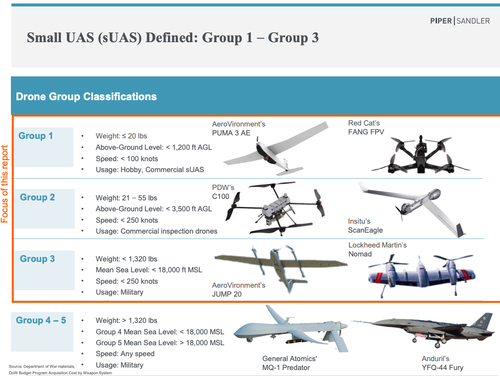
Amid escalating U.S. investment in unmanned systems, the emerging procurement supercycle is reshaping the defense supply chain, prompting aerospace and technology firms to accelerate R&D and scale production capacity. The heightened demand signals a shift toward higher‑margin contracts, which could lift earnings expectations across the sector and buoy broader market sentiment, especially in indices weighted toward defense and industrials. This trend dovetails with macro‑level themes of increased federal spending, supply‑chain resilience initiatives, and the strategic pivot toward autonomous capabilities in both conventional and asymmetric warfare. As investors perceive a more predictable revenue pipeline, confidence in related equities may rise, encouraging a modest tilt toward risk‑on positioning within the broader portfolio, while also prompting a re‑evaluation of exposure to legacy platforms that may face obsolescence pressures. Analysts therefore watch procurement timelines closely, as any acceleration could further amplify sector momentum and attract new capital inflows.
Amid escalating U.S. investment in unmanned systems, the emerging procurement supercycle is reshaping the defense supply chain, prompting aerospace and technology firms to accelerate R&D and scale production capacity. The heightened demand signals a shift toward higher‑margin contracts, which could lift earnings expectations across the sector and buoy broader market sentiment, especially in indices weighted toward defense and industrials. This trend dovetails with macro‑level themes of increased federal spending, supply‑chain resilience initiatives, and the strategic pivot toward autonomous capabilities in both conventional and asymmetric warfare. As investors perceive a more predictable revenue pipeline, confidence in related equities may rise, encouraging a modest tilt toward risk‑on positioning within the broader portfolio, while also prompting a re‑evaluation of exposure to legacy platforms that may face obsolescence pressures. Analysts therefore watch procurement timelines closely, as any acceleration could further amplify sector momentum and attract new capital inflows.