Choose language / Korean

EN / 한
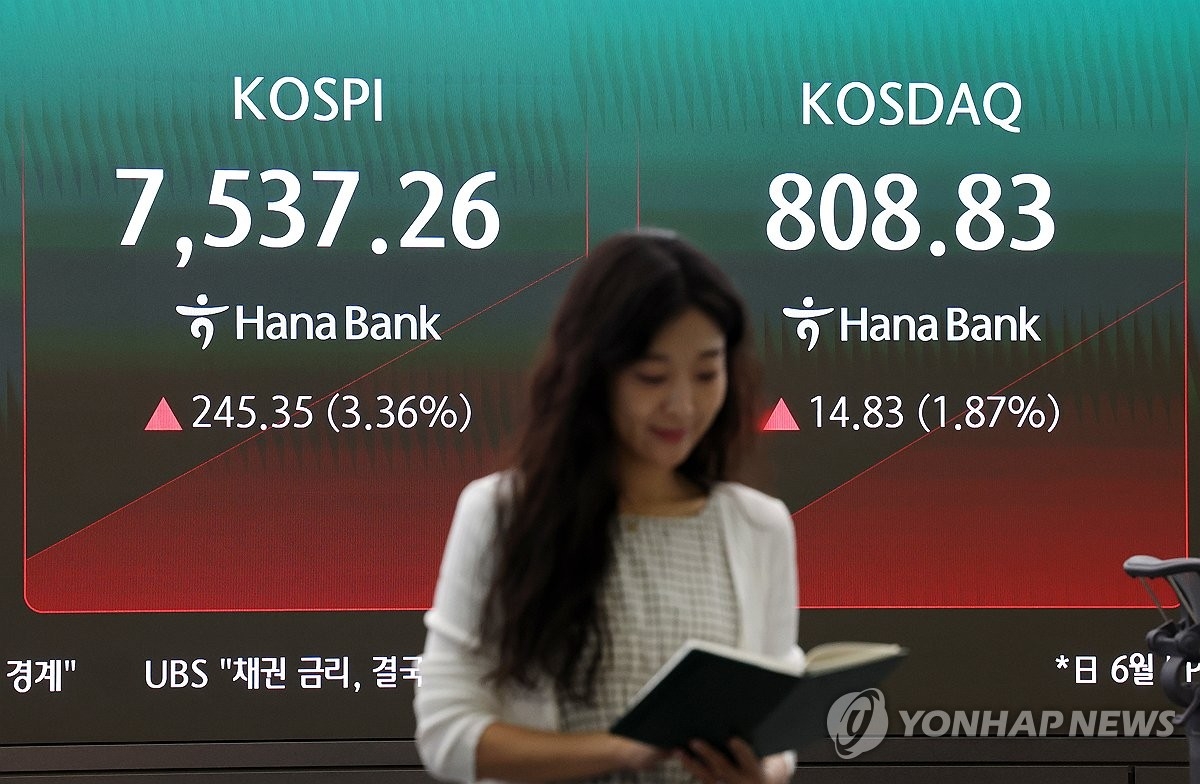
KOSPI, KOSDAQ Rise by 2% Backed by Strong US Tech Stocks
Bull/Bear Index 45.9/100
global ▲ Bull Impact 75/100 TokenPost 21d ago Read original ↗

KOSPI, KOSDAQ Rise by 2% Backed by Strong US Tech Stocks

South Korean stocks, KOSPI and KOSDAQ, are showing strength with a 2% rise, driven by the strong performance of US tech stocks and expectations for semiconductor investments. The KOSPI 200 Volatility Index declined, but the won-dollar exchange rate remained at 1,511.75, showing instability in the foreign exchange market.

How this call is verified

▲ Bullish call was checked against the actual S&P 500 price 24h later: ✓ Hit (+0.42%).

Bar: S&P 500 ±0.3% within 24h · every verdict lands on the public ledger

Key takeaway

"KOSPI, KOSDAQ Rise by 2% Backed by Strong US Tech Stocks" — BullBear's AI rates this story as a bullish (positive) signal for markets, with a market-impact score of 75 out of 100. South Korean stocks, KOSPI and KOSDAQ, are showing strength with a 2% rise, driven by the strong performance of US tech stocks and expectations for semiconductor investments. The KOSPI 200 Volatility Index declined, but the won-dollar exchange rate remained at 1,511.75, showing instability in the foreign exchange market. Reported by TokenPost on July 10, 2026. The call is verified against the actual 24-hour price move on BullBear's public conviction ledger.

Catch the next bull catalyst

Telegram alerts when our AI scores a story 80+/100 impact (~1-3 per day, no spam). Verified 30d hit rate 50.1%.

Join Telegram channel

📡 Tomorrow's Watch

Related news

▲ Bull
70/100
Google News Stock Market (EN) 1h ago

Stock Market Today: Dow, S&P 500 and Nasdaq poised for strong session as Amazon climbs on earnings, chips gain following surge for South Korea's Kospi - marketwatch.com

Rewritten: Markets rise as Amazon earnings and chip stocks boost sentiment.

The Dow, S&P 500, and Nasdaq are poised for a strong session, driven by Amazon's earnings and gains in chip stocks following a surge in South Korea's Kospi.

The current market environment exhibits a notable upward trend across key equity benchmarks, driven by a combination of robust corporate financial reports and sector-specific strength. Significant gains from prominent technology companies, alongside a notable uplift in semiconductor manufacturers, are contributing to this positive momentum. This performance is further supported by the positive performance observed in international markets, suggesting a global inclination towards risk assets. The resilience in consumer-facing sectors and the ongoing advancements in technology appear to be key drivers, fostering investor optimism. This broad-based strength, encompassing both individual company successes and a generally favorable global economic sentiment, points towards a potentially sustained period of market appreciation.

The current market environment exhibits a notable upward trend across key equity benchmarks, driven by a combination of robust corporate financial reports and sector-specific strength. Significant gains from prominent technology companies, alongside a notable uplift in semiconductor manufacturers, are contributing to this positive momentum. This performance is further supported by the positive performance observed in international markets, suggesting a global inclination towards risk assets. The resilience in consumer-facing sectors and the ongoing advancements in technology appear to be key drivers, fostering investor optimism. This broad-based strength, encompassing both individual company successes and a generally favorable global economic sentiment, points towards a potentially sustained period of market appreciation.

#global
▼ Bear
75/100
Reuters via Google News EN 10h ago

Morning Bid: Yen sinks as BOJ holds - and it's the KOSPI's best day

Rewritten: Yen drops on BOJ inaction; KOSPI surges.

The Japanese Yen depreciated significantly as the Bank of Japan maintained its interest rate, while the South Korean KOSPI index experienced its best day.

The Bank of Japan's decision to maintain its ultra-loose monetary policy, despite a weakening yen, signals a divergence in global central bank actions and raises questions about the sustainability of current currency trends. This divergence could fuel further volatility across currency markets and impact cross-border investment flows. The yen's sharp depreciation, while boosting export-oriented sectors like South Korea's KOSPI, introduces an element of uncertainty for global trade and inflation expectations. Such developments can temper broader market sentiment, potentially leading to increased caution among investors as they reassess risk exposures. The disconnect between the BOJ's stance and the tightening cycles elsewhere highlights ongoing macro-economic imbalances, which may erode investor confidence and dampen risk appetite as the market grapples with the implications of prolonged monetary policy divergence.

The Bank of Japan's decision to maintain its ultra-loose monetary policy, despite a weakening yen, signals a divergence in global central bank actions and raises questions about the sustainability of current currency trends. This divergence could fuel further volatility across currency markets and impact cross-border investment flows. The yen's sharp depreciation, while boosting export-oriented sectors like South Korea's KOSPI, introduces an element of uncertainty for global trade and inflation expectations. Such developments can temper broader market sentiment, potentially leading to increased caution among investors as they reassess risk exposures. The disconnect between the BOJ's stance and the tightening cycles elsewhere highlights ongoing macro-economic imbalances, which may erode investor confidence and dampen risk appetite as the market grapples with the implications of prolonged monetary policy divergence.

#global