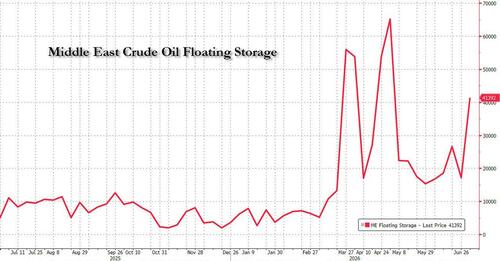
63 Million Barrels Of Iranian Oil Stuck At Sea After US Pulls Iran Sanction Waiver
63 million barrels of Iranian oil are stuck at sea after the US pulls Iran sanction waiver.
How this call is verified
▼ Bearish
call was checked against the actual S&P 500 price 24h later:
✗ Miss (+1.16%).
Bar: S&P 500 ±0.3% within 24h · every verdict lands on the public ledger
Key takeaway
"63 Million Barrels Of Iranian Oil Stuck At Sea After US Pulls Iran Sanction Waiver" — BullBear's AI rates this story as a bearish (negative) signal for markets, with a market-impact score of 75 out of 100. 63 million barrels of Iranian oil are stuck at sea after the US pulls Iran sanction waiver. Reported by ZeroHedge on July 08, 2026. The call is verified against the actual 24-hour price move on BullBear's public conviction ledger.
Catch the next bear flag
Telegram alerts when our AI scores a story 80+/100 impact (~1-3 per day, no spam).
Verified 30d hit rate 51.4%.
Rewritten: BofA, Deutsche Bank expect Fed to keep rates steady.
BofA and Deutsche Bank remain confident that the Fed will hold rates.
The consensus from BofA and Deutsche Bank regarding the Federal Reserve's stance on interest rates suggests a period of sustained monetary policy stability. This outlook could foster a more predictable environment for equity markets, potentially reducing volatility and encouraging a measured approach to risk-taking. The implication for broader market sentiment is one of cautious optimism, as the absence of immediate rate hikes alleviates a significant headwind for growth-oriented assets. This aligns with a macro theme of economic resilience, where central banks are perceived to be navigating inflation without resorting to aggressive tightening. Consequently, investor confidence may see a modest uplift, as the perceived certainty around borrowing costs allows for more strategic allocation of capital and a potentially increased appetite for assets that benefit from stable economic conditions.
Rewritten: Conflict's momentum is significantly reduced.
Authored by Alastair Crooke Trump ordered the US military not to carry out new strikes on Iran Friday night, despite approving earlier a "Gates of Hell massive attack" on Iran. The US has now requested a new temporary ceasefire with Iran and is seeking a return to the collapsed and suspended MoU, with discussions to include Yemen, and with Trump seeking to make AnsarAllah a party to the negotiations. Clearly Trump is angry, and fears ...
The renewed emphasis on protracted geopolitical conflict is creating a significant headwind for global equity markets. This elevated level of uncertainty is expected to temper investor enthusiasm, promoting a more cautious approach to risk. The ramifications are likely to manifest as a widespread market contraction, as investors reallocate capital towards perceived safe assets. This shift could, in turn, amplify existing inflationary pressures and contribute to a deceleration in economic expansion. These dynamics are intrinsically linked to broader macroeconomic trends such as deglobalization and the inherent vulnerabilities within global supply chains, underscoring anxieties regarding long-term economic resilience. As a result, a decline in investor confidence may become apparent, leading to a diminished inclination for speculative investments and a greater allocation towards traditionally defensive industries.
Rewritten: Fed likely to keep rates unchanged amid inflation concerns.
Amid persistent inflation concerns, the U.S. Federal Reserve is expected to hold interest rates steady. This expectation raises uncertainty about the timing of potential rate cuts, potentially weighing on markets.
The anticipation of the US Federal Reserve maintaining its current interest rate stance, amidst persistent inflationary pressures, suggests a period of continued economic recalibration. This scenario could foster a cautious market sentiment, as investors weigh the Fed's commitment to price stability against potential headwinds for growth. The underlying macro theme of inflation management remains paramount, influencing central bank policy globally. Consequently, investor confidence may be tested, leading to a more risk-averse environment. This could manifest as a preference for defensive assets and a tempering of speculative exuberance, as the market digests the implications of prolonged higher borrowing costs and the ongoing battle against rising prices. The perceived stability in rates, while a relief for some, also signals that the path to disinflation is not yet clear, potentially prolonging market uncertainty.
Rewritten: Fed meeting impacts more than just interest rates.
The Federal Reserve meeting has significant implications beyond just interest rate decisions.
Upcoming Federal Reserve deliberations extend their influence far beyond the immediate realm of interest rate adjustments. The committee's pronouncements and forward guidance will likely shape broader market implications by signaling the central bank's assessment of economic resilience and its willingness to intervene further. This, in turn, can significantly impact market sentiment, potentially shifting it from cautious optimism to a more defensive posture if concerns about inflation or growth slowdown are amplified. Such signals are intrinsically connected to prevailing macro themes, including geopolitical stability and global supply chain dynamics, which are currently creating a complex economic backdrop. Consequently, investor confidence and risk appetite may be tested, leading to a recalibration of asset allocations as market participants weigh the potential for continued volatility against opportunities for growth.