Choose language / 한국어

EN / 한
U.S. jobs market slips in June as unemployment ticks down
Bull/Bear Index 46.1/100
macro ▼ Bear Impact 75/100 Google News Macroecon... Jul 02, 2026 Read original ↗

U.S. jobs market slips in June as unemployment ticks down

How this call is verified

▼ Bearish call was checked against the actual S&P 500 price 24h later: ✗ Miss (+0.39%).

Our record on calls like this

1,106 scored calls here, 46.2% right (±7.8pp). Always answering up would have scored 61.0% on the same rows. Paired within the same day and asset, our directional edge is +0.9 pp ± 3.9 — inside the error bar, i.e. indistinguishable from zero.

Bar: S&P 500 ±0.3% within 24h · every verdict lands on the public ledger

Key takeaway

"U.S. jobs market slips in June as unemployment ticks down" — BullBear's AI rates this story as a bearish (negative) signal for markets, with a market-impact score of 75 out of 100. Reported by Google News Macroeconomics (EN) on July 02, 2026. The call is verified against the actual 24-hour price move on BullBear's public conviction ledger.

2 more reports on this event

MishTalk Economy Adds Only 57,000 Jobs in June, Huge Negative Revisions Jul 02, 2026 Google News Macroeconomics (EN) Hiring worse than expected in June amid elevated inflation Jul 02, 2026

Catch the next bear flag

Telegram alerts when our AI scores a story 80+/100 impact (~1-3 per day, no spam). Verified 30d hit rate 40.7%.

Join Telegram channel

📡 Tomorrow's Watch

Related news

ZeroHedge 12m ago

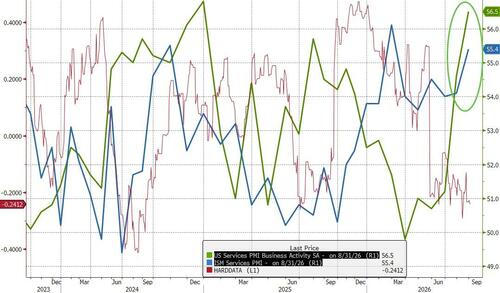
US PMI Surveys Signal Growth Rebound In Q3, Strongest Among Global Peers

US PMI Surveys Signal Growth Rebound In Q3, Strongest Among Global Peers Following the mixed/weak Manufacturing PMI survey data earlier in the week, today's Services PMIs were expected to be just as mixed with S&P Global higher and ISM flat. S&P Global Services PMI for August rose from 54.6 to 56.5 (below the preliminary 56.8 but still up bigly) - the highest since Dec 2024 ISM Services PMI for August rose from 54.1 to 55.4 (better than the 54.1 exp) - the highest since Feb 2026 These improvements come as hard data languishes... The S&P Global US Composite PMI recorded 56.0 in August, up from 54.5 in July and pushed the index to a 52-month high. A stronger rise in services activity coincided with sustained, albeit slower growth in manufacturing. This puts the US economy ahead of the rest of the world based on survey data...

#macro
ZeroHedge 1h ago

NVIDIA To Buy Hugging Face For $12.9 Billion

NVIDIA To Buy Hugging Face For $12.9 Billion Nvidia has agreed to buy AI startup Hugging Face for roughly&nbsp;$12.93 billion, putting the world's most important open-model hub under the same roof as the most dominant AI chip company on the planet, according to&nbsp;The&nbsp;Wall Street Journal.&nbsp; Image via FT CEO Jensen Huang announced the deal on Thursday, a day after NVIDIA filed that it had signed a definitive agreement. The transaction includes about $11.9 billion for Hugging Face stockholders and an equity retention package of up to $1 billion for employees who join NVIDIA. Closing is expected in the first half of 2027, pending regulatory approvals. <

#macro
▼ Bear
70/100
ZeroHedge 4h ago

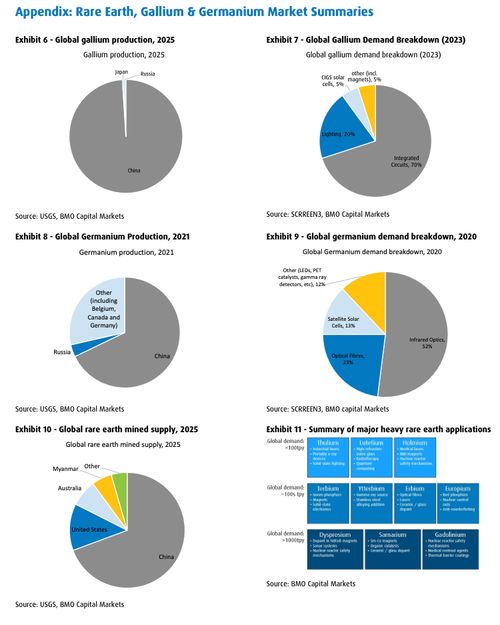
Ukraine's Drone Warfare Devouring 4% Of Global Germanium Demand As China Chokes Supplies

Rising consumption of germanium for Ukraine’s drone operations, now accounting for roughly four percent of global demand, intensifies pressure on an already tight supply chain dominated by Chinese exporters. The resulting scarcity is likely to lift germanium prices, tightening margins for semiconductor and optics manufacturers that rely on the material, while prompting investors to reassess exposure to firms with limited alternative sourcing. Market sentiment may tilt toward caution as the geopolitical flashpoint underscores broader supply‑chain vulnerabilities and reinforces the macro trend of resource nationalism. At the same time, heightened demand from defense applications could attract capital to niche producers, yet the overall risk appetite may contract as traders price in potential escalation and further export restrictions from China. Consequently, confidence in related equities could waver, with a bias toward defensive positioning and diversification away from concentrated commodity exposures.

Rising consumption of germanium for Ukraine’s drone operations, now accounting for roughly four percent of global demand, intensifies pressure on an already tight supply chain dominated by Chinese exporters. The resulting scarcity is likely to lift germanium prices, tightening margins for semiconductor and optics manufacturers that rely on the material, while prompting investors to reassess exposure to firms with limited alternative sourcing. Market sentiment may tilt toward caution as the geopolitical flashpoint underscores broader supply‑chain vulnerabilities and reinforces the macro trend of resource nationalism. At the same time, heightened demand from defense applications could attract capital to niche producers, yet the overall risk appetite may contract as traders price in potential escalation and further export restrictions from China. Consequently, confidence in related equities could waver, with a bias toward defensive positioning and diversification away from concentrated commodity exposures.

#macro
▼ Bear
80/100
ZeroHedge 12h ago

Xi In Rare Egypt Visit Blasts 'External Interference' In Mideast, As Iran War Drags On

Xi's remarks in Cairo condemning external interference and highlighting the protracted Iran conflict inject fresh geopolitical uncertainty into global markets, reinforcing a risk‑off bias that has already been heightened by lingering supply‑chain strains and divergent monetary policies. Investors are likely to reassess exposure to emerging‑market equities and commodities tied to Middle‑East stability, such as oil and copper, as any escalation could tighten energy supplies and dampen demand. The visit also underscores China's strategic outreach to African and Arab partners, feeding into broader macro narratives about shifting trade corridors and the search for alternative growth engines beyond the West. Consequently, confidence in risk‑on assets may wane, prompting a tilt toward safe‑haven currencies and government bonds, while heightened caution could suppress appetite for higher‑yielding but volatile sectors.

Xi's remarks in Cairo condemning external interference and highlighting the protracted Iran conflict inject fresh geopolitical uncertainty into global markets, reinforcing a risk‑off bias that has already been heightened by lingering supply‑chain strains and divergent monetary policies. Investors are likely to reassess exposure to emerging‑market equities and commodities tied to Middle‑East stability, such as oil and copper, as any escalation could tighten energy supplies and dampen demand. The visit also underscores China's strategic outreach to African and Arab partners, feeding into broader macro narratives about shifting trade corridors and the search for alternative growth engines beyond the West. Consequently, confidence in risk‑on assets may wane, prompting a tilt toward safe‑haven currencies and government bonds, while heightened caution could suppress appetite for higher‑yielding but volatile sectors.

#macro