Choose language / Korean

EN / 한
Gold slips as US-Iran tensions lift oil, stoke inflation fears
Bull/Bear Index 45.6/100
macro ▼ Bear Impact 75/100 Google News Macroecon... May 26, 2026 Read original ↗

Gold slips as US-Iran tensions lift oil, stoke inflation fears

Gold prices fell as escalating US-Iran tensions pushed oil prices higher, fueling inflation concerns.

How this call is verified

The ▼ Bearish call is auto-verified against the actual S&P 500 price shortly.

Bar: S&P 500 ±0.3% within 24h · every verdict lands on the public ledger

Key takeaway

"Gold slips as US-Iran tensions lift oil, stoke inflation fears" — BullBear's AI rates this story as a bearish (negative) signal for markets, with a market-impact score of 75 out of 100. Gold prices fell as escalating US-Iran tensions pushed oil prices higher, fueling inflation concerns. Reported by Google News Macroeconomics (EN) on May 26, 2026. The call is verified against the actual 24-hour price move on BullBear's public conviction ledger.

1 more report on this event

Google News Macroeconomics (EN) Gold slips as US-Iran tensions lift oil, stoke inflation fears - Reuters May 26, 2026

Catch the next bear flag

Telegram alerts when our AI scores a story 80+/100 impact (~1-3 per day, no spam). Verified 30d hit rate 53.3%.

Join Telegram channel

📡 Tomorrow's Watch

Related news

▼ Bear
75/100
Google News Macroeconomics (EN) 36m ago

Fed may hike rates twice in 2026, 36% chance per Polymarket

Rewritten: Fed rate hikes possible twice in 2026, Polymarket sees 36% chance.

Fed may hike rates twice in 2026, 36% chance per Polymarket

The potential for the Federal Reserve to implement interest rate increases beyond 2025, as indicated by current market probabilities, suggests a sustained period of restrictive monetary policy. This outlook could foster a more cautious investor sentiment, implying either persistent inflationary pressures or a stronger-than-expected economic trajectory, both of which carry bearish undertones. This scenario aligns with broader macroeconomic discussions surrounding entrenched inflation and the possibility of interest rates remaining elevated for an extended timeframe, diverging from expectations of near-term rate reductions. As a result, investor confidence may face headwinds, potentially leading to a diminished appetite for risk assets due to the prolonged elevated cost of borrowing, which could influence asset valuations across various markets.

The potential for the Federal Reserve to implement interest rate increases beyond 2025, as indicated by current market probabilities, suggests a sustained period of restrictive monetary policy. This outlook could foster a more cautious investor sentiment, implying either persistent inflationary pressures or a stronger-than-expected economic trajectory, both of which carry bearish undertones. This scenario aligns with broader macroeconomic discussions surrounding entrenched inflation and the possibility of interest rates remaining elevated for an extended timeframe, diverging from expectations of near-term rate reductions. As a result, investor confidence may face headwinds, potentially leading to a diminished appetite for risk assets due to the prolonged elevated cost of borrowing, which could influence asset valuations across various markets.

#macro
▼ Bear
80/100
Google News Macroeconomics (EN) 1h ago

Fed guidance retreat risks communication own goal

Rewritten: Fed's shifting guidance may backfire.

The retreat of Federal Reserve guidance poses a risk of a communication misstep, potentially creating confusion and uncertainty in the markets.

The Federal Reserve's move away from providing explicit forward guidance on its monetary policy stance is introducing a notable degree of uncertainty into financial markets. This shift towards less predictable communication could foster a more cautious investor sentiment, as market participants face a less defined path for future interest rate adjustments and policy actions. This development aligns with broader macroeconomic concerns regarding the persistence of inflationary pressures and the possibility of sustained higher interest rates, potentially challenging expectations for an imminent policy reversal. As a result, investor confidence may experience a recalibration, potentially leading to a reduced appetite for riskier assets and a general tempering of speculative activity. The absence of clear signals regarding the central bank's future intentions may prompt a greater focus on defensive investment strategies.

The Federal Reserve's move away from providing explicit forward guidance on its monetary policy stance is introducing a notable degree of uncertainty into financial markets. This shift towards less predictable communication could foster a more cautious investor sentiment, as market participants face a less defined path for future interest rate adjustments and policy actions. This development aligns with broader macroeconomic concerns regarding the persistence of inflationary pressures and the possibility of sustained higher interest rates, potentially challenging expectations for an imminent policy reversal. As a result, investor confidence may experience a recalibration, potentially leading to a reduced appetite for riskier assets and a general tempering of speculative activity. The absence of clear signals regarding the central bank's future intentions may prompt a greater focus on defensive investment strategies.

#macro
▼ Bear
📡 +1 90/100
Google News Macroeconomics (EN) 2h ago

10-year Treasury yield climbs to highest level since January 2025 as $100 oil sparks inflation fears - Yahoo Finance

Rewritten: Treasury yield hits 2025 high as oil price fuels inflation worries.

The 10-year Treasury yield has reached its highest level since January 2025, as concerns over $100 oil fueling inflation intensify.

Elevated Treasury yields, reaching levels not seen in over a year, are being driven by a confluence of factors, notably a significant increase in crude oil prices and a resurgence of inflation anxieties. This trend has direct implications for the cost of capital across the economy, potentially impacting corporate profitability through higher debt servicing expenses and constraining household purchasing power, which can subsequently affect consumer demand. The renewed focus on inflation may foster a more risk-averse environment among investors, leading to a reassessment of asset allocations. This development is intrinsically linked to macroeconomic stability, as sharp rises in energy commodities frequently contribute to widespread price increases, complicating monetary policy objectives. As a result, market participants may adopt a more conservative approach, potentially favoring assets perceived as more stable and reducing exposure to higher-risk investments.

Elevated Treasury yields, reaching levels not seen in over a year, are being driven by a confluence of factors, notably a significant increase in crude oil prices and a resurgence of inflation anxieties. This trend has direct implications for the cost of capital across the economy, potentially impacting corporate profitability through higher debt servicing expenses and constraining household purchasing power, which can subsequently affect consumer demand. The renewed focus on inflation may foster a more risk-averse environment among investors, leading to a reassessment of asset allocations. This development is intrinsically linked to macroeconomic stability, as sharp rises in energy commodities frequently contribute to widespread price increases, complicating monetary policy objectives. As a result, market participants may adopt a more conservative approach, potentially favoring assets perceived as more stable and reducing exposure to higher-risk investments.

#macro
▲ Bull
60/100
Google News Macroeconomics (EN) 3h ago

How to Use Fixed Income to Outmaneuver Inflation | Financial Advisors

Rewritten: Fixed income strategies to combat inflation.

Financial advisors suggest strategies for using fixed income products to outmaneuver inflation.

As inflation continues its persistent march, fixed income instruments are emerging as a strategic tool for navigating this economic landscape, offering a potential hedge against eroding purchasing power. This shift in focus toward yield-generating assets can influence broader market dynamics, potentially drawing capital away from more speculative ventures and into sectors offering predictable income streams. Consequently, market sentiment may tilt towards a more cautious, value-oriented perspective, reflecting a growing awareness of macroeconomic pressures like rising interest rates and supply chain disruptions. Investor confidence, particularly among those prioritizing capital preservation and steady returns, could see a boost as they identify avenues to maintain their financial standing. This, in turn, might temper overall risk appetite, encouraging a more measured approach to portfolio construction as investors seek stability amidst inflationary headwinds.

As inflation continues its persistent march, fixed income instruments are emerging as a strategic tool for navigating this economic landscape, offering a potential hedge against eroding purchasing power. This shift in focus toward yield-generating assets can influence broader market dynamics, potentially drawing capital away from more speculative ventures and into sectors offering predictable income streams. Consequently, market sentiment may tilt towards a more cautious, value-oriented perspective, reflecting a growing awareness of macroeconomic pressures like rising interest rates and supply chain disruptions. Investor confidence, particularly among those prioritizing capital preservation and steady returns, could see a boost as they identify avenues to maintain their financial standing. This, in turn, might temper overall risk appetite, encouraging a more measured approach to portfolio construction as investors seek stability amidst inflationary headwinds.

#macro
▼ Bear
50/100
ZeroHedge 3h ago

From Cash To Trash, Rinse And Repeat

Frank Giustra uses the historical example of the Continental dollar to illustrate how currencies without credible backing and control can rapidly lose value, serving as a cautionary tale.

#macro
▼ Bear
75/100
Google News Macroeconomics (EN) 3h ago

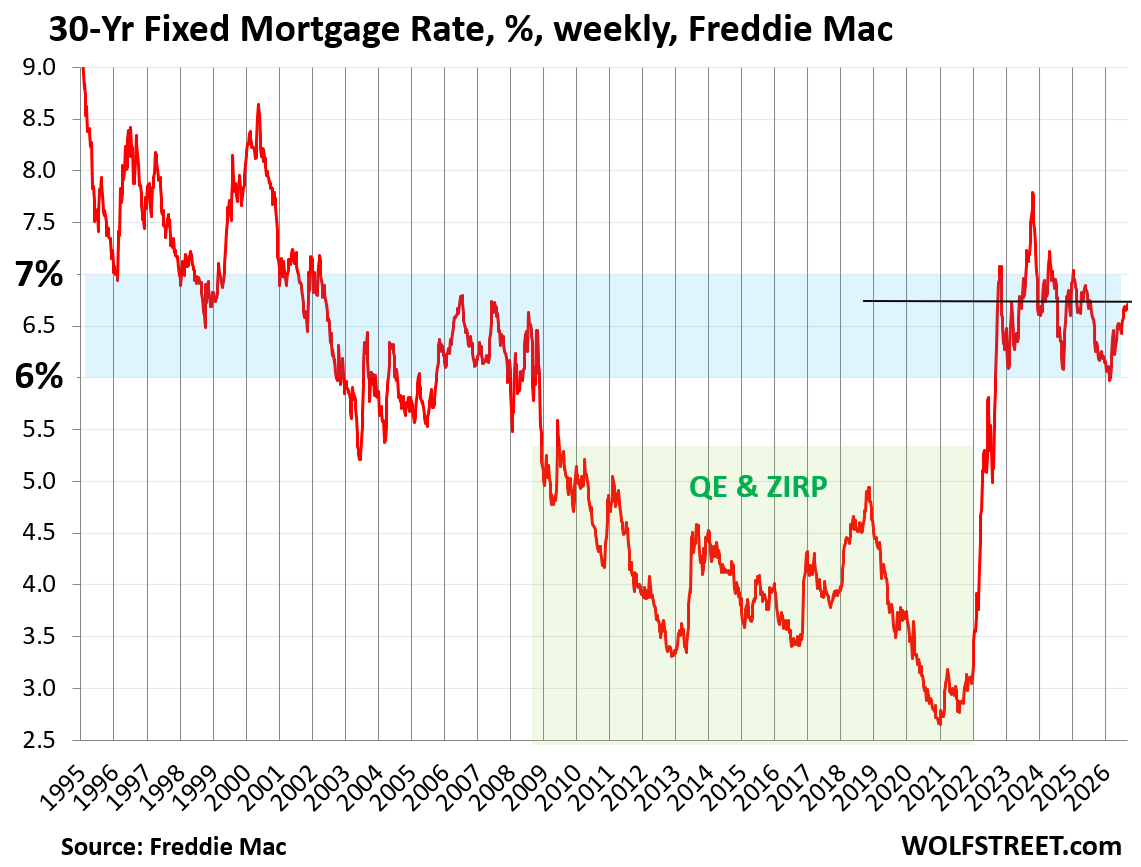
Surging oil prices, T-bonds push mortgage rates closer to 7%

Rewritten: Oil, bonds rise, pushing mortgage rates near 7%.

Surging oil prices and rising Treasury bond yields are pushing mortgage rates closer to 7%.

Elevated Treasury yields, influenced by factors such as rising energy prices, indicate sustained inflationary pressures. This economic backdrop suggests that monetary policy may remain restrictive for an extended duration. Such conditions tend to temper overall market sentiment, prompting investors to adjust their outlooks regarding economic expansion and corporate profitability. The direct link to broader economic themes of inflation and interest rate policy points towards a sustained period of increased borrowing expenses. As a result, investor confidence could diminish, leading to a decreased willingness to take on risk. This shift may manifest as heightened price fluctuations across various asset classes as capital flows towards more secure investments.

Elevated Treasury yields, influenced by factors such as rising energy prices, indicate sustained inflationary pressures. This economic backdrop suggests that monetary policy may remain restrictive for an extended duration. Such conditions tend to temper overall market sentiment, prompting investors to adjust their outlooks regarding economic expansion and corporate profitability. The direct link to broader economic themes of inflation and interest rate policy points towards a sustained period of increased borrowing expenses. As a result, investor confidence could diminish, leading to a decreased willingness to take on risk. This shift may manifest as heightened price fluctuations across various asset classes as capital flows towards more secure investments.

#macro