US May Michigan Consumer Sentiment Index Preview: Markets Focus on Inflation, How Will US Stocks, Dollar, and Gold Markets React? - TradingKey
US May Michigan Consumer Sentiment Index Preview: Markets Focus on Inflation, How Will US Stocks, Dollar, and Gold Markets React?
Key takeaway
"US May Michigan Consumer Sentiment Index Preview: Markets Focus on Inflation, How Will US Stocks, Dollar, and Gold Markets React? - TradingKey" — BullBear's AI rates this story as a mixed, direction-neutral signal, with a market-impact score of 80 out of 100. US May Michigan Consumer Sentiment Index Preview: Markets Focus on Inflation, How Will US Stocks, Dollar, and Gold Markets React? Reported by Google News Macroeconomics (EN) on May 22, 2026. The call is verified against the actual 24-hour price move on BullBear's public conviction ledger.
Get the next high-impact catalyst
Telegram alerts when our AI scores a story 80+/100 impact (~1-3 per day, no spam).
Verified 30d hit rate 53.3%.
Rewritten: Treasury yield hits 2025 high as oil price fuels inflation worries.
The 10-year Treasury yield has reached its highest level since January 2025, as concerns over $100 oil fueling inflation intensify.
Elevated Treasury yields, reaching levels not seen in over a year, are being driven by a confluence of factors, notably a significant increase in crude oil prices and a resurgence of inflation anxieties. This trend has direct implications for the cost of capital across the economy, potentially impacting corporate profitability through higher debt servicing expenses and constraining household purchasing power, which can subsequently affect consumer demand. The renewed focus on inflation may foster a more risk-averse environment among investors, leading to a reassessment of asset allocations. This development is intrinsically linked to macroeconomic stability, as sharp rises in energy commodities frequently contribute to widespread price increases, complicating monetary policy objectives. As a result, market participants may adopt a more conservative approach, potentially favoring assets perceived as more stable and reducing exposure to higher-risk investments.
Rewritten: Fixed income strategies to combat inflation.
Financial advisors suggest strategies for using fixed income products to outmaneuver inflation.
As inflation continues its persistent march, fixed income instruments are emerging as a strategic tool for navigating this economic landscape, offering a potential hedge against eroding purchasing power. This shift in focus toward yield-generating assets can influence broader market dynamics, potentially drawing capital away from more speculative ventures and into sectors offering predictable income streams. Consequently, market sentiment may tilt towards a more cautious, value-oriented perspective, reflecting a growing awareness of macroeconomic pressures like rising interest rates and supply chain disruptions. Investor confidence, particularly among those prioritizing capital preservation and steady returns, could see a boost as they identify avenues to maintain their financial standing. This, in turn, might temper overall risk appetite, encouraging a more measured approach to portfolio construction as investors seek stability amidst inflationary headwinds.
Frank Giustra uses the historical example of the Continental dollar to illustrate how currencies without credible backing and control can rapidly lose value, serving as a cautionary tale.
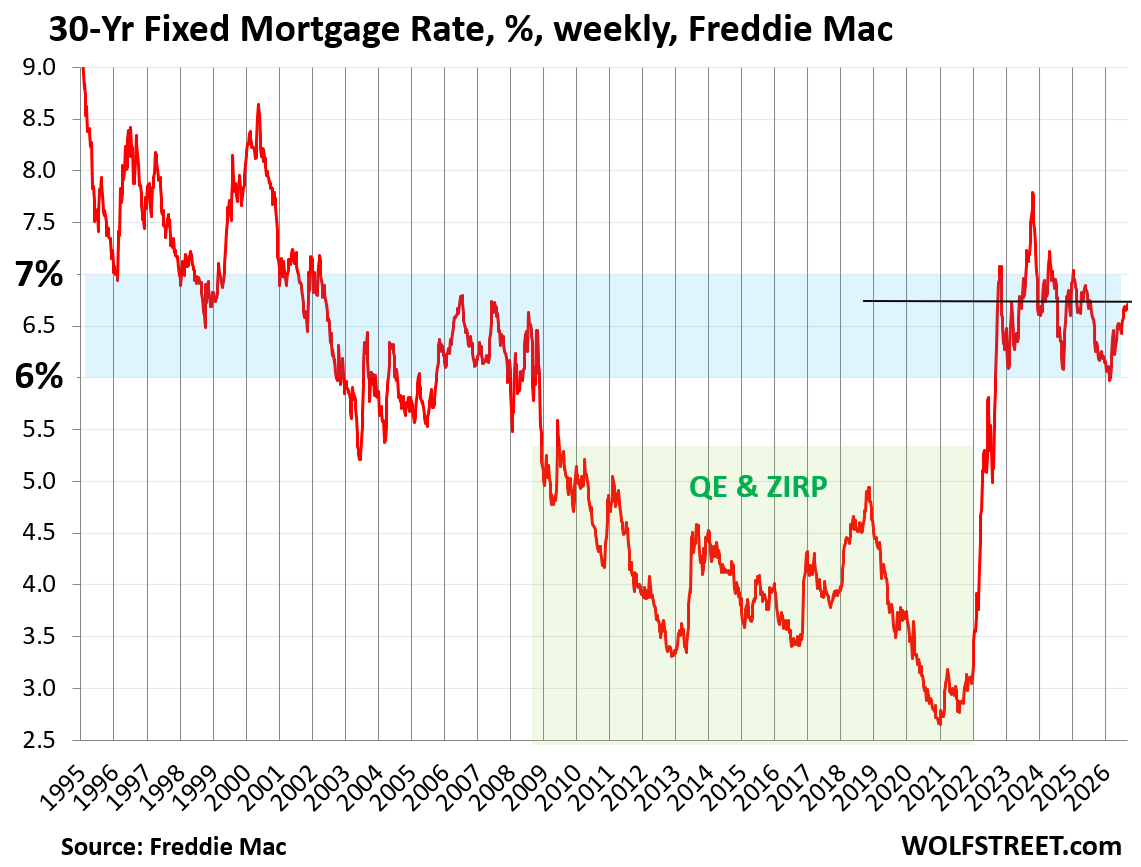
Rewritten: Oil, bonds rise, pushing mortgage rates near 7%.
Surging oil prices and rising Treasury bond yields are pushing mortgage rates closer to 7%.
Elevated Treasury yields, influenced by factors such as rising energy prices, indicate sustained inflationary pressures. This economic backdrop suggests that monetary policy may remain restrictive for an extended duration. Such conditions tend to temper overall market sentiment, prompting investors to adjust their outlooks regarding economic expansion and corporate profitability. The direct link to broader economic themes of inflation and interest rate policy points towards a sustained period of increased borrowing expenses. As a result, investor confidence could diminish, leading to a decreased willingness to take on risk. This shift may manifest as heightened price fluctuations across various asset classes as capital flows towards more secure investments.
Rewritten: Intel sales surge to 15-year high on strong demand.
Intel's better-than-expected second-quarter results and guidance for its fastest revenue growth in 15 years are seen as a positive for the tech sector.
The semiconductor industry is observing a notable shift in sentiment, influenced by projections of substantial sales growth. This optimistic forecast, stemming from a leading technology manufacturer, points towards a period of heightened demand across various segments of the hardware market. The projected trajectory suggests a potential turnaround for technology hardware, even as the sector navigates ongoing supply chain challenges and broader economic inflationary headwinds. This development aligns with a wider economic narrative of increasing investment in industrial modernization and the acceleration of digital initiatives. Consequently, this positive corporate outlook, especially from a key player in foundational technology, may foster an increased willingness among investors to consider growth-oriented equity opportunities, seeking evidence of economic robustness and future expansion.
Rewritten: Inflation, economy push more Americans to shoplift.
An increasing number of Americans are citing inflation and the economy as reasons for shoplifting.
Heightened levels of shoplifting, reportedly driven by economic strain, point to increasing consumer hardship and could foreshadow a contraction in non-essential purchases. This development may contribute to a less optimistic market outlook, underscoring economic vulnerabilities and potentially prompting adjustments to financial projections for companies within the retail and consumer staples industries. The observed behavior aligns with broader economic narratives concerning sustained price increases and growing disparities in wealth, suggesting that the burden of high living costs is affecting a substantial segment of the populace. As a result, investor confidence may experience a decline, and a preference for lower-risk assets could emerge, driven by amplified concerns regarding consumer spending power and the earnings potential of businesses, leading to a more conservative investment stance.
#macro
Get the next 80+ impact catalyst
Push notifications when our AI flags a high-impact bull/bear story. ~1–3 per day.