Choose language / Korean

EN / 한
How Will the Upcoming Leadership Change at the US Federal Reserve Affect Bitcoin? What Happened in the Past? Here Are the Details - Cryptonews.net
Bull/Bear Index 47.3/100
macro ▼ Bear Impact 80/100 Google News Macroecon... May 01, 2026 Read original ↗

How Will the Upcoming Leadership Change at the US Federal Reserve Affect Bitcoin? What Happened in the Past? Here Are the Details - Cryptonews.net

Key takeaway

"How Will the Upcoming Leadership Change at the US Federal Reserve Affect Bitcoin? What Happened in the Past? Here Are the Details - Cryptonews.net" — BullBear's AI rates this story as a bearish (negative) signal for markets, with a market-impact score of 80 out of 100. Reported by Google News Macroeconomics (EN) on May 01, 2026. The call is verified against the actual 24-hour price move on BullBear's public conviction ledger.

Catch the next bear flag

Telegram alerts when our AI scores a story 80+/100 impact (~1-3 per day, no spam). Verified 30d hit rate 48.6%.

Join Telegram channel

📡 Tomorrow's Watch

Related news

▲ Bull
📡 +1 70/100
Wolf Street 4h ago

CPI Dragged Down by Energy, Hotels & Motels (Shelter), Auto Insurance, and Meat (Finally)

Rewritten: CPI Lowered by Falling Energy, Shelter, Auto Insurance, and Meat Prices

Recent declines in core CPI components—particularly energy, shelter (encompassing hotels and motels), auto insurance, and meat—indicate broad-based moderation in inflation, extending beyond temporary factors. These categories represent significant, persistent drivers of price pressures, making their easing noteworthy. This trend diminishes near-term urgency for the Federal Reserve to sustain restrictive monetary policy, potentially accelerating market expectations for rate cuts later in 2024. The data reinforces a broader macroeconomic shift where inflation appears to be cooling sustainably, weakening the rationale for prolonged "higher for longer" policy. Consequently, reduced inflation concerns bolster confidence in economic growth trajectories, enhancing risk appetite across equity markets and interest-rate sensitive sectors. This clearer path to monetary easing supports a more favorable environment for broader risk assets, reflecting a structural shift in the inflation outlook rather than a temporary dip. (148 words)

Recent declines in core CPI components—particularly energy, shelter (encompassing hotels and motels), auto insurance, and meat—indicate broad-based moderation in inflation, extending beyond temporary factors. These categories represent significant, persistent drivers of price pressures, making their easing noteworthy. This trend diminishes near-term urgency for the Federal Reserve to sustain restrictive monetary policy, potentially accelerating market expectations for rate cuts later in 2024. The data reinforces a broader macroeconomic shift where inflation appears to be cooling sustainably, weakening the rationale for prolonged "higher for longer" policy. Consequently, reduced inflation concerns bolster confidence in economic growth trajectories, enhancing risk appetite across equity markets and interest-rate sensitive sectors. This clearer path to monetary easing supports a more favorable environment for broader risk assets, reflecting a structural shift in the inflation outlook rather than a temporary dip. (148 words)

#macro
▼ Bear
85/100
ZeroHedge 4h ago

Global Oil Deficit To Hit 1.8 Million Bpd This Quarter, IEA Forecasts

Rewritten: IEA forecasts global oil deficit to reach 1.8 million bpd this quarter

The International Energy Agency's projection of a 1.8 million barrels per day global oil deficit for the current quarter underscores ongoing supply constraints, yet this physical tightness occurs against a backdrop of subdued demand growth. This dynamic creates a nuanced market environment where the fundamental scarcity typically supportive of prices faces countervailing pressures from weakening consumption patterns, likely linked to broader economic slowdowns across key regions. The deficit, while substantial, appears insufficient to overcome prevailing macroeconomic headwinds such as cooling global growth and the accelerating shift towards alternative energy sources. Consequently, the market faces a tension between near-term supply limitations and longer-term structural demand concerns, amplifying price volatility as participants weigh these opposing forces. This complex interplay is likely to sustain cautious market sentiment, tempering expectations for sustained price appreciation despite the supply gap. (148 words)

The International Energy Agency's projection of a 1.8 million barrels per day global oil deficit for the current quarter underscores ongoing supply constraints, yet this physical tightness occurs against a backdrop of subdued demand growth. This dynamic creates a nuanced market environment where the fundamental scarcity typically supportive of prices faces countervailing pressures from weakening consumption patterns, likely linked to broader economic slowdowns across key regions. The deficit, while substantial, appears insufficient to overcome prevailing macroeconomic headwinds such as cooling global growth and the accelerating shift towards alternative energy sources. Consequently, the market faces a tension between near-term supply limitations and longer-term structural demand concerns, amplifying price volatility as participants weigh these opposing forces. This complex interplay is likely to sustain cautious market sentiment, tempering expectations for sustained price appreciation despite the supply gap. (148 words)

#macro
▼ Bear
85/100
ZeroHedge 5h ago

Tailing 10Y Auction Prices At Highest Yield Since 2007

Rewritten: Year Yield at Highest Since 2007

Rising yields on 10-year Treasury auctions, reaching their highest level since 2007, reflect persistent inflationary pressures and a central bank maintaining a restrictive monetary policy stance, directly countering market expectations of near-term interest rate reductions. This sustained high-yield environment elevates borrowing costs across the broader economy, exerting downward pressure on equity valuations and potentially constraining corporate capital expenditure. Consequently, investor risk appetite diminishes as the sustainability of current economic growth narratives is questioned, particularly regarding the feasibility of a soft landing. This macroeconomic uncertainty drives a shift in market sentiment towards caution, with investors increasingly favoring defensive asset classes and reducing exposure to cyclical sectors, signaling a notable reduction in overall risk-taking behavior within financial markets. (158 words)

Rising yields on 10-year Treasury auctions, reaching their highest level since 2007, reflect persistent inflationary pressures and a central bank maintaining a restrictive monetary policy stance, directly countering market expectations of near-term interest rate reductions. This sustained high-yield environment elevates borrowing costs across the broader economy, exerting downward pressure on equity valuations and potentially constraining corporate capital expenditure. Consequently, investor risk appetite diminishes as the sustainability of current economic growth narratives is questioned, particularly regarding the feasibility of a soft landing. This macroeconomic uncertainty drives a shift in market sentiment towards caution, with investors increasingly favoring defensive asset classes and reducing exposure to cyclical sectors, signaling a notable reduction in overall risk-taking behavior within financial markets. (158 words)

#macro
▼ Bear
80/100
ZeroHedge 7h ago

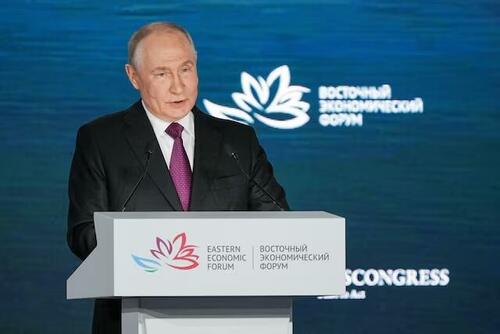
Putin Threatens Seizures Of European Ships Over EU's "Piracy & Banditry"

Rewritten: Putin threatens ship seizures over EU's piracy claim

Escalating geopolitical friction between Russia and the EU, underscored by recent rhetoric threatening European shipping assets, introduces heightened uncertainty into global trade corridors. This directly challenges established maritime logistics, particularly for energy and key commodities, potentially triggering supply chain adjustments and increasing maritime insurance premiums as risk assessments recalibrate. The persistent tension fuels market concerns about the fragility of international commerce, reinforcing perceptions of a fragmented global economic landscape where interdependence becomes a vulnerability rather than an asset. Consequently, market participants may increasingly favor defensive positioning within energy infrastructure and shipping sectors, while capital flows could shift toward traditional safe havens. This dynamic amplifies broader structural trends, including the acceleration of deglobalization and the strategic use of economic tools as leverage, further diminishing confidence in the predictability of major trade routes amid evolving sanction frameworks and retaliatory dynamics. (158 words)

Escalating geopolitical friction between Russia and the EU, underscored by recent rhetoric threatening European shipping assets, introduces heightened uncertainty into global trade corridors. This directly challenges established maritime logistics, particularly for energy and key commodities, potentially triggering supply chain adjustments and increasing maritime insurance premiums as risk assessments recalibrate. The persistent tension fuels market concerns about the fragility of international commerce, reinforcing perceptions of a fragmented global economic landscape where interdependence becomes a vulnerability rather than an asset. Consequently, market participants may increasingly favor defensive positioning within energy infrastructure and shipping sectors, while capital flows could shift toward traditional safe havens. This dynamic amplifies broader structural trends, including the acceleration of deglobalization and the strategic use of economic tools as leverage, further diminishing confidence in the predictability of major trade routes amid evolving sanction frameworks and retaliatory dynamics. (158 words)

#macro