Upcoming Market Dates: PCE Inflation and Q1 GDP Determining the Fed’s Next Move - Investing.com
Key takeaway
"Upcoming Market Dates: PCE Inflation and Q1 GDP Determining the Fed’s Next Move - Investing.com" — BullBear's AI rates this story as a mixed, direction-neutral signal, with a market-impact score of 75 out of 100. Reported by Google News Macroeconomics (EN) on April 28, 2026. The call is verified against the actual 24-hour price move on BullBear's public conviction ledger.
Chinese Refiners Pay Record Premiums For Russian ESPO Crude
Authored by Irina Slav via OilPrice.com,
Chinese refiners are paying a hefty premium for Russia's ESPO crude to replace Iranian crude that independent refiners were importing before the U.S. installed its naval blockade on the country.
East Siberia-Pacific Ocean crude, or ESPO, for delivery in November is trading at a premium of over $7 per barrel, with offers reaching as high as $10 per barrel over Brent crude, Bloomberg reported today, citing traders. The blend is loaded from Russia's Far East coast and can reach the buyers in China in less than a week, the publication noted.
China is the biggest buyer of ESPO crude, with a market share of 83% for the first seven months of the year. However, this share is down from 88% a year earlier. The change came amid stronger ESPO buying from Indian refiners, whose market share for the Far Eastern Russian crude blend went up from 12% to 16% for the first
China-Linked Hackers Hid In Cisco Routers, Stole Administrator Credentials: Report
Authored by Arthur Zhang via The Epoch Times,
A China-linked cyberespionage group compromised Cisco routers and hid its activity from the network administrators who managed them, cybersecurity firm Sygnia said in an Aug. 27 report.
The Cisco logo is displayed in front of Cisco headquarters in San Jose, Calif., on Feb. 9, 2024. Justin Sullivan/Getty Images
The group also recorded traffic moving through the devices and used them to probe other high-value networks, according to the report.
The hackers compromised systems that verify whether network administrators are authorized to log in to routers and other equipment, allowing them to capture administrator credentials, Sygnia said.
Sygnia tracks the group as Fire Ant and describes it as China-nexus. The firm has not
Democrats Cry Foul As DHS Launches Voter Fraud Probe In 9 States
The Department of Homeland Security opened a coordinated voter fraud investigation across nine states this week, and Democratic election officials are not taking the news well...
CNN reported that internal federal guidance directs Homeland Security Investigations, the investigative arm of Immigration and Customs Enforcement, to build criminal cases against people suspected of illegally registering or voting. The effort is described as a "coordinated criminal voter fraud surge initiative" and will run from early September through mid-October.
Agents began work Tuesday in Washington, Wisconsin, Missouri, Georgia, California, Pennsylvania, Nevada, New York and Connecticut.
The operation targets noncitizens who registered or cast ballots, including immigrants accused of voting before they naturalized. DHS has directed investigators to coordinate w
Asian LNG Prices Surge To Highest Since 2022 As Iran War Escalates
Authored by Irina Slav via OilPrice.com,
Spot LNG prices for Asian buyers went up to almost $26 per million British thermal units yesterday for a 5% weekly gain following the resumption of strikes between the United States and Iran.
Spot LNG for Asia traded at $25.908 per mmBtu late on Wednesday, Bloomberg reported, citing unnamed traders, after President Donald Trump said "We took out all of the new equipment that they tried to build along the Strait of Hormuz - some defensive, some offensive ... It was a very heavy attack last night, and we're prepared to do another one any time we want."
Prices in both Asia and Europe had jumped at the end of last week after Qatar's state-owned firm QatarEnergy extended the force majeure on its LNG deliveries into November am
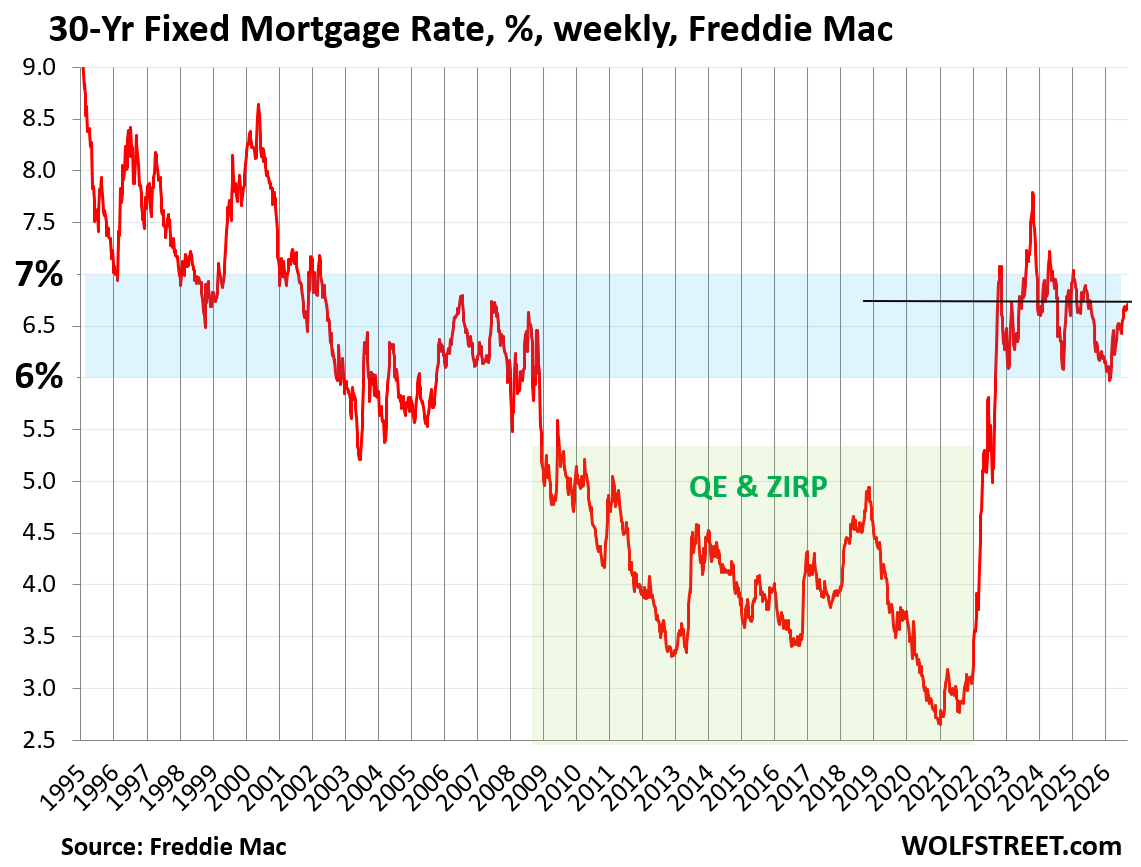
The persistent 2‑point gap between the 10‑year Treasury yield and the 30‑year mortgage rate signals that mortgage‑backed‑securities support from Fannie Mae and Freddie Mac is not translating into tighter financing conditions, a pattern that could weigh on housing‑related equities and broader credit markets. With mortgage rates remaining elevated relative to risk‑free yields, home‑buyer demand may stay subdued, reinforcing expectations of slower residential construction activity and dampening consumer‑spending outlooks. This decoupling also underscores lingering inflationary pressures and the Federal Reserve’s cautious stance on rate cuts, reinforcing a macro environment where yield curves stay flat and risk premia stay high. Consequently, investor confidence in rate‑sensitive sectors may erode, prompting a tilt toward defensive assets and reducing overall risk appetite across equity and fixed‑income portfolios. Such dynamics may also influence credit spreads and the pricing of agency MBS, further shaping portfolio allocations.
The persistent 2‑point gap between the 10‑year Treasury yield and the 30‑year mortgage rate signals that mortgage‑backed‑securities support from Fannie Mae and Freddie Mac is not translating into tighter financing conditions, a pattern that could weigh on housing‑related equities and broader credit markets. With mortgage rates remaining elevated relative to risk‑free yields, home‑buyer demand may stay subdued, reinforcing expectations of slower residential construction activity and dampening consumer‑spending outlooks. This decoupling also underscores lingering inflationary pressures and the Federal Reserve’s cautious stance on rate cuts, reinforcing a macro environment where yield curves stay flat and risk premia stay high. Consequently, investor confidence in rate‑sensitive sectors may erode, prompting a tilt toward defensive assets and reducing overall risk appetite across equity and fixed‑income portfolios. Such dynamics may also influence credit spreads and the pricing of agency MBS, further shaping portfolio allocations.
#macro
Get the next 80+ impact catalyst
Push notifications when our AI flags a high-impact bull/bear story. ~1–3 per day.

 or scan with phone →